
Women's Healthcare at the VA
Let me say something that catches most women off guard: the VA is not the same system your mother told you to avoid, and it is not the one built for the men who came home before you. Women are now the fastest-growing group of veterans in the country — and in response the VA has stood up dedicated women's health teams, gender-specific clinics, designated Women Veterans Program Managers in every medical center, and a full spectrum of care built specifically for your body and your life. Most women were never told any of it exists, so they go without care they earned and already paid for. That ends when you finish reading this page.
I put everything on this page, in plain English and all in one place, what is actually covered, who your advocates inside the building are and how to reach them, how to enroll step by step, which priority group you likely fall into, and how to get seen even if the nearest VA is two hours away. You will not have to leave this page to piece it together from a dozen others. Read it once, and you will walk into your VA knowing exactly what to ask for and exactly what you are owed. But walking in is on you, nobody can make that appointment for you.
How to Enroll — Step by Step
Enrollment is the single step that unlocks everything else on this page. Until your 10-10EZ is processed you are not in the system — no primary care team, no Women’s Health Primary Care Provider, no mammogram, no prescriptions, no copay protection. The application itself is short and you can finish it online in about twenty minutes, but the VA will hold it up over small things: a missing DD-214, an unsigned page, an income figure left blank. Gather your discharge paperwork, your current insurance card, and last year’s household income before you start, and the whole thing goes through in one sitting. Below is exactly what to gather, where to submit it, what the VA does with it, and how long each stage actually takes — so nothing about the process is a surprise. And if you need care today, read the box directly beneath this: three kinds of care do not wait on enrollment at all.
Before you start — care you can get RIGHT NOW without enrolling
Three categories of care do not require enrollment at all: MST-related care (always free, no paperwork), emergency mental health care under the COMPACT Act (any ER, if you are in suicidal crisis), and Vet Center counseling (community-based, no medical record at a VA hospital). If you need help today, you do not have to enroll first.
Gather Your Documents
DD-214 (your discharge papers), Social Security number, prior-year household income information, and any private health insurance details. If you cannot find your DD-214, you can request it from the National Personnel Records Center — and you can still start your application while you wait for it.
Choose How to Apply
- Online at VA.gov — fastest, typically processed within a week
- By phone: call 877-222-8387 (Mon–Fri, 8am–8pm ET)
- By mail: send completed VA Form 10-10EZ to Health Eligibility Center, PO Box 5207, Janesville, WI 53547-5207
- In person: bring your completed 10-10EZ to your nearest VA medical center
Processing (~1 week)
The VA reviews your application, verifies your service, and assigns you to a priority group based on your disability rating, service history, and income. You will receive a letter with your priority group and enrollment confirmation.
Receive Your VHIC
Upon approval you receive your Veteran Health Identification Card. This is your key to scheduling appointments, using the pharmacy, and accessing all VA health services.
Set Up My HealtheVet
Create your account at myhealth.va.gov — this is how you schedule appointments, message your care team securely, refill prescriptions, and access your medical records online. Ask for a Premium account at your first visit for full features.
Book the first appointment — and ask for two things by name
Call your facility or use My HealtheVet to schedule your first primary-care visit. When you do, ask for the Women Veterans Program Manager and ask for your Toxic Exposure Screening. The screening takes five to ten minutes, is offered to every enrolled veteran, and it puts your exposure history in the record — which is the piece most women are missing years later when they file a claim.
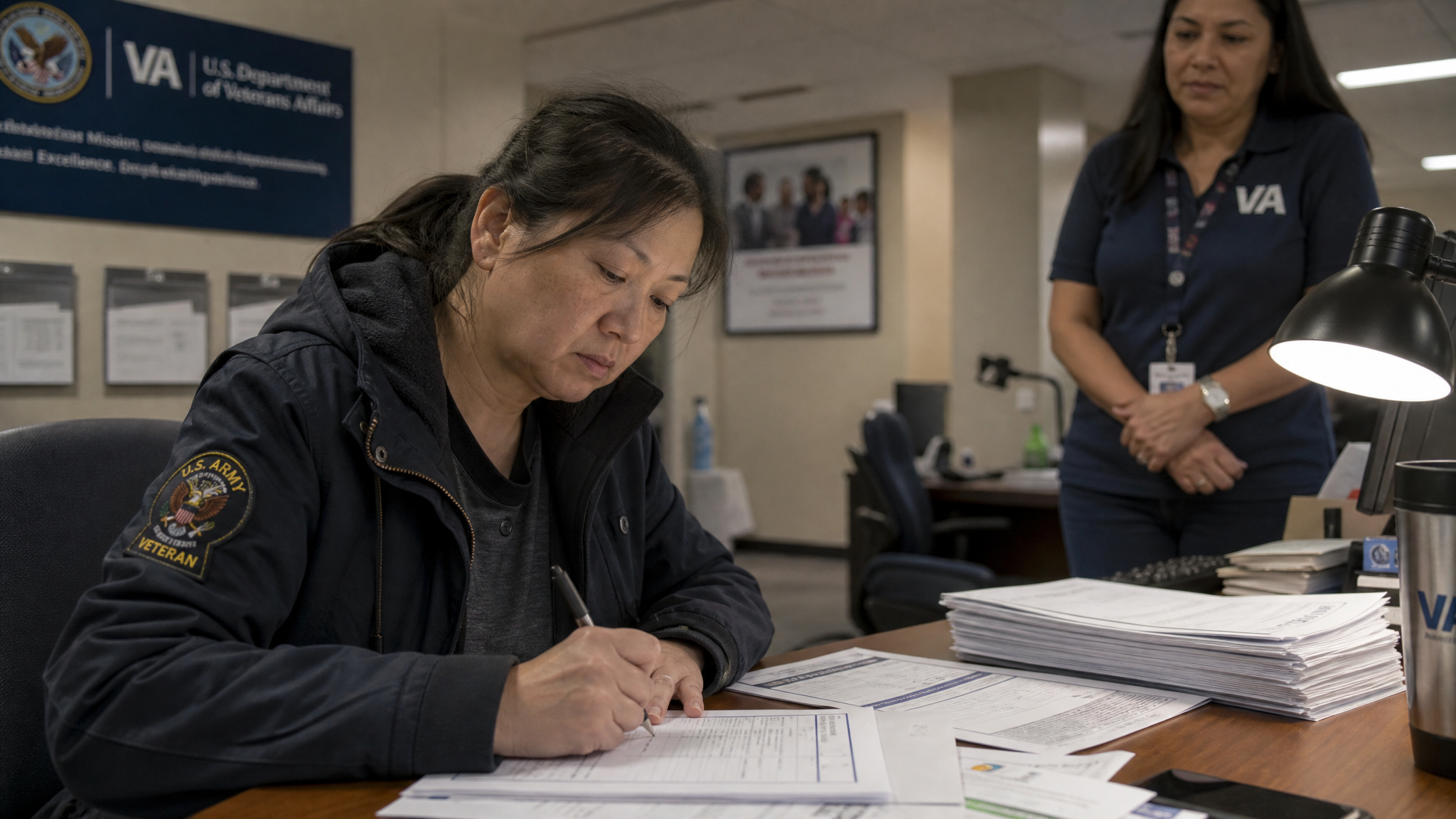
The Form — VA Form 10-10EZ
This is the only form you need. It asks for your service dates, discharge status, contact information, income, and insurance. It is straightforward — it is not a disability claim, and it does not require medical records or evidence of any kind.
Download or complete VA Form 10-10EZOpens the official VA form page in a new tab.
Your Advocates Inside the VA
Before you learn what is covered, know who is already fighting for you inside the building. Every VA medical center is required to have these positions — they exist specifically for women veterans, and most women never ask for them.
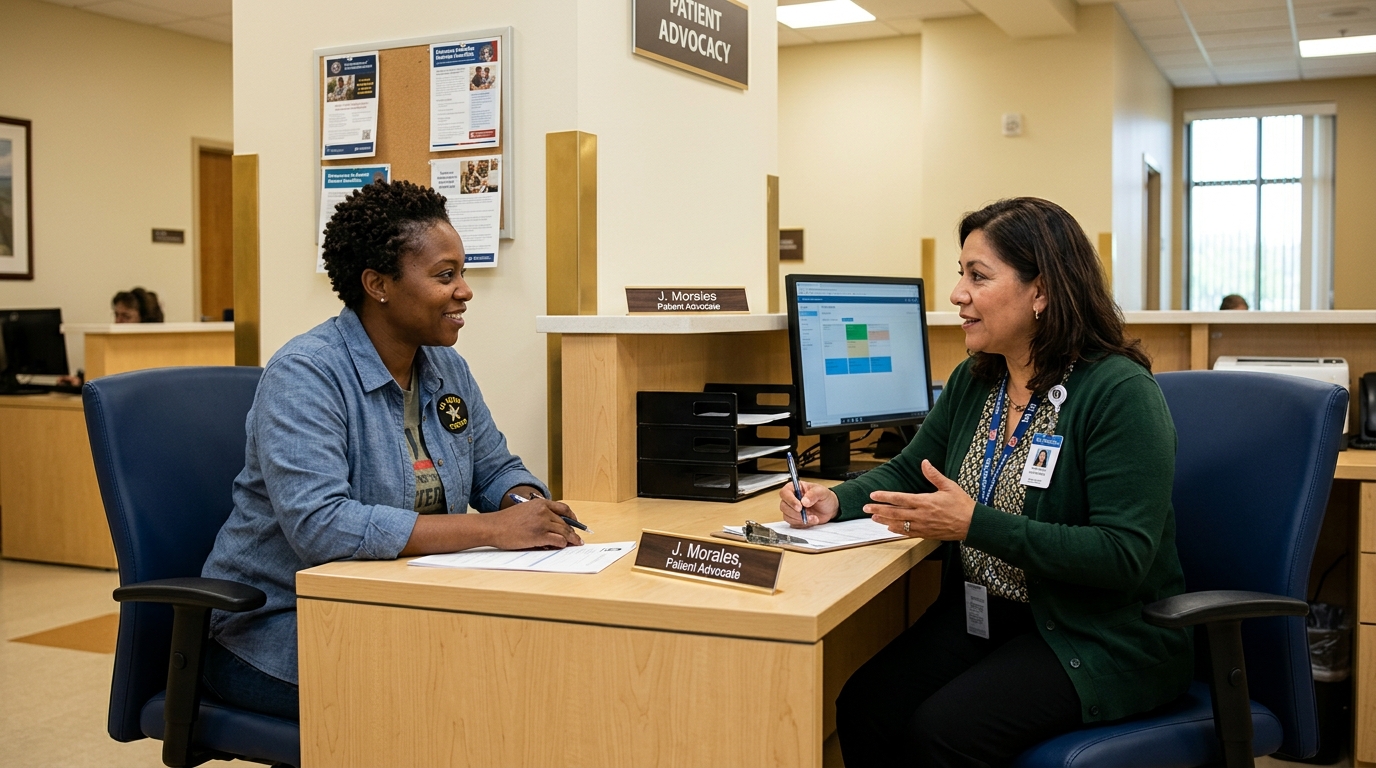
Women Veterans Program Manager (WVPM)
Every VA medical center has one, and she is your single most important contact. The WVPM is not a clerk — she is an internal advocate whose job is to make the system work for you. She coordinates your care across departments, resolves scheduling problems, ensures your facility meets women's health standards, and connects you to every service you qualify for but may not know about.
- Advocates for you across departments when care falls through the cracks
- Monitors women's health data — screening follow-ups, referral timing, wait times
- Coordinates with community-based outpatient clinics (CBOCs) to extend coverage closer to you
- Conducts outreach to women who are eligible but not enrolled
- Oversees the environment of care — from separate exam rooms to safety concerns
How to reach yours: Call your local VA medical center and ask for the Women Veterans Program Manager, or call the Women Veterans Call Center at 1-855-829-6636 and they will connect you.
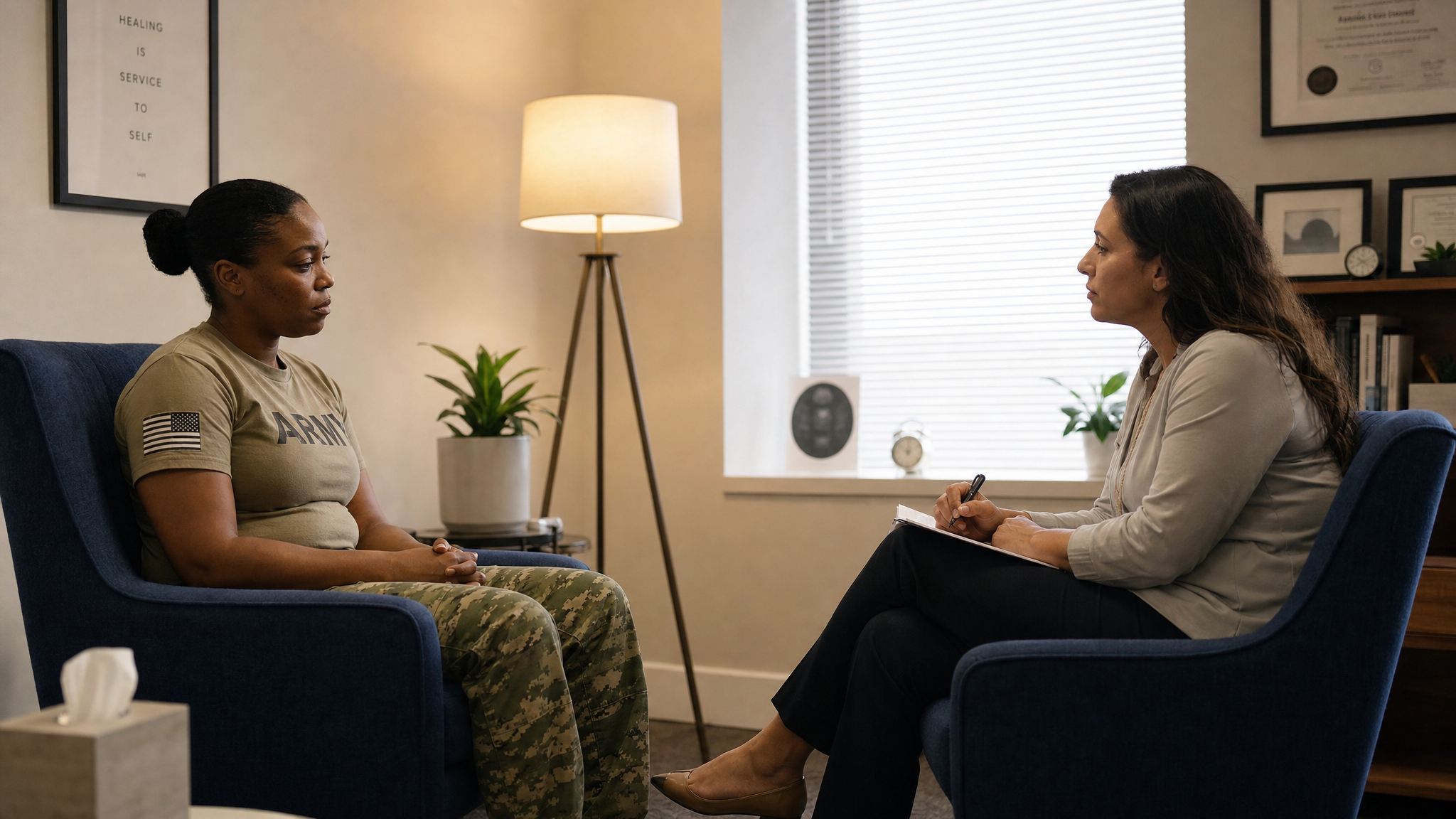
Women's Mental Health Champion
Every VA medical center also has a designated Women's Mental Health Champion — a clinician with specialized training in the mental-health conditions that affect women veterans differently. She is not a general therapist assigned to your case by default; she understands the intersection of trauma, service, gender, and healing in a way that generic providers often do not.
- Specialized training in women's mental health — PTSD, MST, perinatal mood disorders, and more
- Can connect you to women-only therapy groups and gender-specific programs
- Understands how military culture uniquely affects women's help-seeking behavior
- Coordinates with your WVPM and primary care team for integrated treatment
- Available for direct referral — ask your primary care provider or your WVPM
How to reach yours: Ask your primary care team or your WVPM for a referral, or call the Women Veterans Call Center.
There is also a Maternity Care Coordinator at every VA facility — a nurse or social worker who guides you from pregnancy through 12 months postpartum, coordinating prenatal care, delivery with a community provider, postpartum screening, and access to supplies like breast pumps and maternity belts. You do not have to find her — when you tell your provider you are pregnant, she comes to you. Full maternity care details
Everything the VA Covers for Women
This is not a vague list of department names — it is every service you are entitled to, with enough detail to know exactly what to ask for. The VA covers the full spectrum of women's health, and much of it is delivered by providers who have completed the VA's Women's Health Mini-Residency — dedicated training that over 11,500 VA clinicians have now completed.
Every card below ends with “Where to go next” — the phone number to call, the VA form to file, the official VA page to read, and our own deeper guide on the same subject. Items marked with the icon open an official government website (va.gov, womenshealth.va.gov, socialwork.va.gov) in a new tab, which means you will leave Women Veterans Claim Help. Items marked with an arrow stay right here on our site.
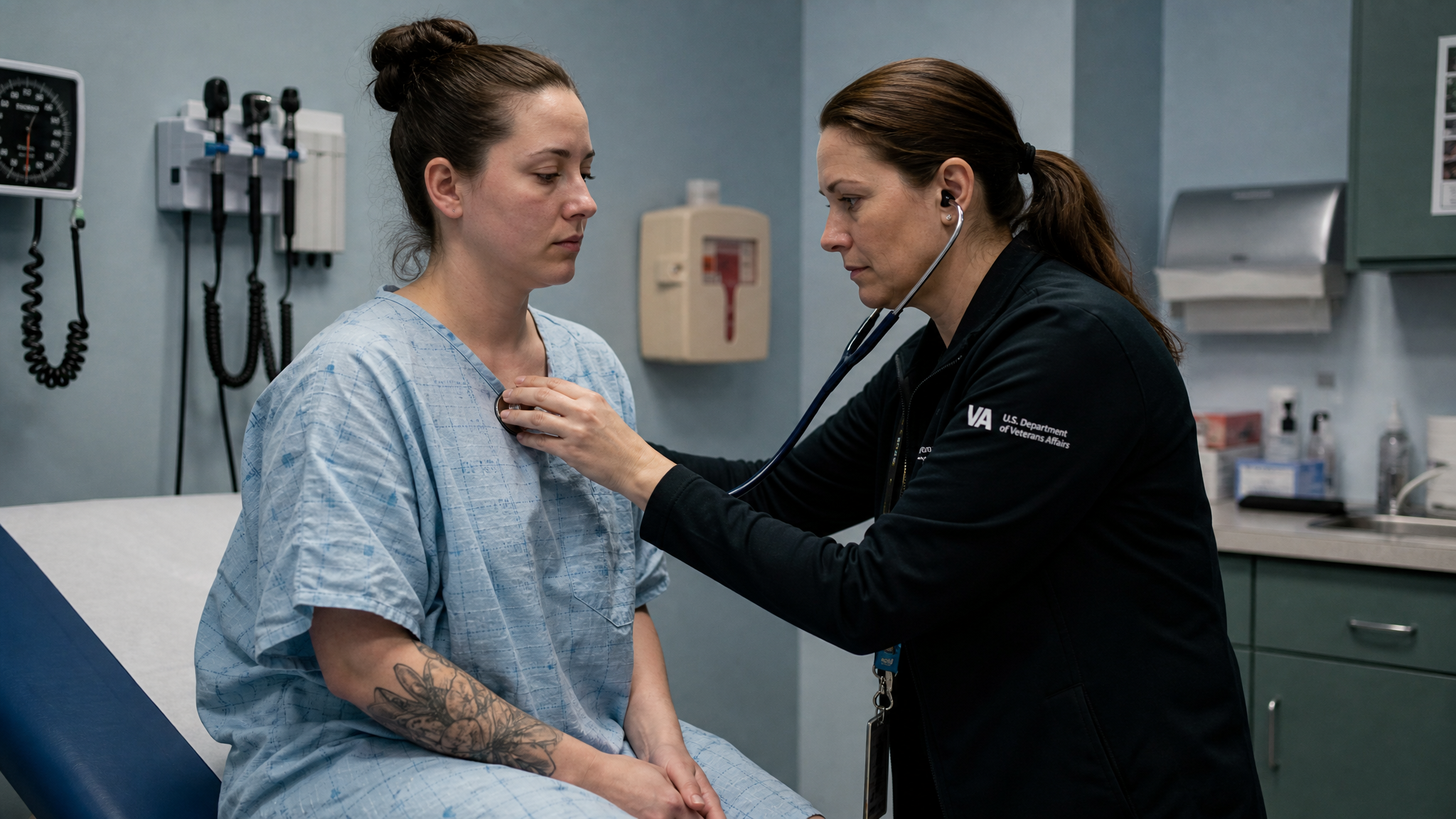
Primary & Preventive Care
Annual wellness visits & immunizations
Your foundation: a comprehensive yearly exam, age-appropriate vaccinations (flu, COVID-19, shingles, pneumonia), blood-pressure and cholesterol checks, diabetes and thyroid screening, and one-on-one healthy-lifestyle counseling. Regular visits catch problems while they are small, cheap, and easy to treat.
Breast cancer screening (mammograms)
The VA covers screening mammograms, diagnostic imaging, ultrasound, MRI when indicated, biopsy, and treatment. If your VA facility does not have on-site mammography, the VA arranges it in the community at no cost to you. The VA follows USPSTF guidelines: screening begins at age 40 for most women, earlier if your family or genetic history raises your risk. Talk to your provider about what schedule is right for you.
Cervical cancer screening (Pap & HPV)
Routine Pap tests and HPV co-testing detect cervical changes years before they become cancer. The VA follows current national guidelines: Pap every 3 years from age 21, or Pap + HPV co-testing every 5 years from 30 to 65. Abnormal results trigger colposcopy and treatment inside the VA or through community care at no cost.
Colorectal cancer screening
Colorectal cancer is one of the most preventable cancers when caught early. The VA covers screening starting at age 45 — or earlier with risk factors — via at-home stool test (FIT), flexible sigmoidoscopy, or colonoscopy. Certain GI cancers are also presumptive under the PACT Act for veterans with qualifying toxic exposure.
Lung cancer screening
For veterans with a 20+ pack-year smoking history or documented burn-pit / airborne-hazard exposure, low-dose CT screening catches lung cancer at its most treatable stage. Lung cancer and several respiratory cancers are presumptive under the PACT Act.
Nutrition counseling & chronic-disease management
One-on-one work with a VA dietitian for weight management, diabetes, heart health, or digestive conditions — available in person and via telehealth. Plus ongoing coordinated care for heart disease, high blood pressure, diabetes, and thyroid disorders so nothing falls through the cracks.

Reproductive & Sexual Health
All FDA-approved birth control — free
The VA covers every method at no cost: the pill, patch, ring, IUD (hormonal and copper), implant, shot, and emergency contraception, plus confidential counseling to match a method to your health and your goals. You never have to justify your choice.
Preconception & fertility care
Planning a pregnancy? The VA reviews your medications, manages existing conditions, and optimizes your health before you conceive. As of 2024, expanded IVF eligibility now includes single veterans and same-sex couples.
Maternity care (prenatal through postpartum)
The VA covers your full maternity journey — prenatal care, delivery through a community provider, and up to 12 months of postpartum care — with a dedicated Maternity Care Coordinator to guide you at every step.
Menopause management including HRT
Whether menopause arrives naturally or suddenly after surgery, the VA offers hormone replacement therapy, bone-health screening (DEXA), and care for hot flashes, sleep disruption, and mood changes.
STI screening & sexual health
Confidential screening, treatment, and ongoing care for all sexually transmitted infections, plus support for sexual health concerns including those connected to MST or service-related conditions.
Gynecological care & pelvic exams
Comprehensive care — routine exams, evaluation of abnormal bleeding or pain, management of infections and other conditions — delivered by providers with dedicated women's health training.

Mental Health & MST Care
PTSD evaluation & evidence-based treatment
Cognitive Processing Therapy (CPT), Prolonged Exposure (PE), and EMDR — the gold-standard treatments — plus medication when appropriate. You can request a female provider and care tailored to your experiences.
MST-related counseling — always free
Care for conditions related to military sexual trauma is free with no enrollment, no disability claim, no discharge-status requirement, and no requirement to have reported the trauma. Period.
Depression, anxiety & mood disorders
Individual therapy, medication management, and combined care for depression, anxiety, bipolar disorder, and adjustment disorders — available in person and via telehealth.
Substance use disorder treatment
Confidential, judgment-free treatment for alcohol and drug use — outpatient counseling, intensive outpatient, and residential programs — often addressed alongside trauma and mental health.
Individual, couples, family & group therapy
A full range of therapy formats, including groups specifically for women veterans, so you can heal in the setting that feels safest to you.
Residential & inpatient mental-health programs
For those who need intensive support, the VA offers residential and inpatient mental-health programs with separate, secure sleeping areas for women.
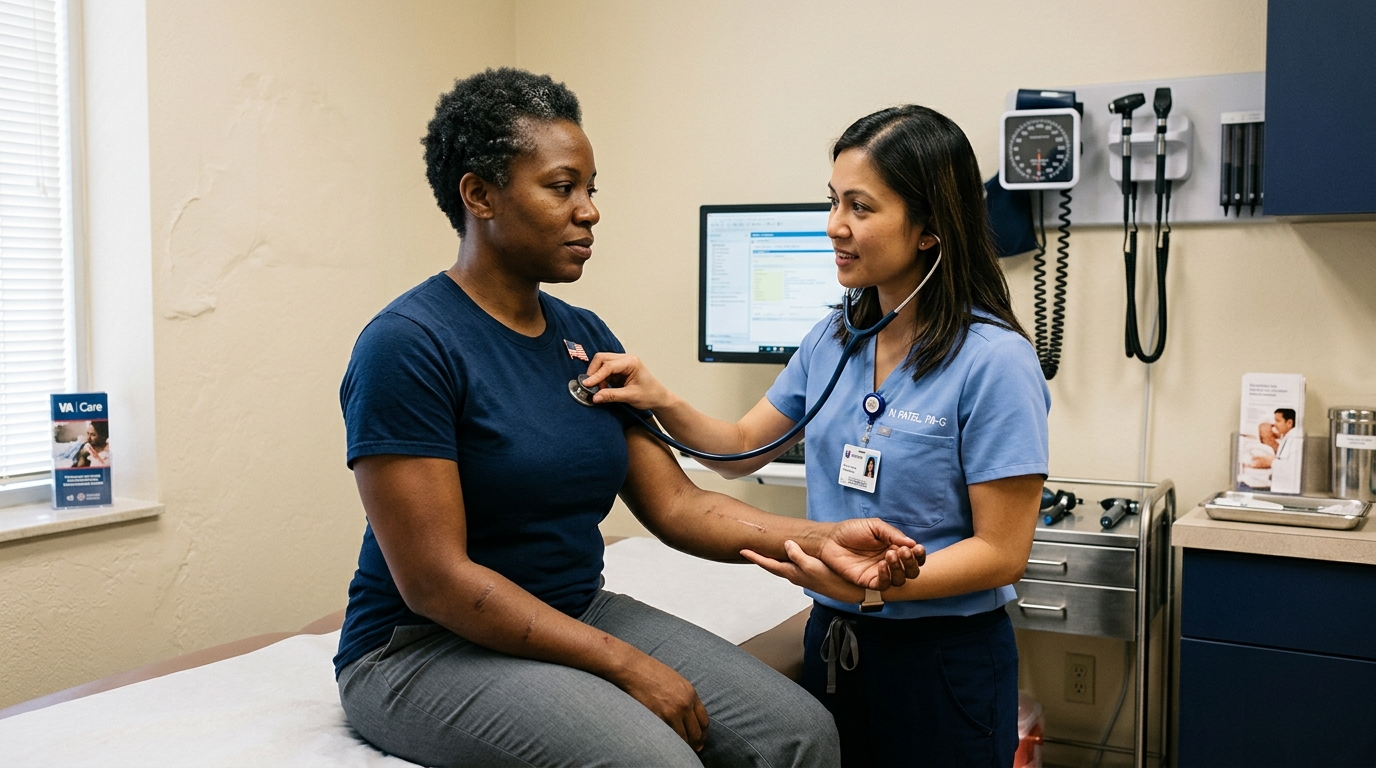
Specialty & Surgical Care
Orthopedics, PT & chiropractic
Treatment for the musculoskeletal injuries so common after service — back, knee, hip, and joint conditions — through orthopedic care, physical therapy, and chiropractic services. Many women veterans carry these from years of rucking, running, and deployment.
Pain management
A whole-person approach to chronic pain: medication, PT, acupuncture, chiropractic, biofeedback, and non-drug options so you can function and live fully — not just mask symptoms.
Endometriosis & uterine fibroids
Diagnosis and treatment with medication, hormone therapy, and surgery when needed. Endometriosis is a ratable disability (DC 7629, 10/30/50% based on symptom control), and fibroids and their complications can support a rating too.
Post-mastectomy care & prosthetics
After breast cancer surgery, the VA provides breast prostheses, mastectomy bras, and related supplies, plus reconstruction options and ongoing support — all free to you.
Hearing, vision & prosthetic/sensory aids
Hearing aids, eyeglasses, prosthetic limbs, and assistive devices supplied, fitted, and maintained by the VA at no cost.
Cardiology, neurology & other specialties
Full-spectrum specialty care: cardiology, neurology, dermatology, gastroenterology, rheumatology, urology, and more — in-house or through community care when the VA cannot meet wait-time or distance standards.
Whole Health — Beyond the Exam Room
The VA's Whole Health program shifts the focus from treating illness to supporting the life you actually want to live. It starts with your personal health goals — not a diagnosis — and integrates complementary therapies alongside your medical care.
- Yoga, tai chi, meditation, and mindfulness — evidence-based, VA-covered
- Acupuncture and Battlefield Acupuncture (auricular) for chronic pain
- Massage therapy and biofeedback
- Personalized health-goal planning with your care team
- The "Live Whole Health" app — free guided exercises from your phone

By the Numbers — Why This Matters
Women are the fastest-growing veteran population, and the gap between who qualifies and who actually walks through the door is enormous. These numbers come from VA enrollment data and peer-reviewed research — and every one of them means the same thing: the system is there, and it is getting better, but too many women still do not use what they have earned.
2.1M
women veterans in the U.S. — the fastest-growing veteran demographic, projected to reach 18% of all veterans by 2040
45%
of women veterans are enrolled in VA healthcare, compared to 50.5% of men — a gap that leaves hundreds of thousands without the care they earned
650K
women veterans used VA medical care in 2023 — 70% of those enrolled — meaning 30% enrolled but did not come in
46%
of women veterans have missed a medical appointment due to childcare — nearly half — the single most-cited barrier to care
1 in 4
women veterans report experiencing inappropriate or unwanted behavior at VA facilities — harassment that keeps them from coming back
11,500+
VA clinicians have completed the Women's Health Mini-Residency — dedicated training to provide gender-specific, evidence-based care
What these numbers really mean
If only 45% of women veterans are enrolled, more than a million women who served are not getting the healthcare they earned. Some do not know they qualify. Some were told they do not. Some walked into a VA facility once, were treated like they did not belong, and never went back. None of those reasons are good enough to give up what your service earned you — and every barrier on this list has a workaround we cover on this page.
The system is catching up — slowly
The VA has trained over 11,500 providers in women's health, mandated a Women Veterans Program Manager at every facility, expanded maternity coordination to 12 months postpartum, added IVF for more veterans, and launched a zero-tolerance harassment policy. It is far from perfect — but the infrastructure is there, and it is getting better. The women who use it are the ones who know about it.
Priority Groups — What They Mean and Why They Matter
When you enroll, the VA assigns you to one of eight priority groups. Your group determines how quickly you are seen, whether you pay copays, and which services are free. Higher priority = more access and lower cost. Here is the full breakdown — so you know exactly where you stand and what you owe.
50%+ service-connected disability, or unemployable due to service-connected conditions, or Medal of Honor recipients
No copays for any VA care
30–40% service-connected disability
No copays for any VA care
10–20% service-connected disability, former POWs, Purple Heart recipients, veterans discharged for a service-connected disability
No copays for any VA care
Veterans receiving Aid & Attendance or Housebound benefits, or determined catastrophically disabled
No copays for any VA care
Veterans with a 0% (non-compensable) service-connected rating, those receiving VA pension, or income below the national means-test threshold
No copays for most care
PACT Act toxic-exposure veterans, combat veterans within their 10-year enhanced eligibility window, Camp Lejeune / Project 112/SHAD veterans
No copays for care related to qualifying exposure or combat service
Income above the VA national threshold but below the geographic threshold, who agree to pay copays
~$15 primary care, ~$50 specialty care per visit
Income above the geographic threshold, who agree to pay copays
~$15 primary care, ~$50 specialty care per visit
Care that is ALWAYS free — regardless of priority group
- Any care related to a VA-rated service-connected disability
- MST-related counseling and treatment — no enrollment required
- Emergency suicidal-crisis care under the COMPACT Act
- Vet Center counseling — no enrollment, no medical record at a VA hospital
Medication copays — there is a cap
Veterans in Groups 1–5 generally pay nothing for medications. Groups 7–8 pay tiered copays (Tier 0 = $0, up to Tier 3), but there is an annual cap of approximately $700 — once you hit it, prescriptions are free for the rest of the year. Service-connected medications are always free regardless of group. The first three urgent-care visits per year are also free for Groups 1–5.
Telehealth — When You Can't Get There
46% of women veterans have missed a medical appointment because of childcare. Others live hours from the nearest VA. Telehealth does not solve every problem, but it removes the two biggest barriers — travel and childcare — for most routine care.
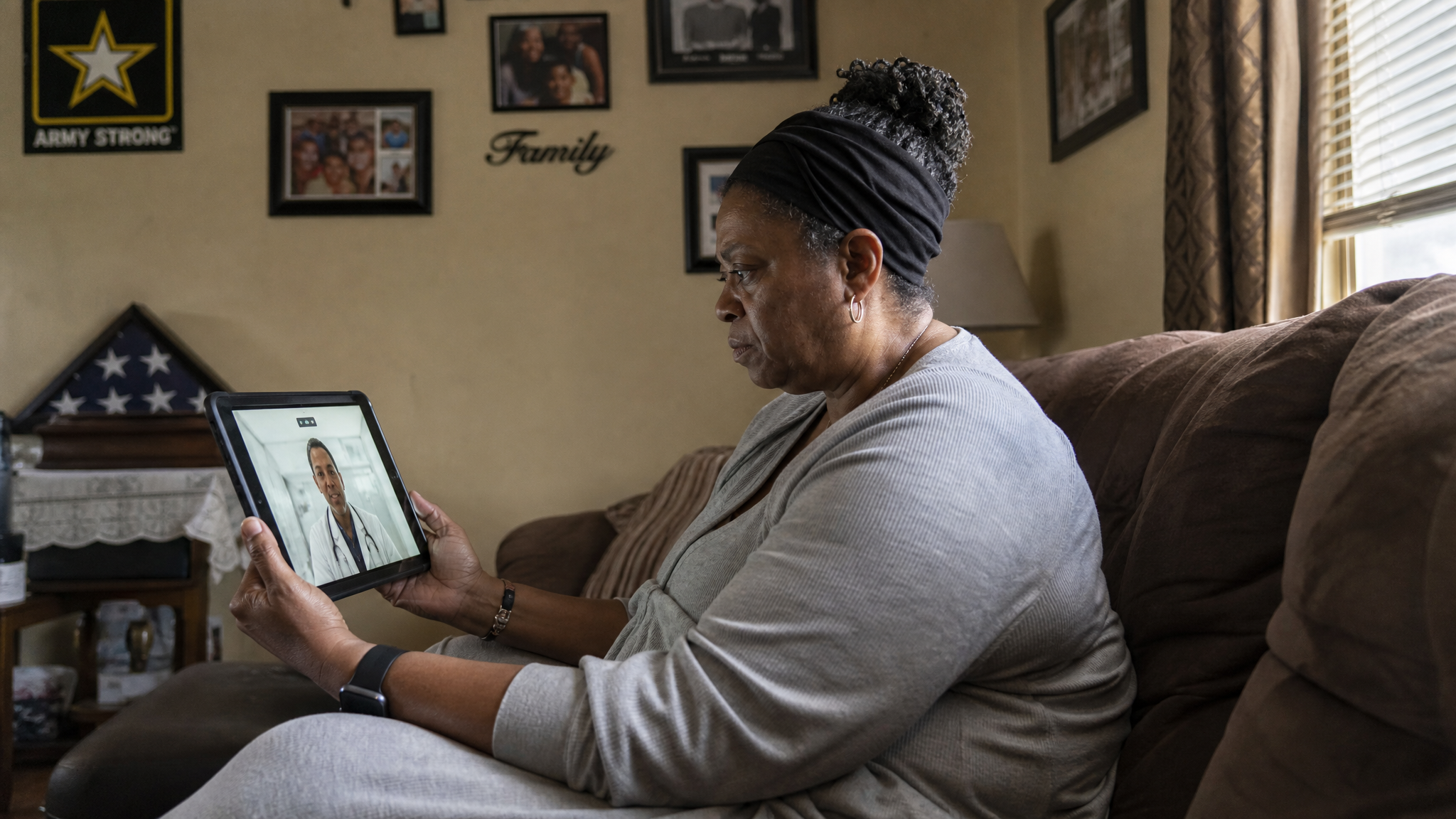
VA Video Connect
VA Video Connect is the VA's secure video platform — it works on your phone, tablet, or computer. You see your actual VA provider face-to-face, from your couch, your car, or wherever you have privacy. It is available for primary care, mental health, specialty care, nutrition, and most follow-up visits.
- Schedule through My HealtheVet or ask your care team directly
- AT&T, T-Mobile, and Verizon waive data charges for VA Video Connect — it does not count against your plan
- Same quality of care, same provider relationship, no travel time

ATLAS — If You Live Far From a VA
ATLAS (Accessing Telehealth through Local Area Stations) puts private, equipped telehealth rooms in American Legion posts, VFW halls, Walmart locations, and university campuses near rural veterans. You walk into a comfortable, private room with a screen and camera already set up, and your VA provider is on the other end. No home internet required, no driving three hours to the VA.
No tablet? No internet? The VA will lend you one.
Through the Digital Divide Consult, the VA can loan you a tablet (usually an iPad) at no cost — with internet connectivity included. Ask your provider for a Digital Divide Consult, and a social worker will assess your needs. The only requirement: use it for a video appointment at least once every 90 days. The VA also provides 24/7 tech support for loaned devices.
Take Control of Your Own Care Online
Once you are enrolled, you do not have to wait on hold to manage your health care. My HealtheVet — now built into VA.gov — lets you message your actual provider, refill prescriptions, read your own lab results, download your complete medical record, manage appointments, and file for travel pay. It is free, it is yours, and almost every woman veteran we talk to is using a fraction of what it can do.
There is a second reason to use it that has nothing to do with convenience. Everything in there is evidence. Your lab results, your medication history, the message where you told your provider the pain was getting worse — that is the paper trail a disability claim lives or dies on. Veterans who read their own records catch errors, spot missing diagnoses, and file stronger claims.
First: how you sign in changed
If you had an old My HealtheVet user ID, it no longer works — the VA retired those sign-ins on March 5, 2025, and retired DS Logon on November 18, 2025. Every VA site and app now uses a Login.gov or ID.me account with two-step verification. You create one free, verify your identity once, and it then works across VA.gov, My HealtheVet, and the mobile app. If you get stuck on the sign-in itself, the VA help desk cannot reset a Login.gov or ID.me password — you have to use their help centers. But for everything else inside the portal, the My HealtheVet help desk can walk you through it, and every VA medical center has an MHV Coordinator whose whole job is helping veterans get set up in person.

Secure messaging with your own care team
Secure messaging lets you write directly to your VA primary care provider, your women’s health provider, your mental health team, your pharmacy — whoever you are already assigned to. Not a call center. The actual team. You can ask a question about a medication, report a symptom that is not an emergency, ask for a referral, or follow up on something you forgot to bring up in the appointment. The VA’s own standard is a reply within three business days, and every message stays in your record, which means it also becomes documentation you can point to later.
- You must be enrolled in VA health care and registered at a VA facility, and your provider has to have messaging turned on — ask at your next visit if you do not see them listed
- Never use messaging for an emergency or a crisis — call 911 or the Veterans Crisis Line at 988, press 1
- Attach photos or documents to a message when it helps your provider see what you are describing

Prescriptions — refill, track, and stop running out
You can refill VA prescriptions, see how many refills you have left, track a shipment in the mail, and look back at what you have been prescribed over the years. If a refill is not available, the same screen tells you why — expired prescription, needs a provider review, needs an appointment — so you know exactly what to fix instead of guessing. You can also order hearing aid batteries and prosthetic supplies without calling anyone.
- Refill early — mail delivery takes days, and a lapse in a psychiatric or pain medication is not a small thing
- Your full medication history is a claims document too: it shows what you were treated for and for how long
- Pharmacy questions can go through secure messaging to your VA pharmacy directly

Your medical records, labs, and test results
This is the part most veterans never use, and it is the part that matters most for a claim. You can view lab and test results, care summaries, allergies, immunizations, and your VA appointment and admission history — and you can download the whole thing as a single report to save, print, or hand to a private doctor or a representative. You can also enter your own information: symptoms, blood pressure readings, a pain journal, over-the-counter medications the VA does not know about.
- Download your records before you file a disability claim — you cannot argue about a rating you have not read the evidence for
- Self-entered symptom and pain logs create a dated record of how a condition actually affects you day to day
- You can share your VA record with a non-VA provider so you are not repeating your history from memory

Appointments, travel pay, and the mobile app
You can see every upcoming VA appointment, cancel one, request a new one at many facilities, and review appointments you have already had. If you drove to that appointment, you can file for travel reimbursement online instead of standing in line at the travel office. The free VA Health and Benefits app puts the same tools on your phone — messages, prescriptions, appointments, claim status, and your VA letters — with sign-in by face or fingerprint.
- File travel pay within 30 days of the appointment — late claims get denied for being late, not for being wrong
- The app also shows disability claim and appeal status, so you are not calling to ask where things stand
- Download the VA Health and Benefits app free from the Apple App Store or Google Play
Do these four things this week
You do not have to learn the whole portal at once. In about an hour you can go from locked out to fully connected.
Secure messaging is for non-urgent questions only, and the VA asks for up to three business days to reply. If you are in crisis, call the Veterans Crisis Line at 988 and press 1, or go to the nearest emergency room.
Sign in and set up — official VA pages
Everything above is explained here on this page. These links are the actual VA doors you walk through to do it — each one opens on va.gov, off Women Veterans Claim Help.
My HealtheVet on VA.gov
Messages, prescriptions, records, appointments — the portal itself
Create a Login.gov or ID.me account
The VA's own guide to the new sign-in and identity verification
VA Health and Benefits mobile app
The free official app for iPhone and Android
File a travel reimbursement claim online
Beneficiary travel pay — file within 30 days of the appointment
Community Care — When You Can See a Non-VA Doctor
Under the MISSION Act, you are not locked into VA facilities. When the VA cannot meet certain standards, it is required to send you to a community provider — at no extra cost to you. Here are the six triggers, so you know exactly when you have the right to go outside the VA.
The VA does not offer the service
Maternity delivery care is the most common example — the VA coordinates it, but delivery happens with a community OB/GYN.
Wait time exceeds standards
If the VA cannot schedule you within 20 days for primary care / mental health, or 28 days for specialty care, you can go to a community provider.
Drive time exceeds standards
If your average drive exceeds 30 minutes for primary care / mental health, or 60 minutes for specialty care.
Your provider agrees it is in your best medical interest
Your VA provider and you agree that community care serves you better for a specific service or situation.
The VA facility does not meet quality standards for a service
If the VA determines its own quality benchmark is not met for a particular service line at your facility.
You qualified under the old Veterans Choice Program
If you qualified under the 40-mile rule as of June 6, 2018, and still live in a qualifying location.
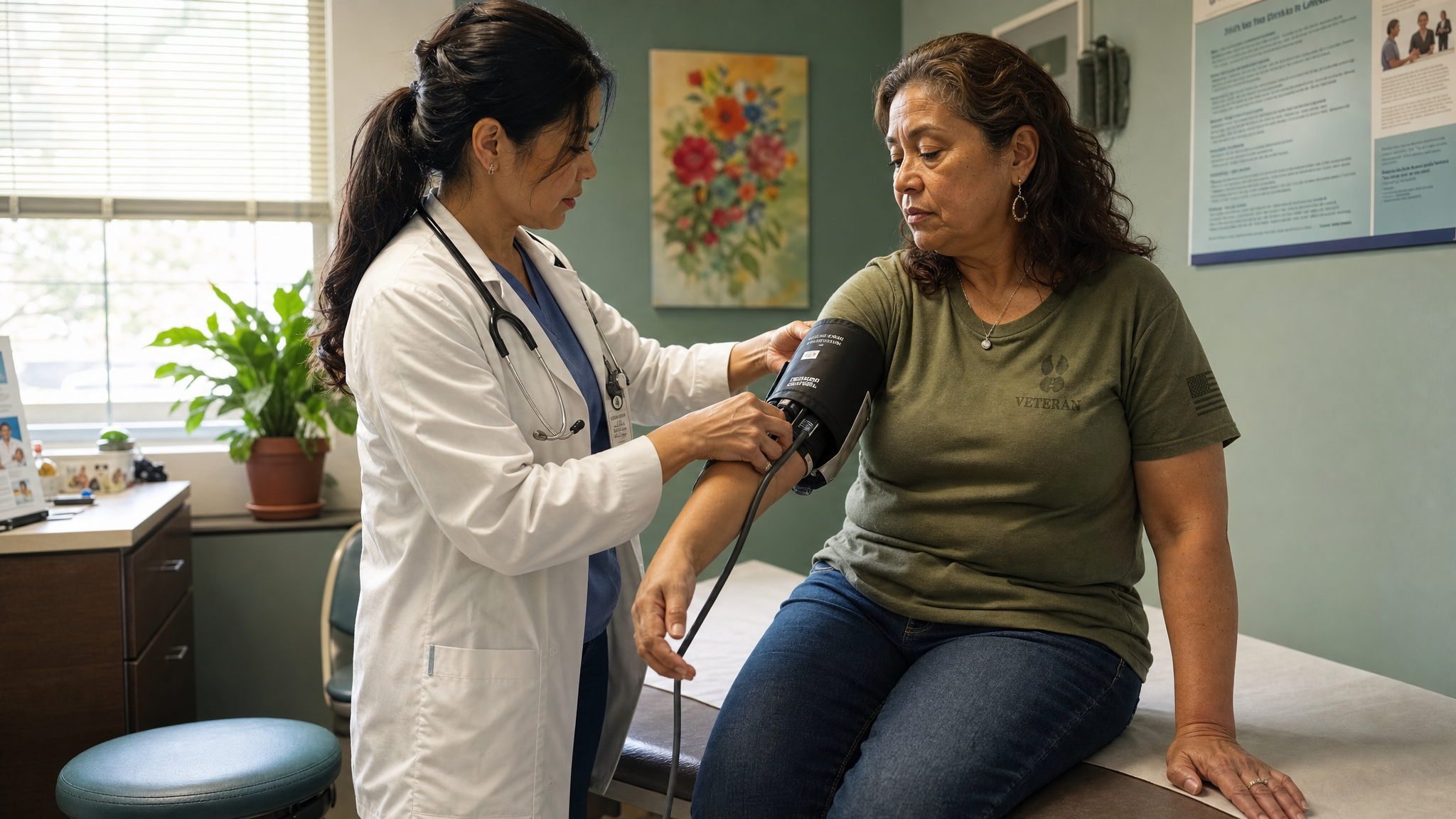
How the referral works
Your VA provider initiates the referral. Under the Senator Elizabeth Dole 21st Century Veterans Healthcare and Benefits Improvement Act, the old secondary administrative review has been eliminated — when your VA doctor says community care is needed, that clinical decision now stands without an extra bureaucratic hurdle. The VA or a third-party administrator schedules your community appointment, and your records flow back to the VA for continuity. If a community-care request is denied, you have the right to a Clinical Appeal.
Your Safety at the VA — What Has Changed
One in four women veterans has experienced inappropriate behavior at a VA facility. That number is why some women walk in once and never come back. The VA knows this, and here is what has been done about it — and what you can do if it happens to you.
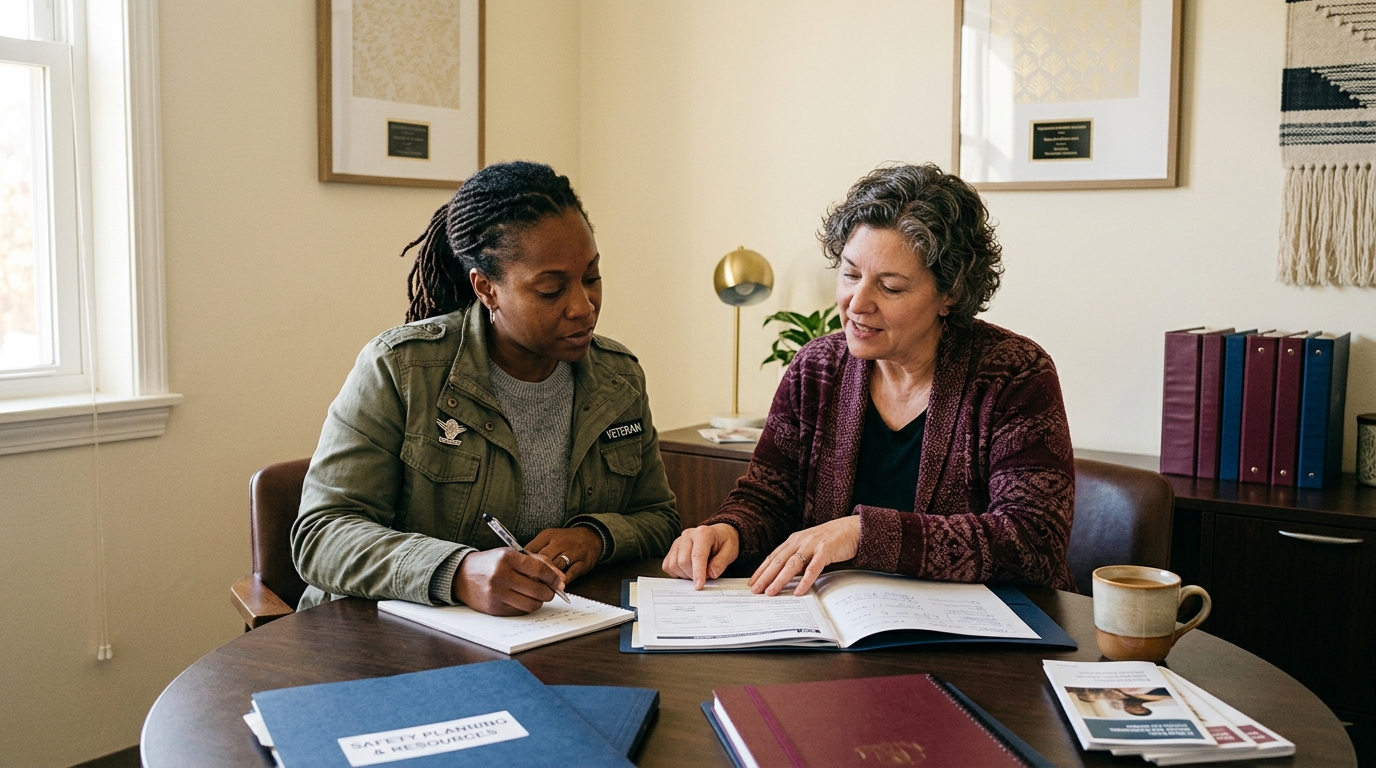
Zero-tolerance policy
The VA maintains a strict zero-tolerance policy for harassment — verbal, physical, or nonverbal — from anyone on VA property: other veterans, staff, or visitors. This is posted at every facility, and VA police have authority to act on it.
Gender-specific clinics & environments
The VA has expanded women's health clinics with separate waiting areas, private exam rooms, and women-only group therapy spaces. Many facilities now have dedicated Women's Health Centers, physically separated from general waiting areas. 83% of women veterans now report feeling safe and comfortable at VA facilities — up significantly, but still not 100%.
If it happens to you
Report it to VA police on-site, your Patient Advocate, or your WVPM. You can also call the Women Veterans Call Center at 1-855-829-6636. Do not let someone else's behavior be the reason you stop getting the care you earned.
Emergency Care — The COMPACT Act
If you are in an acute suicidal crisis, you can walk into any emergency room in the country — VA or not — and the VA will pay for it. You do not need to be enrolled, you do not need a service-connected rating, and you do not need prior authorization. This is federal law, not a courtesy: the COMPACT Act requires the VA to cover up to 30 days of inpatient or 90 days of outpatient emergency suicide-care at any facility, and it bars the VA and the hospital from billing you a copay for it. It covers veterans with any discharge other than dishonorable, including people the VA has previously turned away. The one thing that helps is notification — the facility (or you, or anyone with you) should tell the VA within 72 hours so the billing is routed correctly, but missing that window does not make you liable for the bill. Go first. Sort the paperwork after.
What the COMPACT Act covers
- Emergency room treatment and crisis stabilization
- Transportation to the ER
- Up to 30 days of inpatient or crisis residential care
- Up to 90 days of outpatient care following the crisis
Who qualifies (no enrollment required)
- Veterans who served 24+ months of active duty, discharged under conditions other than dishonorable
- Veterans who served 100+ days in combat or contingency operations
- Veterans who were victims of sexual assault, battery, or harassment during service (MST)

If you get a bill for COMPACT Act care
Notify the VA within 72 hours of the visit by calling the Emergency Care Reporting line at 844-724-7842. If you receive a bill that should have been covered, contact your local VA Patient Advocate or call 877-881-7618 to request a clinical review.
VA Healthcare for Women Veterans
Clear, trustworthy explainers on how VA healthcare works for women — enrollment, what the women’s health clinic actually provides, and what to expect at your first appointment. These are worth twenty minutes because they teach you the VA’s own vocabulary: priority group, Women’s Health Primary Care Provider, community care referral, copay tier. When you can use those words on the phone, the person on the other end routes you correctly the first time instead of handing you off. Nothing here replaces the detail on this page — it reinforces it. Watch whenever you're ready, on your own time, with nobody looking over your shoulder.
VA Healthcare for Women Veterans — Your Benefits Explained
An overview of the healthcare services, enrollment process, and dedicated women's health resources available to women veterans through the VA.
How to Enroll in VA Healthcare — Step by Step
A practical walkthrough of how to enroll in VA healthcare, what documents you need, and what to expect after you apply.
These videos are shared for general education from third-party creators. They are not legal advice, and watching them is never required to get help.
Healthcare Resources — Save These
Every one of these is free and confidential, and none of them require you to be enrolled, rated, or “in the system” before you call. Tap any card to take action right now — phone numbers dial straight from your phone. The Women Veterans Call Center is staffed entirely by women and is the right first call when you do not know which office you need; they will find your local Women Veterans Program Manager for you. The Veterans Crisis Line answers 24/7/365 by phone, text, or chat, and you never have to be suicidal to use it. Vet Centers keep records separate from your VA medical file, which matters if privacy is the thing holding you back. Save this list on your phone now, while you are calm — the moment you actually need it is the worst moment to go looking for it, and pass it to a fellow veteran who is not going to ask for it herself.
Official VA Forms, Applications & Program Pages
Everything you need to read is already on this page — these are the official government sources in addition, so you can file the form or verify anything yourself. Each one opens in a new tab and takes you off Women Veterans Claim Help.
Apply for VA health care online
The official VA.gov application — start, save, and submit
VA Form 10-10EZ
Application for Health Benefits — download or complete online
VA Form 10-10EZR
Health Benefits Update Form — if you are already enrolled
VA Form 10-10CG
Family Caregiver Program application (PCAFC)
VA Office of Women's Health
The national program office for women veterans’ health care
Women Veterans Program Manager locator
Find the WVPM assigned to your VA facility by name
VA facility locator
Find VA medical centers, clinics, and Vet Centers near you
My HealtheVet
Schedule appointments, message your team, refill prescriptions
VA Community Care
Eligibility and referral rules for seeing a non-VA provider
VA Telehealth Services
VA Video Connect, ATLAS sites, and remote care options
Beyond MST app
Free, private self-help app — no account or login required
Intimate Partner Violence Assistance Program
VA support if you are experiencing relationship violence
You Earned This Care. Use It.
Whatever kept you from the VA before — a bad experience, a bad story from someone else, a feeling that it was not built for you — the door is open and the people on the other side of it are trained for you now. Enroll, meet your WVPM, and start using what your service earned.
Questions Women Ask About VA Health Care
Straight answers about eligibility, women’s health providers, and getting care close to home. A free review can also tell you whether your conditions could support a disability claim.
Am I eligible for VA health care as a woman veteran?
Most veterans who served on active duty and did not receive a dishonorable discharge are eligible to enroll in VA health care. Eligibility and any copays depend on your priority group, which is based on things like service-connected disabilities, income, and special circumstances such as MST or toxic exposure. Many women veterans qualify for care at little or no cost — and enrolling does not cost you anything.
Does the VA actually have providers who understand women’s health?
Yes. Every VA medical center has a Women Veterans Program Manager and designated Women’s Health Primary Care Providers trained in the care women need — from routine primary care to gynecology, maternity coordination, and mental health. If you have not been connected to one, the Women Veterans Call Center (1-855-829-6636) can help you find women’s health services near you.
Is care related to military sexual trauma free?
Yes. Under 38 U.S.C. §1720D, care for conditions related to MST is free, regardless of whether you have a disability rating or how long ago it happened — and in many cases you do not need to be fully enrolled to receive it.
Can I get care closer to home instead of driving to a VA hospital?
Often, yes. Through VA Community Care, you may be able to see an approved local provider when the VA cannot offer timely or reasonably close care. Ask your VA care team or the Women Veterans Call Center whether you qualify for community care for a specific need.
What if I have an other-than-honorable discharge?
You may still be eligible for some VA health care, especially MST-related care, and a character-of-discharge review or discharge upgrade can sometimes open the door to more. It is worth asking rather than assuming you are shut out.
How do I get started or ask a benefits question?
Call or text the Women Veterans Call Center at 1-855-829-6636 for help with enrollment, eligibility, and appointments. If you want someone to look at whether your health conditions could also support a disability claim, an accredited claims agent can review your situation for free.
Still have a question about your own situation?