
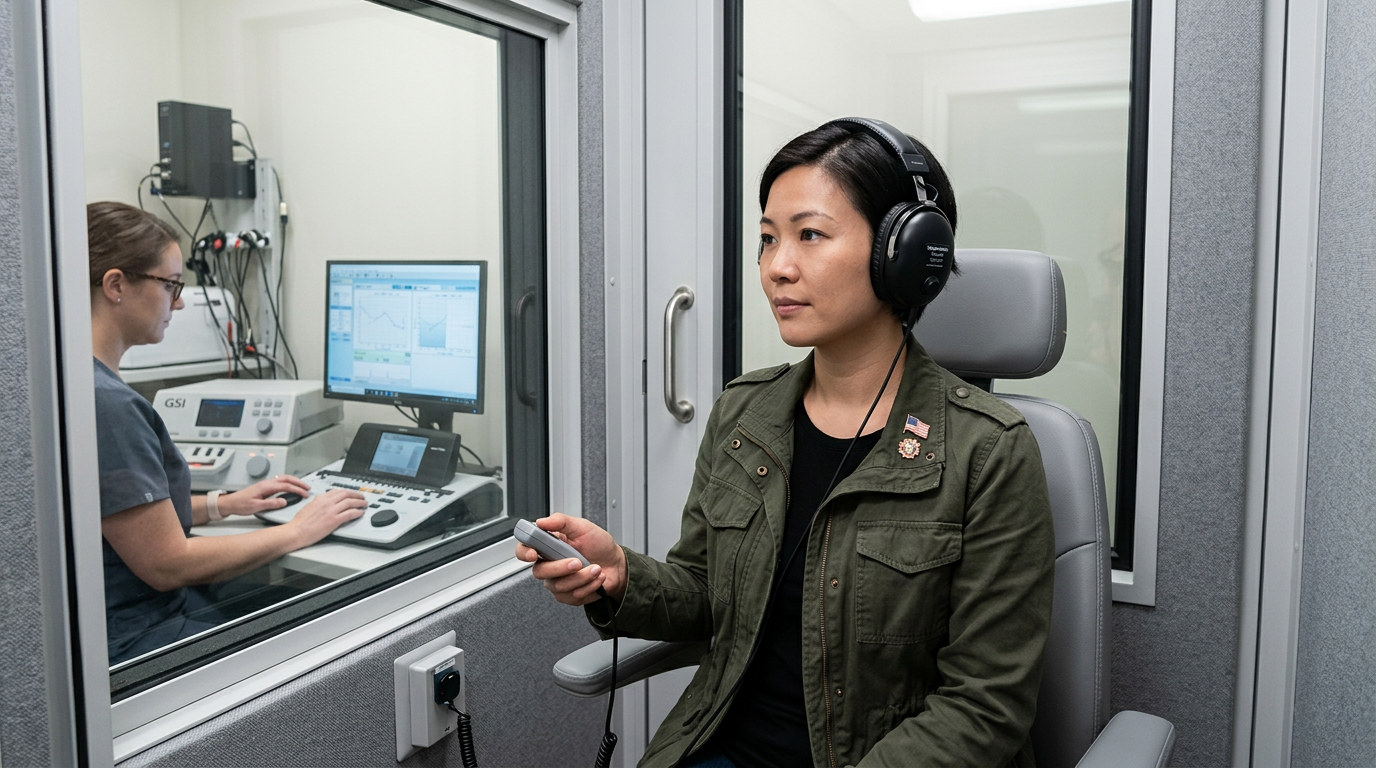
Hearing Loss & Tinnitus
Ringing in the ears (tinnitus) and hearing loss are among the most common service-connected conditions of all — and they are not a male, combat-only issue. Flight lines, firing ranges, motor pools, generators and machinery all cause the noise damage behind them, and any service member exposed to hazardous noise qualifies, regardless of job title.
Everything is on this page, in plain English: what these conditions are, why women skip the claim, what in your service causes them, exactly what each is worth, how the VA underrates them, and how to build a claim that holds up.
What These Conditions Really Are
Tinnitus is the perception of sound — ringing, buzzing, hissing or roaring — with no external source. Hearing loss is a measurable drop in what you can hear, tested with an audiogram. Both usually come from the same thing: hazardous noise destroying the hair cells of the inner ear, which do not regenerate. Once they are gone, they are gone.
The fact that decides your claim is in-service noise exposure. You do not need a combat role — you need a credible history of hazardous noise (your MOS, your duty stations, buddy statements) and a diagnosis. Tinnitus in particular is granted on your own competent report of the ringing; you are the one person who can attest that you hear it.
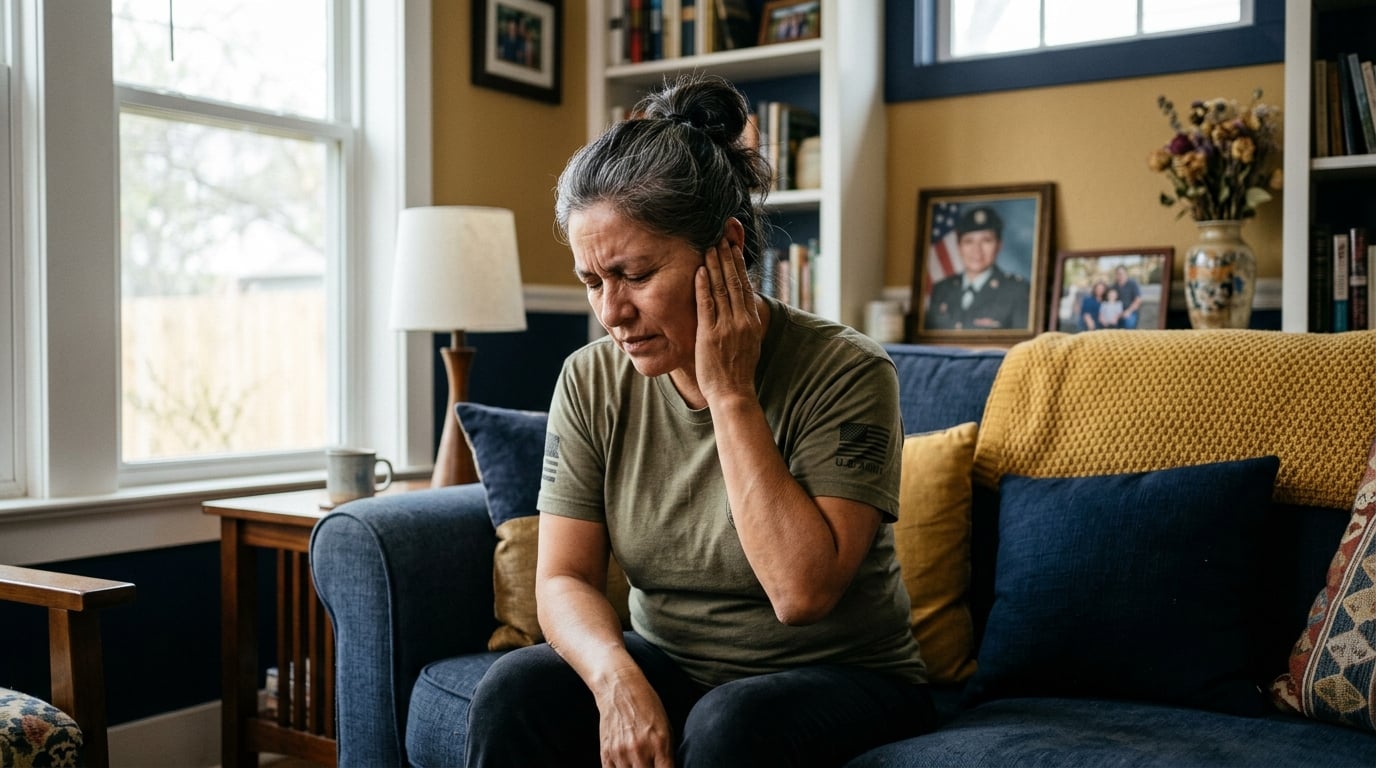
“Hazardous noise exposure” — not job title — is what qualifies you
What it means
A credible history of exposure to loud noise in service — ranges, aircraft, vehicles, generators, machinery, blasts. Combat is not required; exposure is.
What the VA measures
Tinnitus is a flat 10%. Hearing loss is scored from your audiogram and the Maryland CNC speech test, from 0% up to 100%.
Why women skip it
It is wrongly seen as a “male, combat” issue, so women in every specialty never file — even after years on flight lines and in motor pools. It qualifies regardless of job title.
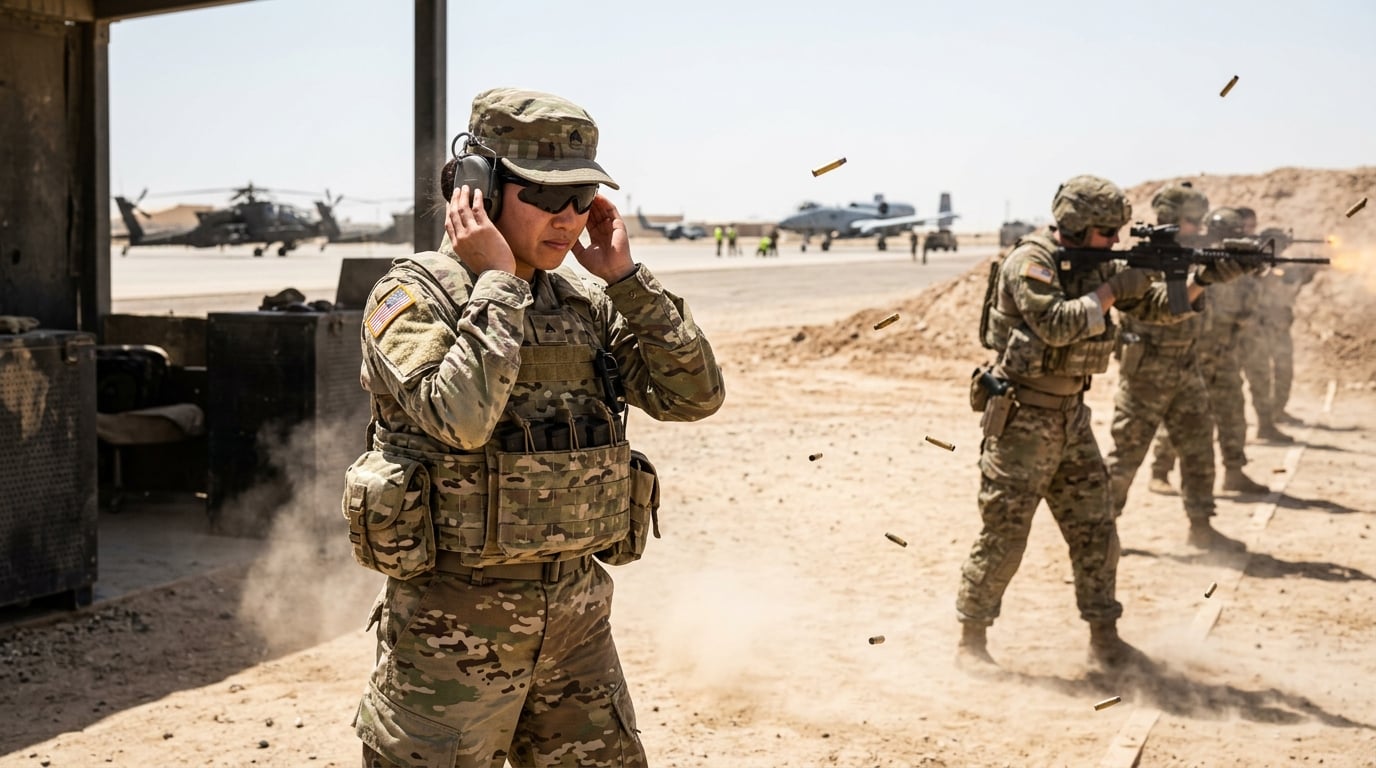
Why women skip a claim they have clearly earned
Because hearing damage is imagined as an infantryman’s injury, women who spent years around aircraft, ranges, vehicles and machinery talk themselves out of filing — “that wasn’t really my job” — even as the ringing never stops. The noise did not check anyone’s MOS.
There is a second, quieter factor: hearing protection was largely designed and issued around a male fit. On many women it sealed poorly, so even when it was worn correctly it delivered less protection than it was supposed to. That means women often took more noise damage than the gear on paper would suggest — and it is exactly the kind of detail that strengthens a claim once it is named.
By the Numbers
These figures come from the VA’s own reporting and its rating schedule. Tinnitus is the single most commonly service-connected disability in the entire VA system, and hearing loss is close behind — and yet women veterans file for both at markedly lower rates than men, largely because nobody ever told them that flight lines, motor pools, weapons qualification, generators, aircraft, and shipboard engineering spaces all count as hazardous noise exposure regardless of your MOS or rating. You do not need a documented hearing complaint in your service record to win. You do not need to have failed a hearing test on active duty. What you need is a current diagnosis, a credible history of noise exposure, and a medical opinion connecting the two. If you have lived with ringing for years and quietly assumed it was not “claimable” — or that it was too small to bother with — read these numbers slowly, then look at what tinnitus alone pays every month for the rest of your life.
#1
tinnitus is consistently the single most commonly granted service-connected disability in the entire VA system
10%
the flat rating for tinnitus — the same whether it affects one ear or both, and one of the easiest to establish
Every MOS
noise exposure happens across every specialty — ranges, flight lines, motor pools, ships — not just combat arms
0–100%
the range for hearing loss under DC 6100, scored from your audiogram and the Maryland CNC speech test
Instant
a single blast can cause permanent tinnitus and hearing loss in a fraction of a second
No deadline
there is no time limit to file — noise damage from decades ago is still claimable today
What in Your Service Causes It
These are the recognized sources of hazardous noise the VA connects to hearing loss and tinnitus. You only need one credible source in your history — and most veterans have several. The VA maintains a Duty MOS Noise Exposure Listing that assigns a probability of hazardous noise to military occupations, and if your job sits in the high or moderate category, exposure is generally conceded without argument. But that listing is not the end of the analysis, and this is where women veterans get shortchanged: your daily duty station is not the only place you were exposed. Annual weapons qualification, deployment convoys, being billeted next to a flight line, working aircraft or vehicle maintenance, shipboard engineering, and range details all count even if they were not in your job description. Under 38 CFR §3.159 the VA has a duty to help develop this history, but they will not go hunting for the detail you never mentioned. Find your source in this list, then state it plainly in your claim in your own words.
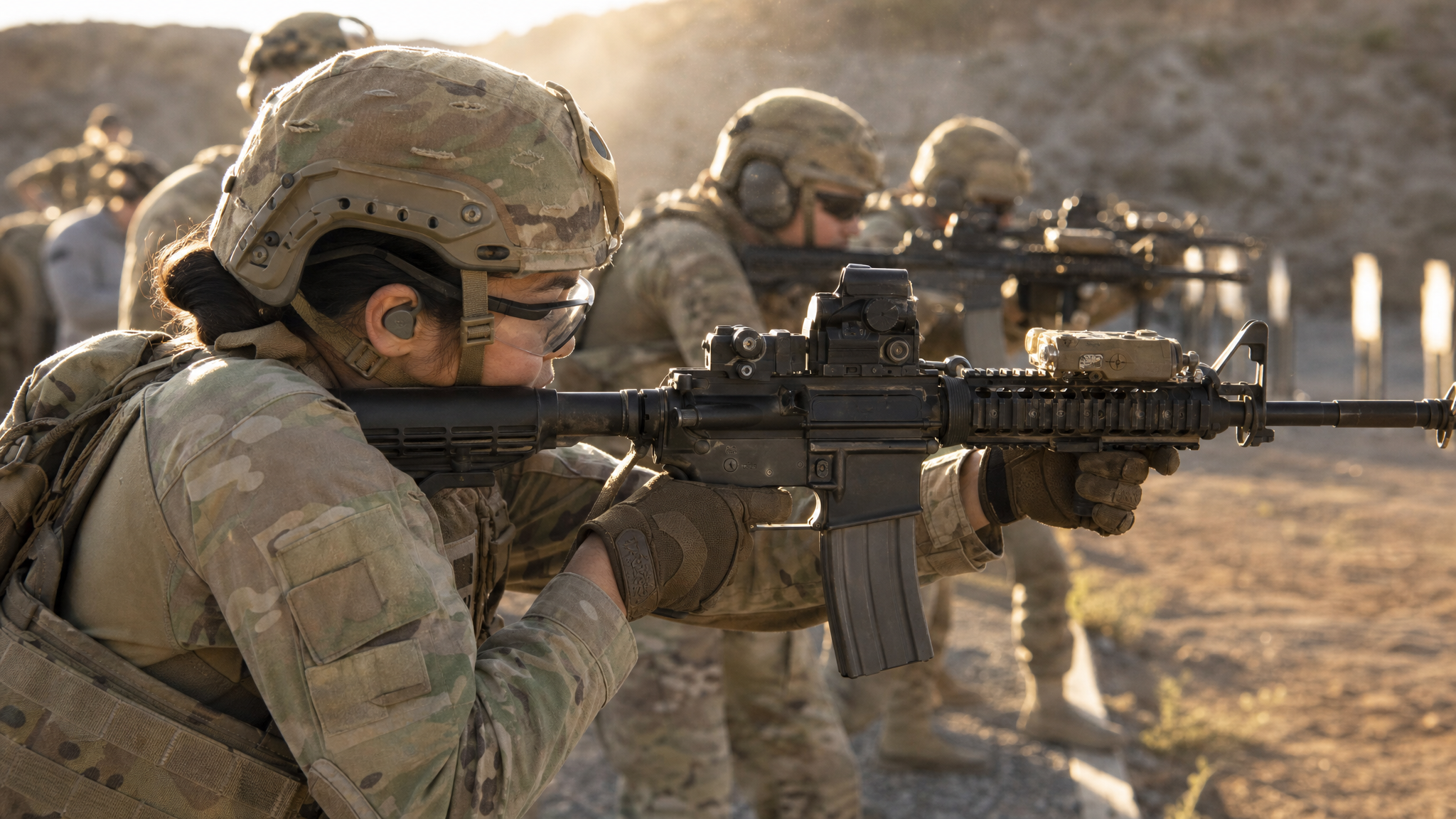
Weapons & aircraft noise
Firing ranges, artillery, flight lines and aircraft engines produce noise well above safe limits — loud enough to damage the delicate hair cells of the inner ear that never grow back. This is the single most common origin of service-connected hearing loss and tinnitus, and it is not limited to combat jobs.

Vehicles, generators & machinery
Armored and tactical vehicles, generators, motor pools and shipboard machinery expose service members in every specialty to constant hazardous noise for hours a day. The damage is cumulative — a career spent near running equipment adds up even without a single dramatic blast.

Blast exposure
Explosions and blast overpressure damage hearing instantly — they are a leading cause of both sudden tinnitus and permanent hearing loss, and they frequently accompany a TBI. A single close blast can leave a lifelong ringing.
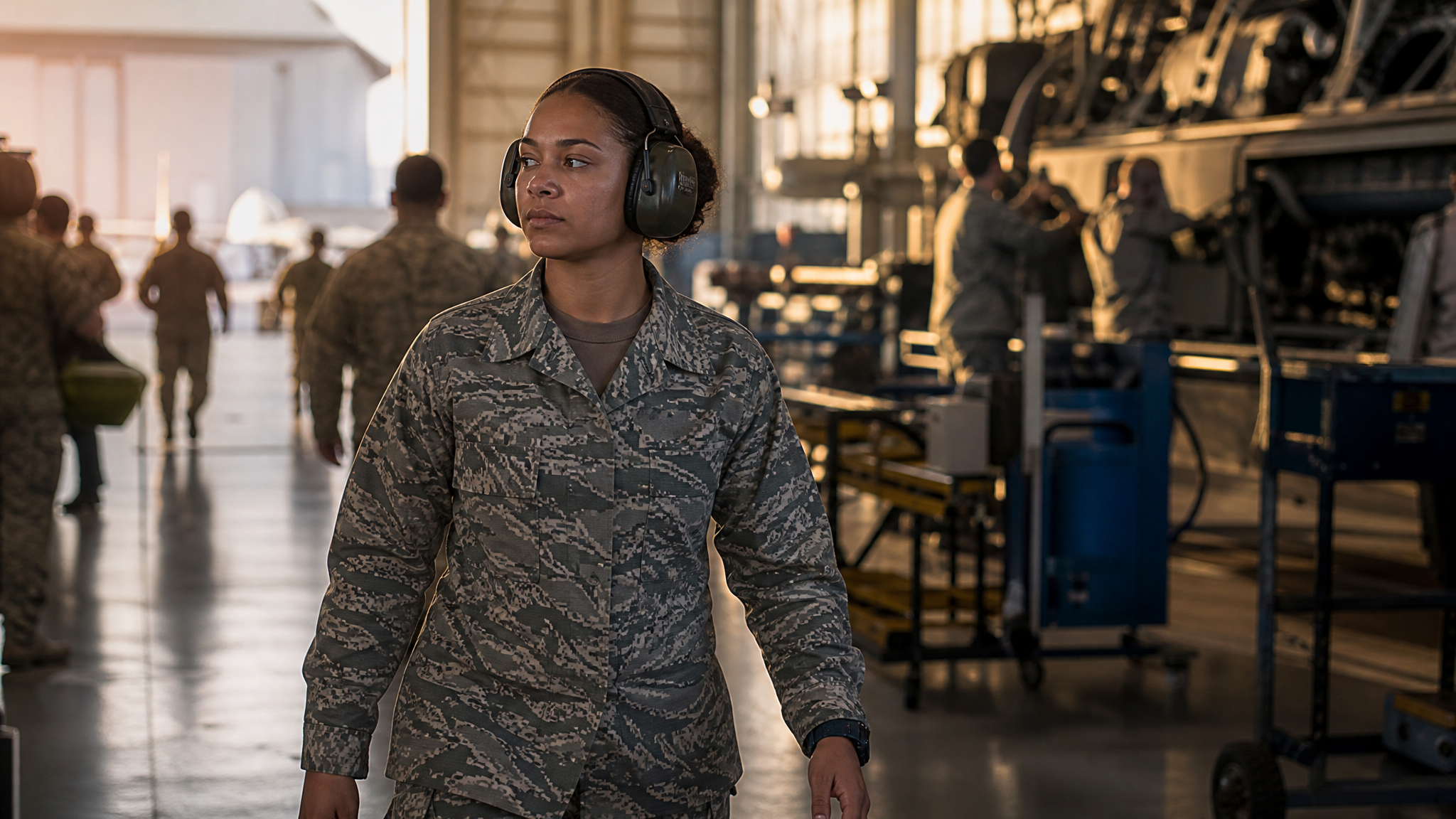
Ill-fitting hearing protection
Hearing protection was frequently sized and issued for a male fit. On many women it sealed poorly, cutting the protection actually delivered — so even when they wore it as ordered, they took more noise damage than the gear was supposed to allow.
What the VA Pays for Hearing Loss & Tinnitus
These are rated under 38 CFR §4.87 — tinnitus under Diagnostic Code 6260, hearing loss under DC 6100 — and the two work nothing alike. Tinnitus is a flat 10 percent, whether it is in one ear or both, whether it is a hum or a scream; there is no higher tier, and that single 10 percent still combines with everything else you are rated for and still pays every month for life. Hearing loss is pure arithmetic: an audiologist runs puretone thresholds at 1000, 2000, 3000, and 4000 Hz plus a Maryland CNC speech-discrimination test, and those two numbers are plugged into Table VI and Table VII under §4.85 to produce your percentage. There is no room for interpretation, which is why the quality of the exam is everything. 38 CFR §4.86 covers exceptional patterns of hearing impairment and can push your rating higher when the loss is severe at specific frequencies. And before any of it applies, your loss has to be a disability for VA purposes under §3.385. Here is exactly what each code requires, in plain English.
Tinnitus (DC 6260): a flat 10% — this is the maximum, whether the ringing is in one ear or both. It is one of the most commonly granted disabilities of all, and it is the same 10% regardless of how loud or constant it is.
Hearing loss (DC 6100): rated from 0% to 100% by audiometry — the puretone thresholds from your audiogram combined with the Maryland CNC speech-recognition score. Even a 0% rating matters: it establishes service connection and unlocks free VA hearing care and hearing aids.
Source: 38 CFR §4.87, Diagnostic Codes 6260 (tinnitus) and 6100 (hearing loss). Every percentage here is set by federal regulation, not a promise — your hearing-loss rating depends entirely on your audiogram and speech test. An accredited representative can confirm exactly what fits your case.
Small percentages that open big doors
Tinnitus at 10% may look modest, but it establishes service connection and very often opens the door to higher-value secondary claims — migraines, sleep disruption, and depression driven by the constant ringing. And even a 0% hearing-loss rating unlocks free VA hearing care and hearing aids for life.
Understanding Tinnitus & Hearing Loss
Tinnitus and noise-induced hearing loss are permanent and there is no cure, but there is a real difference between living with them and being run by them. These are clear explainers from respected medical sources on what is actually happening inside the cochlea, why damaged hair cells do not grow back, why the ringing often gets louder in silence and at night, and what genuinely helps — sound therapy, masking, hearing aids, and cognitive approaches that reduce the distress rather than the sound. VA audiology provides hearing aids and tinnitus management at no cost to enrolled veterans who need them, and a hearing aid does not lower your rating. Watch whenever you’re ready, and then get the audiogram scheduled — the exam is the claim.
Tinnitus & Hearing Loss Explained
A clinical explanation of tinnitus and noise-related hearing loss — what causes the ringing, how noise exposure damages hearing, and why it is often permanent.
Mayo Clinic Minute — Is Tinnitus Causing That Ringing in Your Ear?
A short Mayo Clinic explainer on why the inner-ear hair cells damaged by loud noise send phantom signals to the brain, and what actually reduces the ringing.
These videos are shared for general education from third-party medical creators. They are not legal advice, and watching them is never required to get help with your claim.

How the VA Quietly Underrates These Claims
Even these “easy” claims get denied constantly, and almost never on the merits — they get denied on technicalities around exposure, timing, and the exam itself. The classic denial reads that your separation audiogram was normal, so any current loss must have come after service. That reasoning is medically wrong: noise damage frequently does not show up on a threshold test until years later, and the courts have repeatedly held that a normal exit audiogram does not by itself defeat a claim. The second classic denial is a one-line examiner opinion that your tinnitus is “less likely than not” related to service, with no rationale attached — an opinion without a rationale is not adequate, and you can challenge it. The third is a hearing exam that came back just above the §3.385 threshold, which means the audiogram itself is where the money was lost. Here is exactly how each of these happens, so you can see it coming:
- A denial claiming your MOS was not “high probability” for noise — ignoring your actual duties and duty stations
- A single normal audiogram used to deny hearing loss, when the loss falls just outside the rating threshold
- Tinnitus denied for lack of an in-service complaint, even though you are competent to report the ringing yourself
- Secondary migraines, sleep loss and depression never connected to the tinnitus that drives them
This is where an accredited representative earns their place — documenting your noise history, framing the exposure correctly, and catching every secondary connection the ringing opens up.
Secondary Claims — The Connections Most Women Miss
Tinnitus rarely travels alone. It is frequently caused by the same blast, crash, or chronic noise that injured something else — and it frequently causes new conditions of its own. Under 38 CFR §3.310(a), anything proximately due to a service-connected disability is itself service connected, and under §3.310(b), anything your rated condition permanently worsens is compensable for the degree of that worsening. Constant ringing destroys sleep, and chronic sleep deprivation drives anxiety, depression, and daytime impairment. Head trauma that caused the tinnitus often caused headaches and cognitive symptoms too. Vestibular problems, Meniere’s disease, and temporomandibular joint dysfunction all sit adjacent to this same injury. Each recognized link is a separate rating that combines under §4.25 — and each one is left on the table unless you claim it and a clinician documents the connection in the record.
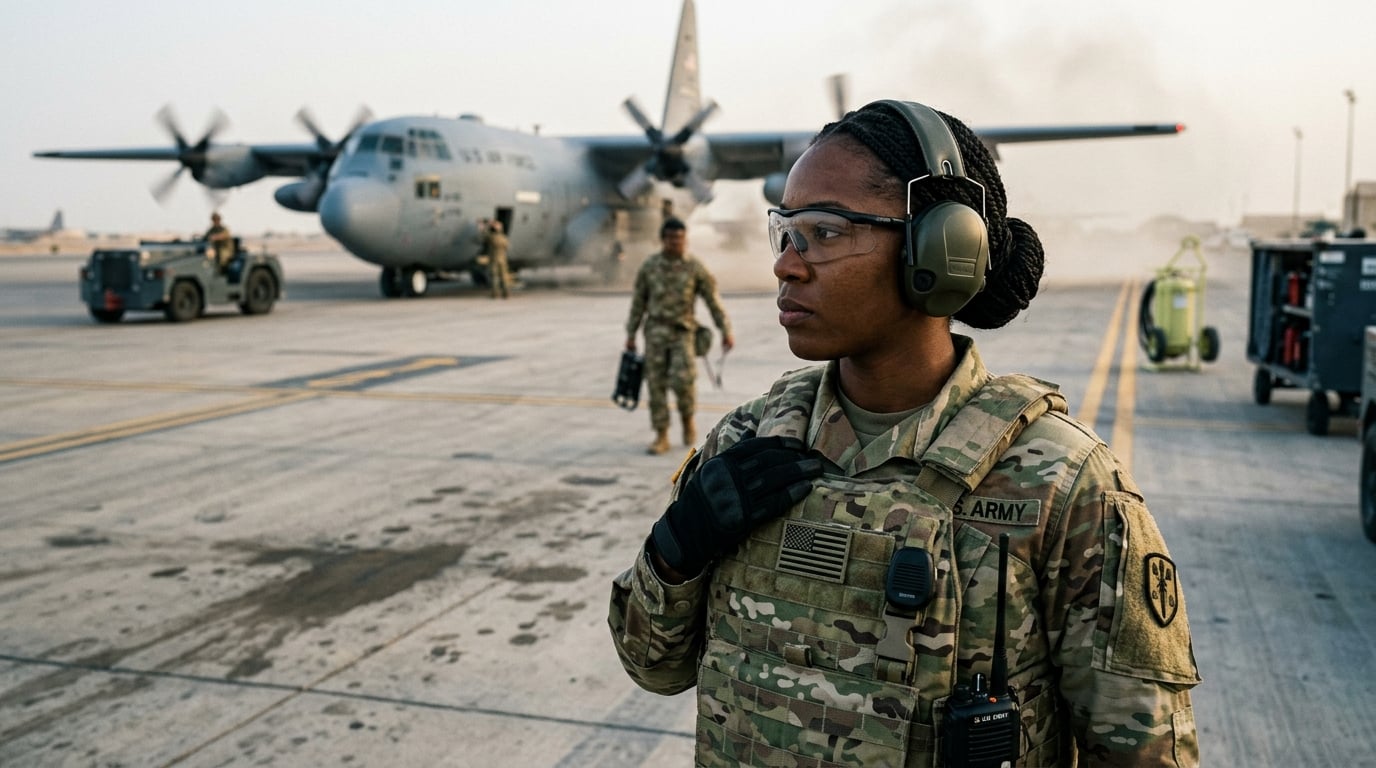
Hearing damage tied to something else
These conditions and exposures establish or reinforce the connection to service:
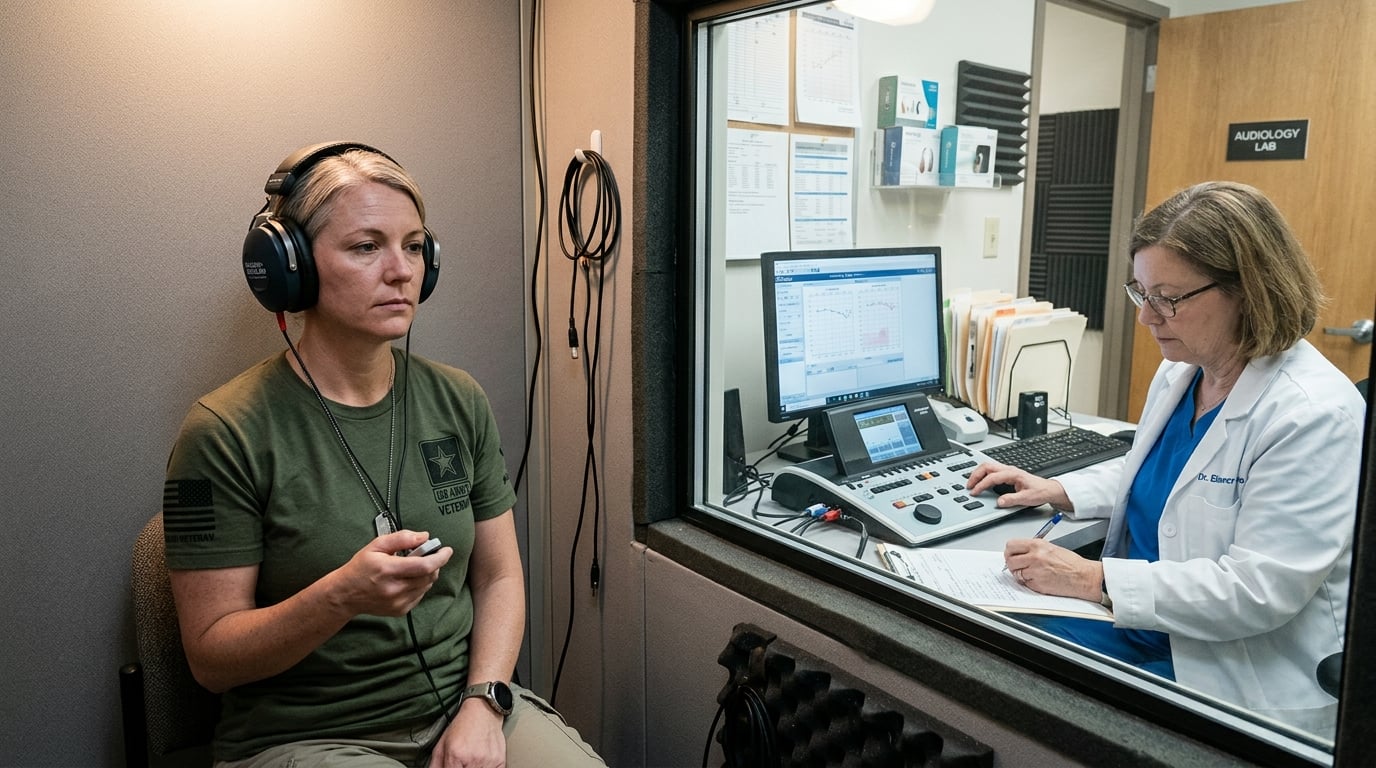
Conditions your tinnitus can cause
Once tinnitus is service-connected, these can be claimed as secondary to it:
A secondary claim needs a diagnosis plus a medical opinion (“nexus”) saying the link is at least as likely as not. This is one of the highest-value things an accredited agent helps build.
Building a Hearing Claim That Wins
A hearing claim is won on the audiogram and a credible noise history — not on how loud the ringing sounds to you. Nobody can measure your tinnitus, which means your own competent, consistent statement that you hear it and when it started carries real evidentiary weight; say it plainly, say it the same way every time, and do not minimize it. For hearing loss, the puretone and Maryland CNC results are the whole rating, so treat that appointment as the most important hour of your claim: show up rested, ask that the test be run by a state-licensed audiologist as §4.85(a) requires, and get a copy of the results. Lock your effective date first with an Intent to File (VA Form 21-0966), file on VA Form 21-526EZ, release any private audiology records with VA Form 21-4142, and add a short buddy statement from anyone who served alongside you and remembers the noise. Here is what a strong file is built from:
Every claim stands on three legs
A current diagnosis
An audiogram plus the Maryland CNC speech test for hearing loss; for tinnitus, your own competent report that you hear the ringing is enough.
An in-service link
A credible history of hazardous noise — your MOS, duty stations, and buddy statements describing the ranges, aircraft, vehicles or blasts.
A nexus
A medical opinion connecting the hearing loss or tinnitus to that in-service noise as at least as likely as not.

Write down your noise history — it is your evidence
The VA needs to believe you were around hazardous noise. Make that easy by writing down:
- Your MOS and every duty station with loud equipment
- Specific sources — ranges, flight lines, motor pools, generators, blasts
- When the ringing started and whether it has ever stopped
- Names of others who served with you and can confirm the exposure
What to expect at the C&P exam
The audiologist runs a hearing test and asks about your exposure and symptoms. Three things protect your rating:
Describe the exposure
Be concrete about the noise — the weapons, aircraft, vehicles and blasts, and how often you were around them without adequate protection.
Report the tinnitus plainly
Say clearly that you hear constant ringing, when it began, and how it affects sleep and concentration. Your report is valid evidence.
Connect the timeline
Tie the onset to your service — “it started after live-fire training and never went away” is exactly what the examiner needs to hear.
When you are ready to file
File on VA Form 21-526EZ, list tinnitus and hearing loss (plus any secondary conditions the ringing drives), and attach your noise history and any audiograms. You can also open the disability calculator to see how these ratings would combine with the rest of your conditions.
Your Rights — Know Them Before You File
The system is easier to face when you know the rules are on your side. These protections apply to your hearing loss and tinnitus claim from the moment you start.
You never pay a fee just to file. A VA-accredited representative can help you at no upfront cost — anyone demanding money up front to "start" your claim is a red flag.
The VA has a legal Duty to Assist — it must help you gather your service and medical records, and must tell you what evidence is still missing BEFORE it issues a denial.
You have the right to request a female provider and a trauma-informed clinician for any exam connected to your claim.
You have the right to file for every condition you live with — including secondary conditions your service-connected condition caused or made worse.
A single low rating is not the end of the road. You have the right to appeal, to submit new evidence, and to be re-evaluated as your condition changes.
If your conditions together keep you from holding steady, gainful work, you have the right to be considered for TDIU — paid at the 100% rate even if no single condition reaches 100%.
Questions Women Ask About Hearing Loss & Tinnitus Claims
Straight answers to the questions that stop women from filing — or from claiming everything they are owed.
The ringing started in service but I never filed when I got out. Is it too late?
No. There is no deadline to file a VA disability claim. If the ringing began during service and never stopped, you can file today — the claim is judged on the evidence and the nexus, not on how long ago you separated.
My hearing test came back 'normal' but my ears ring constantly. Can I still be rated?
Yes. Tinnitus is rated separately from hearing loss and does not require any hearing-test threshold. It carries a single 10% rating on its own — and it often opens the door to secondary conditions like migraines, anxiety, depression and sleep disruption that stack on top.
Do I need documented proof I was around loud noise?
Your military occupation and duties do a lot of the work — the VA maintains noise-exposure profiles by MOS. Buddy statements from people who served with you, and a description of the weapons, aircraft, engines or machinery you worked around, help establish the in-service exposure even without a formal record.
How much is tinnitus actually worth?
Tinnitus itself is a flat 10%, but that is rarely the whole story. Its real value is as the anchor of a larger claim: the same acoustic trauma frequently connects to hearing loss, and the tinnitus itself drives ratable secondaries. Filed together and properly connected, the combined rating is often far higher than the 10% alone.
When You Are Ready to File
Before you file anything, talk to an accredited agent first — it is free. A claim is won or lost on how it is built: the diagnosis on record, the right in-service connection, and whether every condition and secondary is captured. Once a claim is submitted it is much harder to fix than to get right the first time. There is no fee to have an accredited claims agent (#45147) review your situation and tell you honestly whether and how we can help.
You now know what the VA looks for — it is all above. When you are ready, the forms themselves are downloaded and submitted on the official VA site. These are the exact ones you will use:
Resources — Save These
Every one of these is free and confidential. You do not need to be enrolled, rated, or “official” to use any of them. Tap any card to take action now — the phone numbers dial straight from your phone.