

What You Were Exposed To Matters
Burn pits, contaminated water, Agent Orange, radiation, women served in every one of these environments, and for decades the system acted as if they had not. The PACT Act changed the rules in your favor, but nobody is going to knock on your door and hand you the money.
I put everything you need on this page, in plain English: the eight categories of military toxic exposure, exactly what the PACT Act did, what a TERA is and why your job and duty stations both matter, what PACT Act claims pay, how the VA quietly underrates these claims, and how to file one that holds up. Read it once and you will understand your own case better than most people who ever look at it, but understanding it and filing it are two different jobs, and both of them are yours.
Two Ways a Toxic-Exposure Claim Is Won
Start here — 30-second screener
One question decides your path: did you deploy?
Almost every toxic-exposure claim comes down to whether you deployed to a covered location. Find the card that matches your service — that is your path.
Likely the PACT Act
If you served in a covered place during covered dates — Gulf War / Southwest Asia, post-9/11 burn-pit locations, Vietnam and Agent Orange, or Camp Lejeune — the VA can presume your service caused a listed condition. You skip proving the link.
Likely TERA
Never deployed — or not to a covered place — but you have a condition tied to your actual duties? TERA reviews your real service and concedes the exposure happened. Stateside jobs — fuel, motor pool, aircraft, firefighting, depot work — count. This is the path most women are never told about.
Both can apply
Deployed veterans whose condition is not on a presumptive list can still win it through TERA. Many women qualify one way for one condition and the other way for another. You do not have to pick just one.
Not sure where your service lands? An accredited representative can tell you in a few minutes which path — or both — applies to your record.
You just matched your service in Start Here above — now click that one path below to open its own full page. Most women fit either the PACT Act or TERA, and some fit both. The two-question checker further down confirms which one is yours.
The PACT Act & its presumptive conditions
The 2022 law that presumes your service caused the illness — so you do not have to prove the connection yourself. If you have a covered condition and served in a covered place during covered dates, the VA presumes the link.
- Every presumptive condition appears as a card with its own full detail page — what it is, who qualifies, how to file, and how to get help.
- No nexus letter required once your diagnosis and covered service line up.
- Covers burn-pit, Gulf War-era, and Agent Orange exposures under one law.
TERA — Toxic Exposure Risk Activity
The path most women are never told about. TERA does not assume anything — it reviews your actual service and concedes the exposure happened. That concession can then support a disability claim for any condition a medical opinion links to it. You bring the diagnosis and the medical link.
- Your unit, duty stations, and actual day-to-day duties can establish exposure on their own.
- Concedes the exposure based on your actual duties and service history — not a list.
- Exactly where women veterans are underrated most — and where an accredited representative earns their keep.
The PACT Act and TERA are two separate pages — clicking a card above opens the full page for that path. Not sure which fits you? An accredited representative can tell you in a few minutes which path — or both — applies to your record.
What Does “Presumptive” Actually Mean?
It is the single most important word in a toxic-exposure claim — and almost no one explains it plainly. Here it is in one sentence: a presumptive condition is one the VA has already agreed is caused by your service, so you do not have to prove the connection yourself.
A presumptive claim
Normally, to win a claim you must prove three things: a current diagnosis, an in-service event, and a medical “nexus” opinion linking the two. A presumption removes the hardest step — the nexus. If you have the diagnosis and you served in the right place at the right time, the VA presumes your service caused it.
You still file the claim and still attend an exam — but you are not fighting to prove why you are sick. That battle is already won by law.
A direct (non-presumptive) claim
If your condition is not on a presumptive list, you can still win — but the burden is on you. You must supply the exposure evidence and a private or VA medical opinion stating it is “at least as likely as not” that your service caused the condition.
This is exactly where women veterans are underrated most often — and exactly where an accredited representative earns their keep.
Two boxes you must both check for a presumption
1. The right diagnosis
Your condition appears on a PACT Act or Agent Orange presumptive list — see the full list just below.
2. The right service
You served in a covered location during the covered dates, or had a qualifying exposure the law recognizes.
A woman who served in Iraq in 2004 and is later diagnosed with chronic sinusitis meets both boxes: sinusitis is a PACT Act presumptive illness, and Iraq after Aug. 2, 1990 is a covered location. She does not need a nexus letter — the VA presumes the burn-pit exposure caused it. Her job is simply to file, attend the exam, and make sure the rating reflects how bad it truly is.
Do you qualify for a presumption? Find out in two answers.
A presumption needs both boxes checked — the right service and the right diagnosis. Answer these two questions and this will tell you which path fits your record. It is a plain-English guide, not a VA decision — an accredited review confirms the exact presumption.
1. Where and when did you serve?
2. What have you been diagnosed with?
Pick one answer in each row to see which path fits your record.
The PACT Act (2022) — What It Actually Did For You
Signed August 10, 2022, the PACT Act is the largest expansion of VA health care and benefits in a generation. It added more than 20 presumptive conditions across burn-pit, Agent Orange, and radiation categories and extended eligibility to millions of veterans — including women who deployed to burn-pit environments.
A “presumptive” condition is one the VA automatically accepts as caused by your service — you no longer have to prove the link yourself.

Key changes that help women veterans
- A free Toxic Exposure Screening for every enrolled veteran — repeated at least every 5 years
- Expanded VA health-care enrollment for combat and toxic-exposure veterans
- Reproductive cancers added as presumptive conditions
- The VA must now provide a C&P exam and medical opinion for a toxic-exposure claim unless there is no reasonable indication of a connection
- Examiners must weigh your total exposure across all deployments, not one event at a time
- If you were denied before for a condition that is now presumptive, you can file a Supplemental Claim and have it reconsidered under the new law
Presumptive conditions that most affect women
It is not only reproductive cancers. Women who deployed to burn-pit environments are also presumptively covered for respiratory illness, hypertension, and more. If you have one of these and served in a qualifying location and time, the VA presumes it is connected to your service — you do not have to prove the link.
The Eight Categories of Military Toxic Exposure
The VA groups hazardous exposures into the categories below. You may have encountered more than one — and the law now requires the VA to consider the combined effect of everything you were exposed to across every deployment, not each one in isolation.

Airborne Hazards
Burn pits, oil-well fires, sand and dust, particulate matter, sulfur fires — the smoke women breathed for months on end at forward operating bases.
Open burn pits were used across Iraq, Afghanistan, and the wider Gulf to destroy everything from plastics and metals to medical and human waste, often with jet fuel as an accelerant. The resulting smoke carried fine particulate matter, dioxins, and volatile chemicals deep into the lungs. Health effects the VA now connects to this include asthma first diagnosed after service, chronic bronchitis and COPD, chronic rhinitis and sinusitis, constrictive bronchiolitis, and several respiratory cancers. What to document: your base(s), the dates you were there, how close your quarters or work area sat to the pit, and any breathing problems that began during or after deployment.
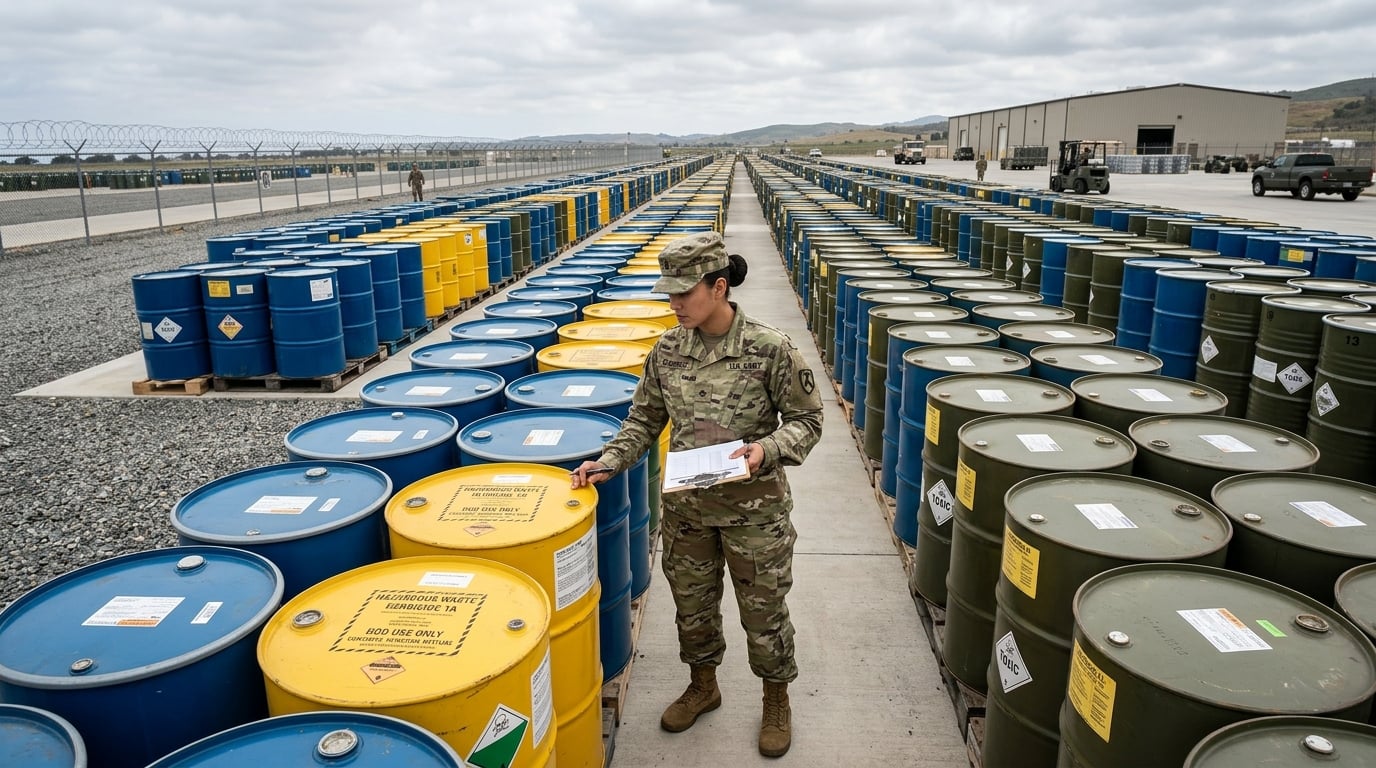
Chemicals
Agent Orange and other herbicides, pesticides, industrial solvents, and contaminated water such as the drinking water at Camp Lejeune.
Chemical exposure reaches far beyond Vietnam-era Agent Orange. It includes the tap water at Camp Lejeune (1953–1987), which was contaminated with industrial solvents TCE and PCE and the fuel additive benzene; pesticides used for base pest control; and solvents used to clean equipment. These are tied to reproductive cancers, kidney and bladder cancer, Parkinson’s disease, and other serious conditions. What to document: every base where you lived or worked, the years you were there, and any job that had you mixing, spraying, storing, or cleaning up chemicals.

Occupational Hazards
Asbestos, lead, industrial paints, firefighting foam (AFFF), fuels and degreasers handled in motor pools, shops, and older base buildings.
Everyday military jobs carried their own toxic load. Asbestos lined older ships and barracks; lead-based paint coated countless buildings; AFFF firefighting foam (a source of “forever chemicals,” or PFAS) was used on flight lines and in fire training; and fuels, degreasers, and solvents filled motor pools and maintenance bays. These are linked to respiratory disease, kidney and other cancers, and thyroid problems. What to document: your MOS and any additional duties, the shops or vessels you worked in, and the materials you handled day to day.
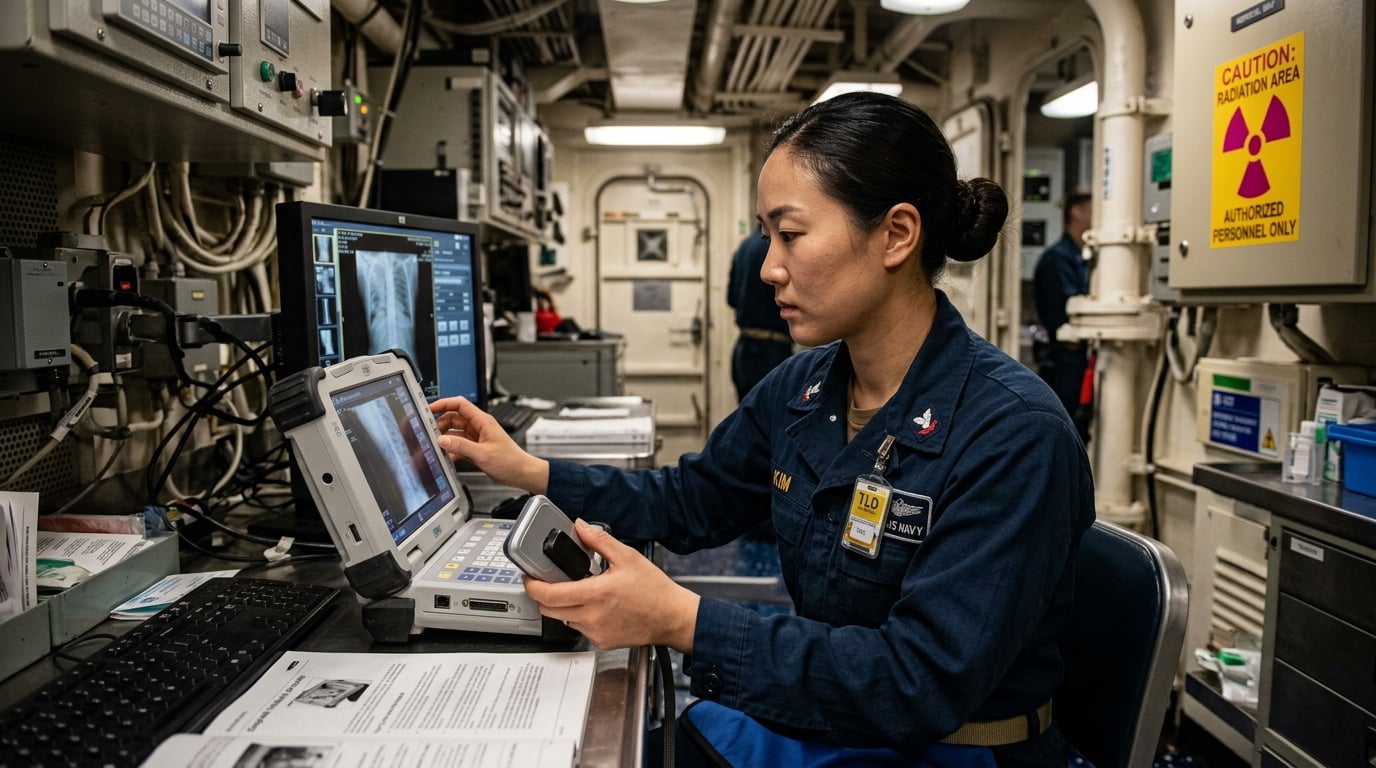
Radiation
Nuclear weapons handling, X-ray and radiologic duties, service aboard nuclear-powered vessels, and cleanup of radiologic sites.
Ionizing radiation exposure covers “atomic veterans” present at nuclear tests, personnel involved in the cleanup of radiologic sites (such as Enewetak Atoll or Palomares), those who handled nuclear weapons, and service members with X-ray, nuclear-medicine, or radar duties. It is tied to many cancers, including leukemia, thyroid, breast, and lung cancer. What to document: your radiation-related duties, any dosimetry (film badge) records, and the sites or vessels where you served.
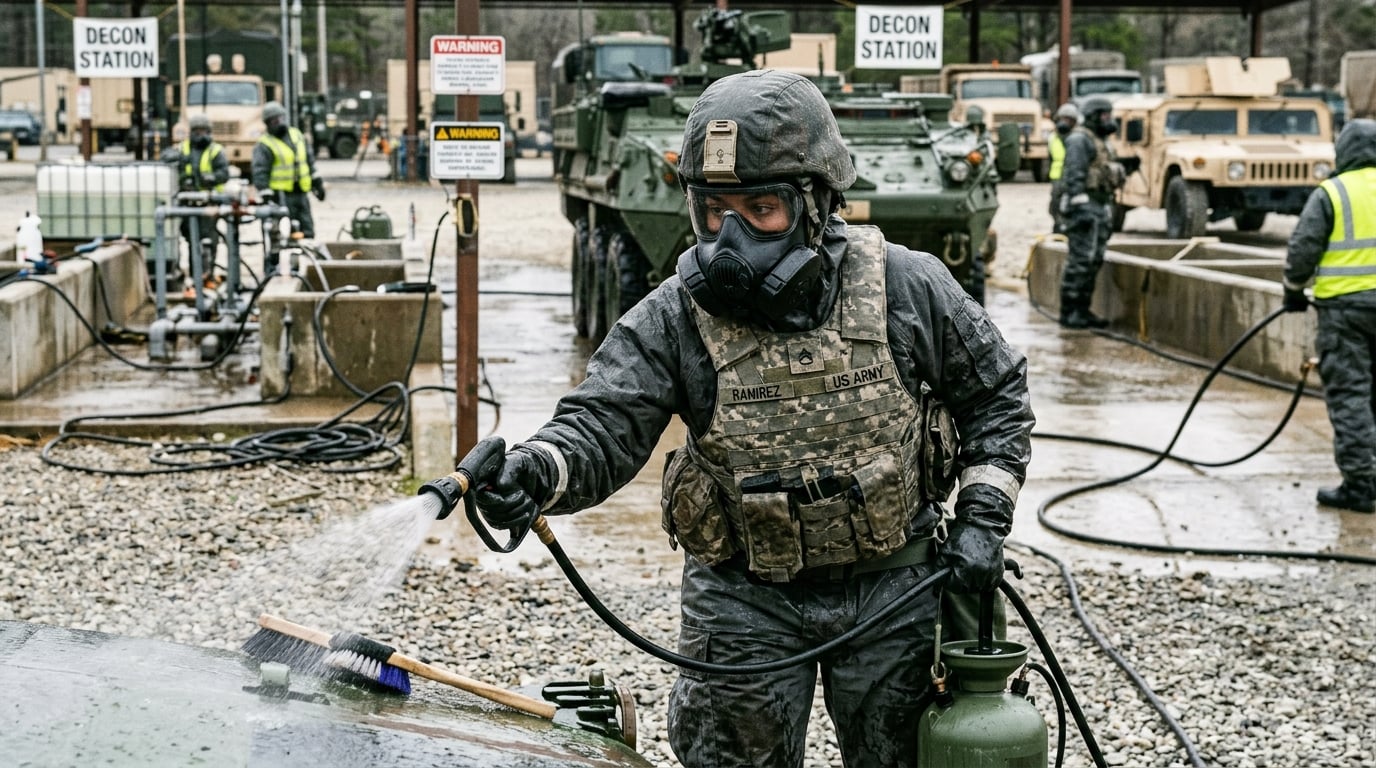
Warfare Agents
Nerve agents, chemical and biological weapons, and depleted uranium — encountered in training, storage, and combat support roles.
This category includes nerve and blister agents (for example, the 1991 Khamisiyah demolition in the Gulf War that released sarin), depleted-uranium munitions and the dust from struck vehicles, and exposures during chemical-defense training. Related conditions range from Gulf War illness and unexplained chronic multisymptom illness to specific cancers. What to document: chemical-alarm or MOPP events you remember, your unit’s location during them, and any symptoms — fatigue, joint pain, cognitive fog, breathing trouble — that persisted afterward.

Contaminated Water Supplies
Industrial solvents, benzene, and other chemicals in base drinking water — most infamously at Camp Lejeune (1953–1987), where the tap water families drank and bathed in was contaminated for decades.
Contaminated water is its own distinct exposure, separate from the burn pits and the chemicals handled on the job. The best-documented case is Camp Lejeune, North Carolina, where the base drinking water was contaminated from 1953 to 1987 with the solvents TCE and PCE and the fuel additive benzene. Just 30 cumulative days stationed there can qualify a veteran — and family members who lived there — for VA care and disability benefits. The conditions tied to it include kidney and bladder cancer, several reproductive cancers, Parkinson’s disease, and other serious illnesses. Other installations have their own documented water and PFAS (“forever chemical”) contamination. What to document: every base where you lived, the years you were there, and any cumulative time at Camp Lejeune — even across separate assignments.
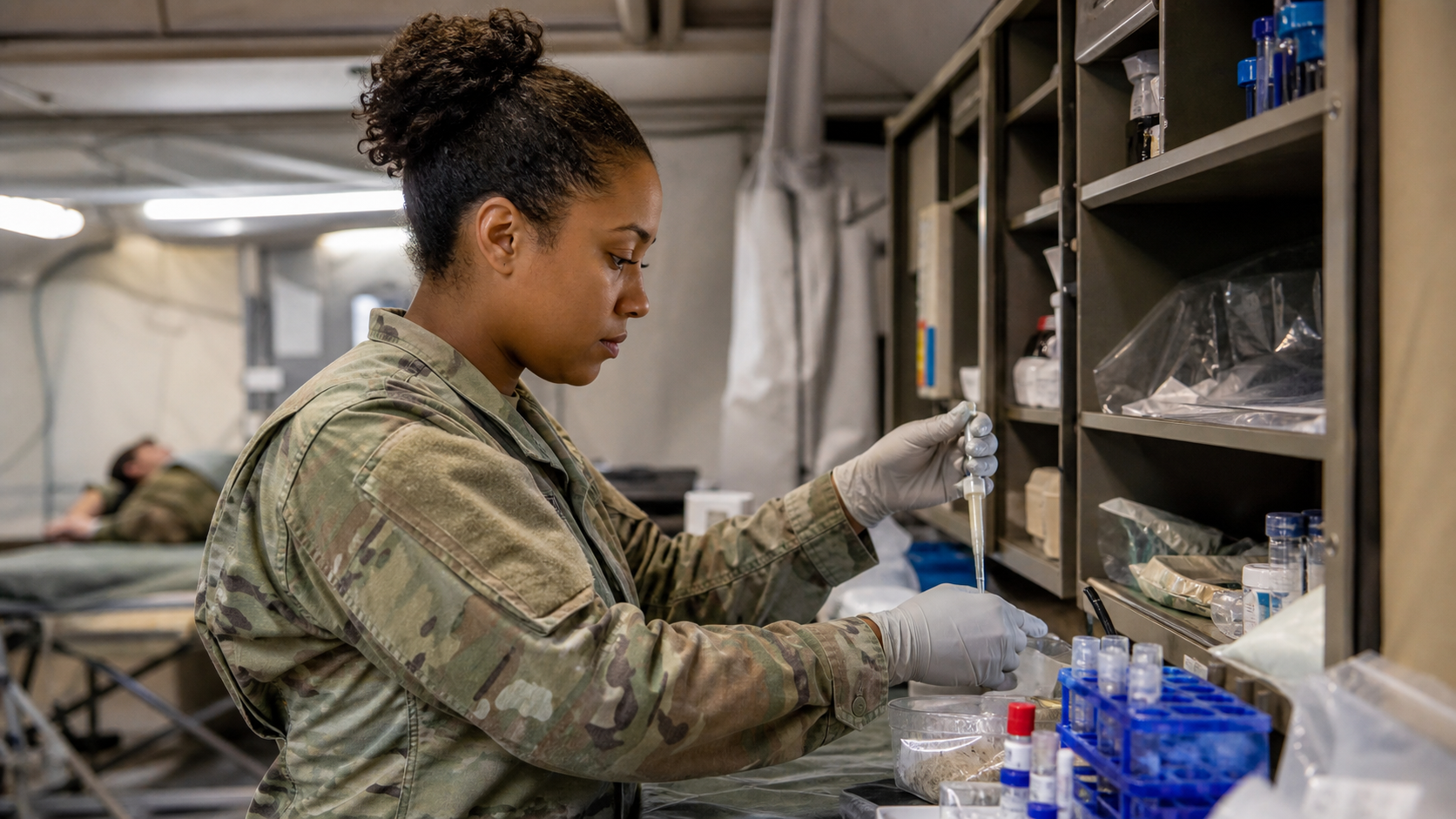
Medical & Laboratory Duties
Bloodborne pathogens, sterilizing chemicals (glutaraldehyde, ethylene oxide), anesthetic waste gases, hazardous drugs such as chemotherapy, formaldehyde in labs and morgues, and ionizing radiation from medical imaging — the daily hazards of the women who staffed military hospitals, clinics, and laboratories.
Military healthcare is its own exposure story, and it is one the VA almost never raises on its own. Nurses, medics, lab and blood-bank technicians, radiologic and nuclear-medicine techs, dental staff, surgical and OR personnel, and mortuary-affairs workers all handled toxic and carcinogenic substances as a routine part of the job: bloodborne pathogens; high-level disinfectants and cold-sterilants such as glutaraldehyde and ethylene oxide; waste anesthetic gases in operating rooms; hazardous antineoplastic (chemotherapy) drugs; formaldehyde and other fixatives in pathology labs and morgues; and repeated low-dose ionizing radiation from X-ray, CT, and fluoroscopy work. These are linked to respiratory disease and asthma, reproductive harm, blood and other cancers, and skin and neurological conditions. Because this exposure comes from the job rather than a named location, it is usually a facts-found (non-presumptive) claim. What to document: your medical MOS or AOC and the specific units and facilities you worked in, the substances and equipment you handled, any radiation dosimetry (film-badge) records, and any needlestick, chemical-spill, or exposure incidents recorded in your service treatment records.

Infectious & Environmental Diseases
Malaria, brucellosis, Q fever, West Nile virus, visceral leishmaniasis (sand-fly fever), and other diseases contracted in Southwest Asia and other deployment regions.
Deployment to Southwest Asia and other regions carried a real risk of infectious and environmental diseases that can surface — or leave lasting damage — long after you come home. The VA recognizes a group of these as presumptive for Gulf War and post-9/11 veterans, including malaria, brucellosis, Campylobacter jejuni, Coxiella burnetii (Q fever), nontyphoid Salmonella, Shigella, mycobacterium tuberculosis, visceral leishmaniasis (sand-fly fever), and West Nile virus. Some, such as visceral leishmaniasis, can appear with no time limit at all. What to document: where and when you deployed, any illness or hospitalization during or after service, and lingering symptoms such as fatigue, fevers, joint pain, or neurological problems.
The Full List of PACT Act Presumptive Conditions
If you have one of these conditions and you served in a covered location during the covered dates (see the windows below), the VA presumes your service caused it. Tap any card below to open a full page on that condition — what it is, who qualifies, how to file, and how to get help.
Presumptive cancers
10









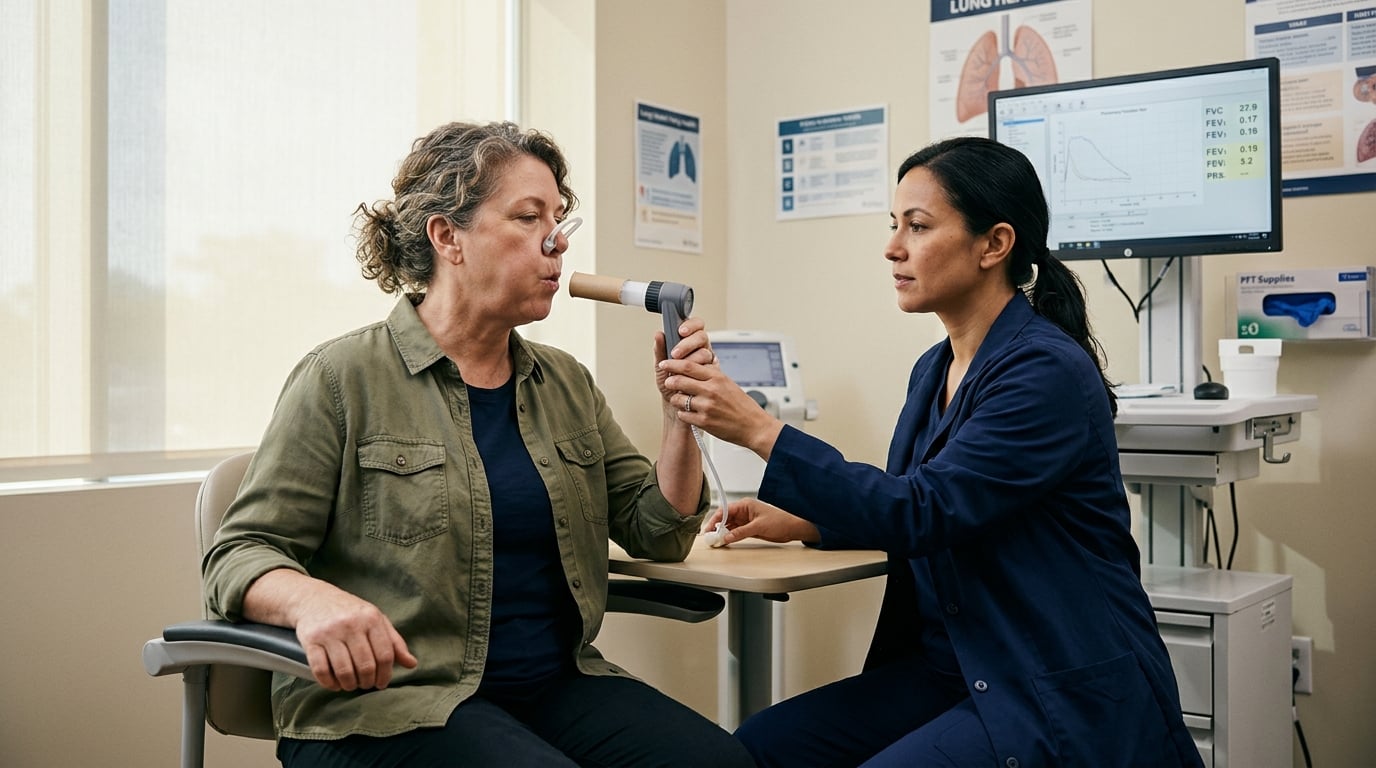
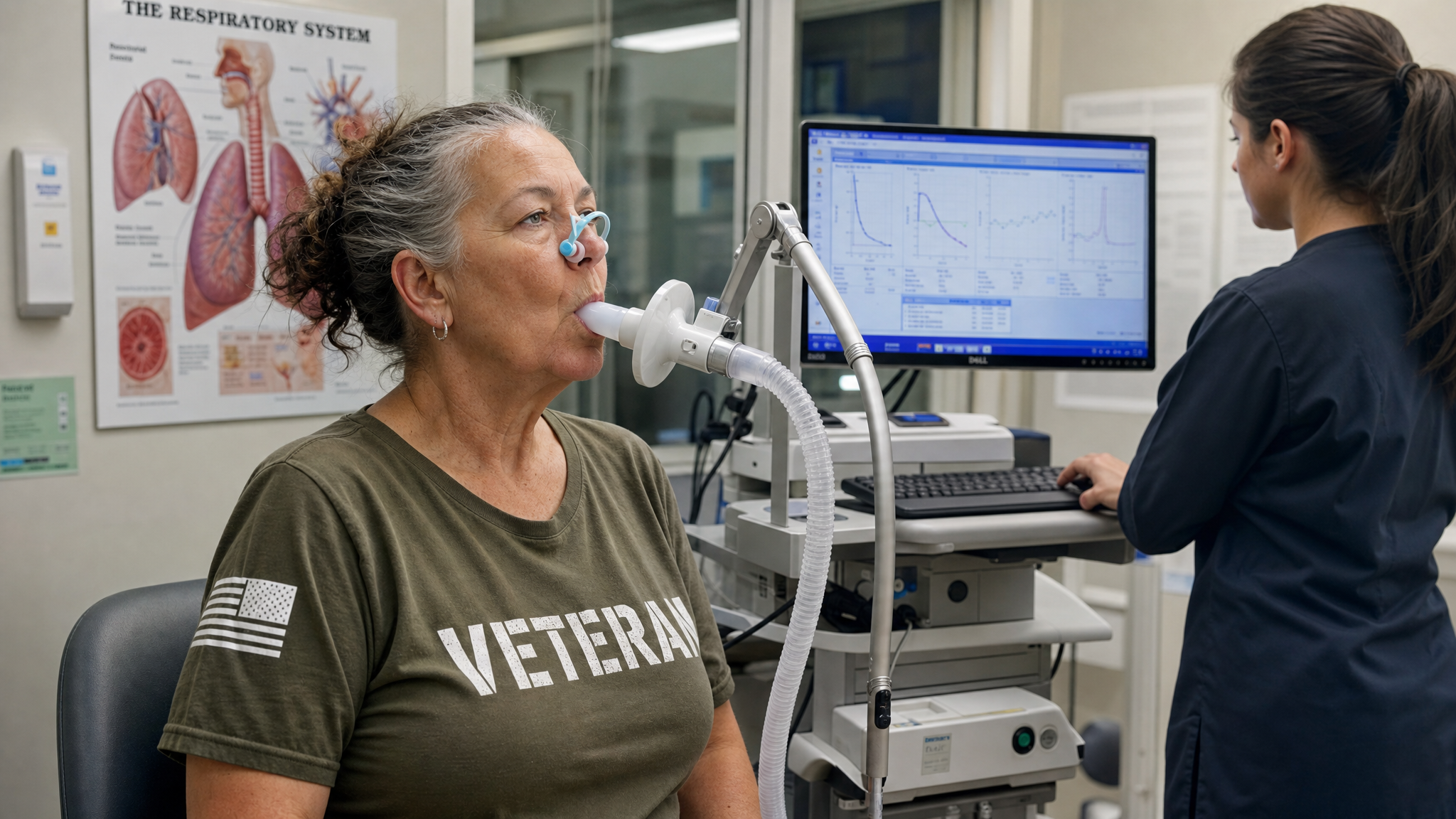
Presumptive respiratory illnesses
12









Presumptive cardiovascular conditions
3


Covered locations & dates (the “where and when”)
To qualify for a burn-pit presumption you must have served in one of these places during the dates shown — including the airspace above them.
On or after Sept. 11, 2001
Afghanistan, Djibouti, Egypt, Jordan, Lebanon, Syria, Uzbekistan, Yemen — or the airspace above any of them.
On or after Aug. 2, 1990
Bahrain, Iraq, Kuwait, Oman, Qatar, Saudi Arabia, Somalia, the United Arab Emirates — or the airspace above any of them.
Camp Lejeune (1953–1987), Vietnam and the Korean DMZ (Agent Orange), and the broader Gulf War theater each have their own separate presumptive rules on top of these windows. If your dates or location fall close to the line, do not assume you are out — an accredited representative can pull your record and confirm exactly which presumptions you qualify for.
What Your PACT Act Claim Could Be Worth
Every presumptive condition is rated on the same VA scale as any other — by how much it limits you, not by how you were exposed. Below is every PACT Act presumptive condition, the exact schedule the VA rates it under, its full rating range, and the estimated tax-free monthly value at 2026 rates. One rule cuts across all of them: an active cancer is rated one hundred percent while you are in treatment, then re-rated on what it leaves behind.
| Condition | Where the VA rates it | Typical rating range | Est. monthly value |
|---|---|---|---|
| Presumptive Cancers | |||
| Every cancer here is rated a total 100% while it is active and for six months after your last treatment — then the VA re-examines you and rates whatever it left behind (the residuals), which stack for life. | |||
| Lung & respiratory cancers | Respiratory tract — DC 6819 | 100% active, then residuals | ≈ $3,939 / mo while active |
| Breast cancer | DC 7630 active → 7626 residual | 100% active; 30–80% residual | ≈ $552 – $3,939 / mo |
| Gynecologic & reproductive cancers | Gyn — DC 7627–7629 | 100% active; 30–50% residual + SMC | ≈ $552 – $3,939 / mo |
| Head & neck cancers | Rated by residual site | 100% active, then residuals | ≈ $3,939 / mo while active |
| Lymphoma (Hodgkin & non-Hodgkin) | Blood — DC 7709 / 7715 | 100% active, then residuals | ≈ $3,939 / mo while active |
| Brain cancer & glioblastoma | Neurological — DC 8002 | 100% active, then residuals | ≈ $3,939 / mo while active |
| Kidney cancer | Genitourinary — DC 7528 | 100% active, then residuals | ≈ $3,939 / mo while active |
| Pancreatic cancer | Digestive — DC 7343 | 100% active, then residuals | ≈ $3,939 / mo while active |
| Melanoma | Skin — DC 7833 | 100% active, then residuals | ≈ $3,939 / mo while active |
| Gastrointestinal cancers | Digestive — DC 7343–7344 | 100% active, then residuals | ≈ $3,939 / mo while active |
| Respiratory Illnesses | |||
| These are rated on your breathing-test results (FEV-1 and FEV-1/FVC), how often you need care, and what medication it takes to control the symptoms — the worse the impairment, the higher the percentage. | |||
| Asthma | Lungs — DC 6602 | Ten to one hundred percent | ≈ $180 – $3,939 / mo |
| Chronic bronchitis | Lungs — DC 6600 | Ten to one hundred percent | ≈ $180 – $3,939 / mo |
| COPD | Lungs — DC 6604 | Ten to one hundred percent | ≈ $180 – $3,939 / mo |
| Emphysema | Lungs — DC 6603 | Ten to one hundred percent | ≈ $180 – $3,939 / mo |
| Constrictive bronchiolitis | Lungs — DC 6825 | Ten to one hundred percent | ≈ $180 – $3,939 / mo |
| Interstitial lung disease | Lungs — DC 6825 | Ten to one hundred percent | ≈ $180 – $3,939 / mo |
| Pulmonary fibrosis | Lungs — DC 6825 | Ten to one hundred percent | ≈ $180 – $3,939 / mo |
| Pleuritis (pleurisy) | Lungs — DC 6845 | Ten to one hundred percent | ≈ $180 – $3,939 / mo |
| Sarcoidosis | Lungs — DC 6846 | Zero to one hundred percent | $0 – ≈ $3,939 / mo |
| Granulomatous disease | Lungs — DC 6846 | Zero to one hundred percent | $0 – ≈ $3,939 / mo |
| Chronic sinusitis | Sinuses — DC 6510–6514 | Zero to fifty percent | $0 – ≈ $1,133 / mo |
| Chronic rhinitis | Nose — DC 6522 | Ten to thirty percent | ≈ $180 – $552 / mo |
| Cardiovascular Conditions | |||
| Rated on how much the heart or vascular system is impaired — measured by workload testing (METs), the medication you need, and any episodes of heart failure. | |||
| Ischemic heart disease (Agent Orange) | Heart — DC 7005, by METs | Ten to one hundred percent | ≈ $180 – $3,939 / mo |
| Hypertension | Heart & vessels — DC 7101 | Ten to sixty percent | ≈ $180 – $1,435 / mo |
Source: 38 CFR Part 4 rating schedule and 2026 VA compensation rates (effective Dec. 1, 2025), veteran alone. Ranges are typical, not guaranteed — a single veteran can be rated anywhere in (or above) these bands depending on severity, and multiple conditions combine into a higher overall rating. Every figure here is an estimate for planning only and should be confirmed with an accredited representative.
By the Numbers
These figures come from the PACT Act, VA public-health guidance, and the VA’s own rating rules. If you have been wondering whether your exposure is “enough” to matter — read them slowly. It counts, and you are not alone.
Millions
of veterans are estimated to have been exposed to open burn pits and airborne hazards during Gulf War and post-9/11 service.
20+
new presumptive conditions the PACT Act added for toxic exposure — from respiratory illness to more than a dozen cancers.
Every 5 yrs
a free toxic-exposure screening is offered to every enrolled veteran — it takes 5 to 10 minutes and starts your exposure record.
6 cancers
reproductive cancers now presumptive for women: breast, cervical, ovarian, uterine, vaginal, and vulvar.
30 days
cumulative time at Camp Lejeune between 1953 and 1987 can qualify you — and your family — for care and benefits.
No deadline
there is no time limit to file. Exposures from decades ago — Vietnam, the Gulf, Camp Lejeune — are still claimable today.
Locations Tied to Toxic Exposure
If you served at any of these, exposure may already be presumed — or documented well enough by the government’s own records that you do not have to prove it happened, only that you were there. That distinction is the whole ballgame. On a presumptive location you need three things: proof of presence (orders, a DD-214, a LES, a performance report), a current diagnosis, and the dates lining up with the statutory window. On a non-presumptive location the VA calls it a facts-found claim, and you carry the burden of showing the exposure — which is exactly what the TERA memo and the ILER registry exist to do for you. This is not the full list, and being absent from it does not defeat a claim; it is simply where women veterans are most often connected. If your base is not here, file anyway and make the VA develop the record — under 38 CFR §3.159 that development is their job, not yours.
Southwest Asia / Post-9/11 deployments
Iraq, Afghanistan, and the Gulf region on or after Aug. 2, 1990 or Sept. 11, 2001 — burn-pit and airborne-hazard exposure is presumed.
Camp Lejeune, NC (1953–1987)
Contaminated drinking water. Veterans and family members stationed there for 30+ cumulative days may qualify for care and disability benefits.
Fort McClellan, AL
Former MP and Chemical Corps training base with documented chemical, radiologic, and airborne exposures — many women trained here.
Vietnam, Thailand & Korean DMZ
Agent Orange / herbicide exposure presumptions apply to specific locations and dates.
The PACT Act & Toxic Exposure, Explained
Clear explainers straight from the Department of Veterans Affairs on what the PACT Act changed and how the free toxic-exposure screening works. Watch them for one reason: they are the VA telling you, on the record, what it says it owes you — which is useful the next time a claims processor acts like your exposure is a novel theory. The screening itself takes about five minutes, is offered to every enrolled veteran at least once every five years, and it puts a permanent note in your medical record that you reported exposure. That note is evidence later. None of this replaces the detail on this page; it backs it up in the VA’s own words. Watch whenever you're ready.
The PACT Act and Your VA Benefits
The Department of Veterans Affairs explains what the PACT Act changed — expanded health care, new presumptive conditions, and who qualifies after toxic exposure.
Ask About the Toxic Exposure Screening
The Veterans Health Administration walks through the free 5–10 minute toxic exposure screening every enrolled veteran can get — and why it starts your exposure record.
These videos are shared for general education from official government sources. They are not legal advice, and watching them is never required to get help with your claim.

How the VA Quietly Underrates Toxic-Exposure Claims
The PACT Act opened the door, but it did not make the VA generous. Presumptive does not mean automatic — it means the VA concedes the exposure, not the disability, and you still have to show a current diagnosis and a rating-level severity. Facts-found claims get denied on technicalities that have nothing to do with whether you were poisoned. The pattern is consistent enough to plan around: the file gets rated off the thinnest evidence in it, the exam gets scheduled on a day your condition is quiet, and nobody develops the record the regulations require the VA to develop. Every one of these is preventable if you see it coming. Here is how these claims get lowballed — so you can head it off:
- A claim denied because the ILER did not “show” exposure — even though the veteran’s unit and duty station clearly did
- A facts-found case rejected for lack of a TERA memo that the VA was supposed to develop itself
- A rushed C&P exam that rates a respiratory condition off one breathing test on a good day
- A cancer rated at a residual level after treatment without the 100% period the veteran was owed during it
This is exactly where an accredited representative earns their place — pulling your ILER, forcing the TERA determination, framing your total exposure across every deployment, and pushing back on a rating that came in too low.
See What You May Be Eligible For
Many women never realize how much they may be owed. VA Benefits Calculators gives you free tools to screen your toxic-exposure eligibility under the PACT Act, combine your ratings with the bilateral factor, estimate your tax-free monthly and annual compensation with dependents, and calculate the lump-sum back pay the VA may owe you from your effective date — all on current VA rate tables, no account or email needed. Every figure is an estimate — a free accredited review confirms the real number.
Open the VA Benefits CalculatorOpens vabenefitscalculators.com in a new tab.

Blue Water Navy Vietnam Veterans
For decades the VA refused Agent Orange claims from sailors who served offshore, insisting that only veterans with boots on the ground were exposed. The Blue Water Navy Vietnam Veterans Act of 2019 ended that. If you served aboard a ship in the offshore waters of Vietnam, the VA now presumes you were exposed to Agent Orange and other herbicides, even if you never set foot on land. That one change reopened the door for tens of thousands of aging sailors, and many still do not know they qualify.
A presumption means you do not have to prove how you were exposed. You only have to show three things: that your ship was in the covered zone during the covered dates, that your discharge was not dishonorable, and that you now have one of the presumptive conditions below. Here is exactly who qualifies, how to prove it, and how to file.
Who Qualifies
You Are Eligible If
- You served aboard a ship that operated in the offshore waters of Vietnam between January 9, 1962 and May 7, 1975.
- The ship came within 12 nautical miles seaward of the demarcation line of Vietnam and Cambodia.
- Your discharge was under conditions other than dishonorable.
- You now have a diagnosed condition on the presumptive list, or a related secondary condition.
Surviving spouses and dependents of a qualifying Blue Water veteran may also file for DIC (Dependency and Indemnity Compensation) if the veteran has passed.
The 12-Nautical-Mile Zone, Explained
Blue water means the open ocean, as opposed to the brown water of Vietnam’s inland rivers and the boots-on-the-ground of shore duty. Before 2019, only brown-water and shore veterans got the Agent Orange presumption automatically. Offshore sailors were routinely denied.
The 2019 Act drew the line 12 nautical miles out from the coast. If your ship crossed inside that line during the covered period, you are presumed exposed. Qualifying vessels include aircraft carriers, destroyers, cruisers, frigates, amphibious assault ships, and supply ships. The VA keeps an official list of ships and the dates each one operated in the zone.
How to Prove You Qualify
You do not prove exposure. You prove your ship, your dates, and your diagnosis. Gather these before you file:
- Your DD-214 and any service personnel records showing your ship assignment and the dates you were aboard.
- Evidence the ship was in the covered zone, such as deck logs, cruise books, or the VA ship list. The VA will help pull deck logs when you name the ship and dates.
- A current medical diagnosis of your condition from a doctor, plus records showing how it affects you day to day.
- If a condition is secondary to a presumptive one, a short nexus statement linking the two strengthens the claim.

Presumptive Conditions for Blue Water Veterans
If you have a diagnosed condition on this list and you served in the covered zone, the VA presumes it is service-connected. Each one can also give rise to secondary conditions, which may be service-connected too when medical evidence links them to the primary disease.
AL Amyloidosis
Secondary: Heart disease, kidney failure, liver damage
Chronic B-cell Leukemias
Secondary: Infections, anemia, lymph node enlargement
Chloracne (or similar acneform disease)
Secondary: Skin infections, scarring
Diabetes Mellitus Type 2
Secondary: Peripheral neuropathy, diabetic retinopathy, kidney disease, cardiovascular disease
Hodgkin’s Disease
Secondary: Secondary cancers, thyroid disorders
Ischemic Heart Disease
Secondary: Heart failure, arrhythmias, stroke
Multiple Myeloma
Secondary: Bone fractures, kidney dysfunction, infections
Non-Hodgkin’s Lymphoma
Secondary: Secondary cancers
Parkinson’s Disease
Secondary: Depression, dementia, autonomic dysfunction
Peripheral Neuropathy, Early-Onset
Secondary: Chronic pain, mobility issues
Porphyria Cutanea Tarda
Secondary: Liver disease, chronic skin conditions
Prostate Cancer
Secondary: Bone metastasis, urinary incontinence, erectile dysfunction
Respiratory Cancers (lung, bronchus, larynx, trachea)
Secondary: COPD, pulmonary fibrosis
Soft Tissue Sarcomas
Secondary: Lymphedema
How to File, Step by Step
Confirm your ship and dates
Match your service dates to the period your ship operated inside the 12-nautical-mile zone. If you are unsure, list the ship and your dates aboard and let the VA or an accredited agent check it against the official records.
Get a current diagnosis
You need a present-day diagnosis of a presumptive condition from a doctor. If you have symptoms but no formal diagnosis yet, see a provider first, or ask for the free Agent Orange Registry health exam to get it documented.
Gather your records
Pull together your DD-214, service records showing the ship assignment, and your medical records. Keep a copy of everything you submit.
File VA Form 21-526EZ
This is the Application for Disability Compensation. File it online at VA.gov, by mail, or through an accredited claims agent. State that you are claiming under the Blue Water Navy Act and list each condition.
Attend the C&P exam
The VA usually schedules a Compensation and Pension exam to rate the severity of your condition. Show up, be honest about your worst days, and describe how the condition limits your daily life.
Denied before 2019? Refile.
If your offshore Agent Orange claim was denied before the 2019 Act, file a Supplemental Claim citing the new law. Many of those old denials are now winnable, and the effective date can reach back.
Agent Orange Registry vs. Filing a Claim
The Blue Water Navy / Agent Orange Registry collects health information and offers a free health exam to document herbicide exposure. It is separate from filing a benefits claim: joining the registry does not start a claim and does not affect the outcome of one. You can register online through the VA Agent Orange Registry page, in person at a VA medical center, or by calling the VA Benefits Hotline at 800-827-1000. Blue Water Navy veterans are also eligible for the additional presumptive conditions added by the PACT Act.

Starting a toxic-exposure claim is simpler than it looks
How to Start a Toxic-Exposure Claim
Get your free Toxic Exposure Screening
Ask any VA facility — it takes about 5–10 minutes and starts your exposure record.
File an Intent to File first
VA Form 21-0966 locks in your effective date while you gather evidence, protecting any back pay.
Submit your disability claim
File VA Form 21-526EZ. List every condition and every place you served — not just your MOS.
Add lay and buddy statements
Even with presumptive rules, statements about what you saw and did strengthen your claim.
Official VA Toxic-Exposure Resources
Everything above stays on this page. These links take you straight to the VA to screen, check eligibility, and file.
The PACT Act and Your VA Benefits
Official overview & presumptive lists
Military Exposures & Toxic Exposure Screening
VA Public Health exposures hub
Hazardous Materials Exposure Eligibility
Presumptive conditions & locations
Camp Lejeune Water Contamination
Benefits for those stationed there
VA Form 21-526EZ
Application for disability compensation
VA Form 21-0966
Intent to File — lock in your date
Questions Women Ask About Toxic Exposure
Straight answers about presumptions, TERA, Camp Lejeune, and refiling old denials under the PACT Act. A free review can tell you honestly whether the new law works in your favor.
What exactly is the PACT Act?
The PACT Act (Public Law 117-168, signed August 10, 2022) is the largest expansion of VA benefits for toxic-exposed veterans in decades. It adds more than 20 presumptive conditions tied to burn pits, Agent Orange, radiation, contaminated water, and other hazards, expands VA health-care eligibility, and requires the VA to provide a toxic-exposure exam and medical opinion in most cases.
Do I have to prove that my exposure caused my condition?
For a presumptive condition, no — that is the point of a presumption. If you served in a qualifying location during a qualifying time and later develop a listed condition, the VA presumes the connection. Even outside the presumptive list, the PACT Act’s TERA (Toxic Exposure Risk Activity) rules require examiners to weigh your total exposure across all deployments, not one event at a time.
Which reproductive cancers are now presumptive for women veterans?
The PACT Act added several reproductive and other cancers as presumptive, including breast, cervical, ovarian, uterine, vaginal, and vulvar cancer. If you have one of these and a qualifying exposure history, you should not have to prove causation — the connection is presumed.
I served at Camp Lejeune — do I qualify?
If you served at Camp Lejeune for at least 30 cumulative days between August 1, 1953 and December 31, 1987, you may qualify for benefits tied to the contaminated water there, including several cancers and other conditions. Family members present during that window may also have separate avenues for care.
What is the free Toxic Exposure Screening?
Under the PACT Act, every enrolled veteran is entitled to a free Toxic Exposure Screening, repeated at least every five years. It is a short set of questions about where and when you served and what you may have been exposed to. It is worth doing even if you feel fine now, because it creates a record.
My exposure claim was denied before the PACT Act — is it worth trying again?
Very possibly. Many conditions that were denied before August 2022 are now presumptive, which changes the outcome. You can file a Supplemental Claim with the new law as the basis. An accredited claims agent can review your prior denial for free and tell you honestly whether the PACT Act now works in your favor.
Still have a question about your own situation?