

The PACT Act
The largest expansion of VA health care and benefits in a generation — and the reason millions of toxic-exposed veterans, including the women who deployed into burn-pit environments, no longer have to prove what the smoke did to them.
A law written to shift the burden off of you
For decades, a veteran who got sick after breathing burn-pit smoke or drinking contaminated water had to prove, on their own, that their service caused the illness. Most could not — not because they were wrong, but because the science was hard and the VA demanded it in writing. Claims were denied by the hundreds of thousands.
The Sergeant First Class Heath Robinson Honoring our Promise to Address Comprehensive Toxics (PACT) Act changed that. It created a long list of presumptive conditions — illnesses the VA now automatically accepts as caused by toxic exposure. If you have one of these conditions and you served in a covered place during a covered time, you do not have to prove the connection. The VA presumes it.
What the PACT Act actually did
A free Toxic Exposure Screening for every enrolled veteran — repeated at least every 5 years.
Expanded VA health-care enrollment for combat and toxic-exposure veterans.
More than 20 new presumptive conditions — respiratory illnesses, cancers, and hypertension.
The VA must now provide a C&P exam and medical opinion for a toxic-exposure claim unless there is no reasonable indication of a connection.
Examiners must weigh your total exposure across all deployments, not one event at a time.
A presumption of exposure for veterans who served in specified locations during specified periods — so you no longer have to prove you were exposed, only that you were there.
The burn-pit eligibility windows
For burn-pit and airborne-hazard presumptions, service in any of these locations during these periods qualifies you — and the bar is genuinely low. There is no minimum number of days, no requirement that you were near a burn pit, and no requirement that you were in a combat role. Service in the airspace above these locations counts, which sweeps in aircrew who never set foot on the ground. What you have to show is presence, and the ordinary records prove it: a DD-214 with the deployment noted, orders, a Leave and Earnings Statement showing combat zone tax exclusion or hostile fire pay, or an award citation naming the theater. If your paperwork is thin, buddy statements from people on the same rotation are competent evidence. Find your location and dates below; if you served anywhere on this list during the listed window, the exposure is conceded and the fight is only over the rating.
On or after Sept. 11, 2001
Afghanistan, Djibouti, Egypt, Jordan, Lebanon, Syria, Uzbekistan, Yemen — or the airspace above any of them.
On or after Aug. 2, 1990
Bahrain, Iraq, Kuwait, Oman, Qatar, Saudi Arabia, Somalia, the United Arab Emirates — or the airspace above any of them.
Camp Lejeune (1953–1987), Vietnam and the Korean DMZ (Agent Orange), and the broader Gulf War theater each have their own separate presumptive rules on top of these windows. If your dates or location fall close to the line, do not assume you are out — an accredited representative can pull your record and confirm exactly which presumptions you qualify for.
The top presumptive conditions, one page each
These are the conditions the PACT Act connects to toxic exposure — not just cancers, but the respiratory illnesses and hypertension that affect just as many women. Open any card for a complete page: what it is, why it is presumptive, how it affects women, and the full rating picture.
Presumptive cancers
10









Presumptive respiratory illnesses
12









Presumptive cardiovascular conditions
3


This covers the most common presumptive conditions for women veterans. The full PACT Act list is broader still — if your diagnosis is not shown here, it may well be covered. An accredited representative can confirm it against your record.
Where these conditions are rated
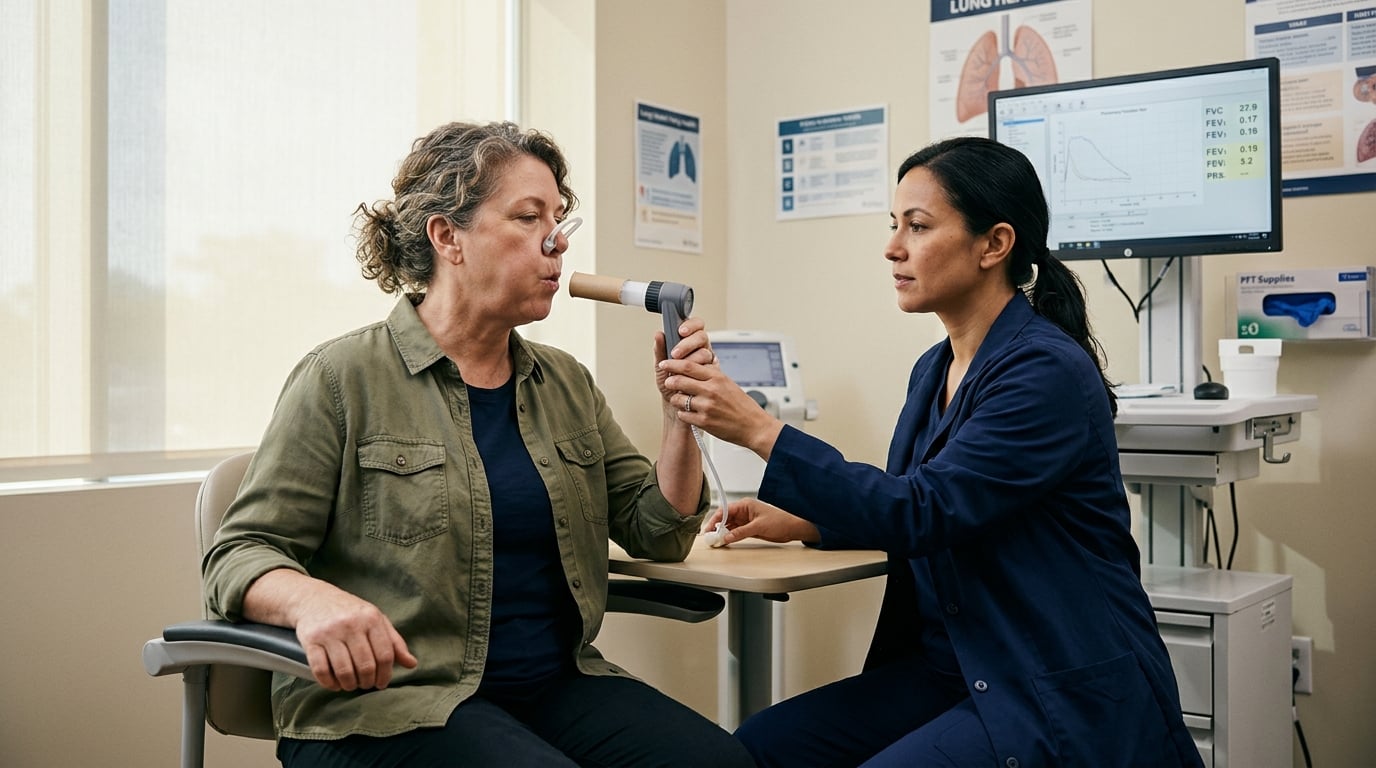
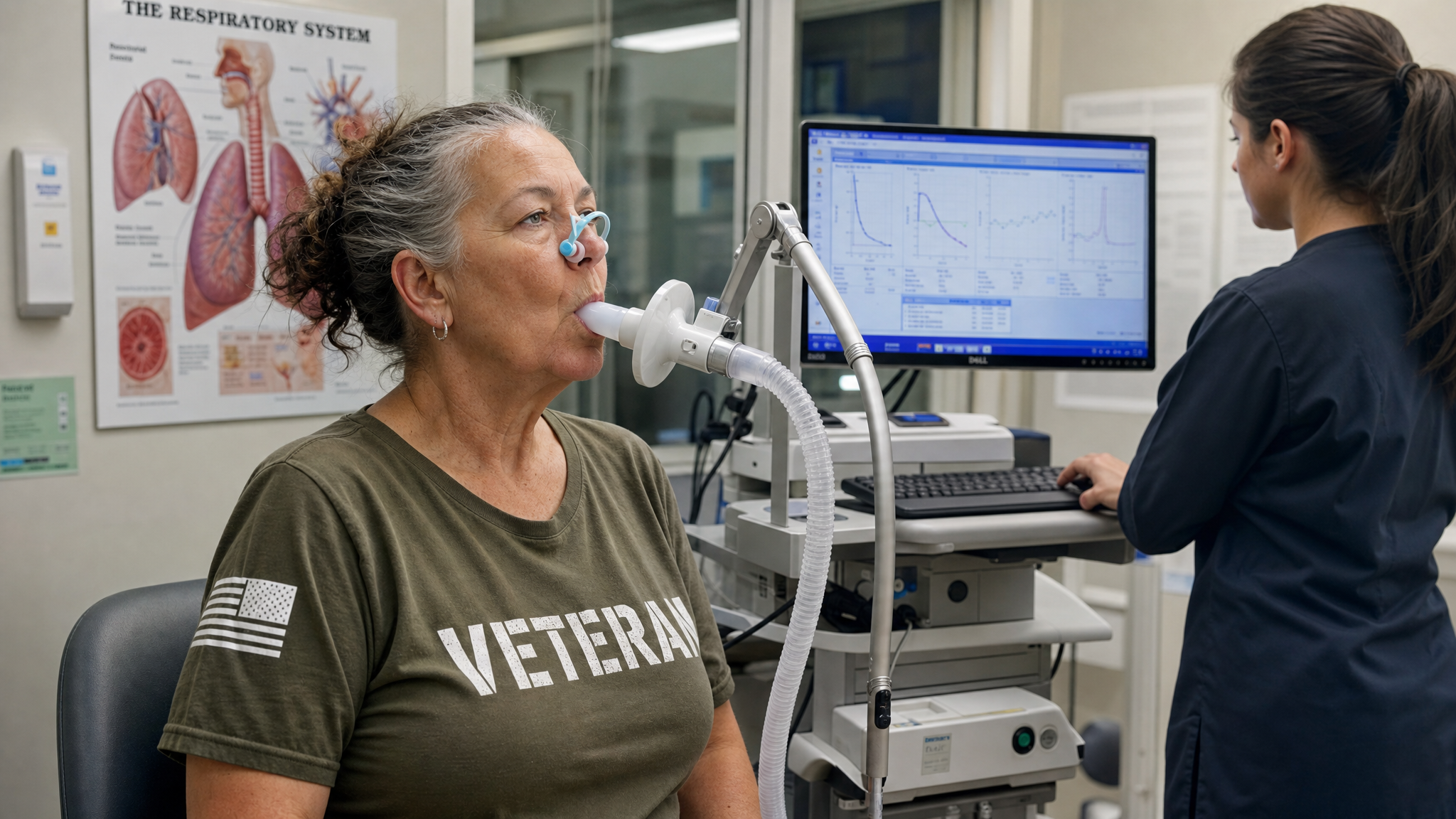
Every presumptive condition is rated on the same VA scale as any other — by how much it limits you, not by how you were exposed. Presumptive status settles one question only: whether the exposure happened. It does not settle the diagnosis and it does not settle the severity, which is where these claims are actually won and lost. Two veterans with the same presumptive cancer can be rated 100% and 10% depending on whether they are in active treatment or in residuals, and an active malignancy generally carries a 100% rating during treatment and for a period afterward before it steps down to whatever function you are left with. Respiratory conditions turn on the numbers from a pulmonary function test, so schedule it on a bad week rather than a good one. The figures below are estimates; your actual rating depends on your records, your exam, and how precisely your worst days were documented.
| Condition | Where it is rated | Typical range | Estimated value |
|---|---|---|---|
| Chronic rhinitis / chronic sinusitis | Nose & sinuses (DC 6510–6522) | Ten to fifty percent | ≈ $180 – $1,133 / mo |
| Asthma, COPD, or chronic bronchitis | Lungs & airways (DC 6600–6604) | Ten to one hundred percent | ≈ $180 – $3,939 / mo |
| Sarcoidosis / interstitial lung disease | Lungs (DC 6825 / 6846) | Zero to one hundred percent | up to ≈ $3,939 / mo |
| Any presumptive cancer — while active | Its own organ system | One hundred percent in treatment | ≈ $3,939 / mo (single) |
| Hypertension (Agent Orange add) | Heart & vessels (DC 7101) | Ten to sixty percent | ≈ $180 – $1,435 / mo |
Dollar figures are 2026 rates (effective Dec. 1, 2025) for a veteran with no dependents and are rounded estimates for illustration, not a promise of any specific award. Multiple conditions combine using VA math — an accredited representative can estimate your true combined rating.
You may still qualify through TERA
If your condition is not presumptive, the PACT Act still requires the VA to review your individual Toxic Exposure Risk Activity (TERA) — a facts-found path that reaches far more veterans than most people realize. It is misunderstood, underused, and often the difference in a claim.
Understand TERAOfficial PACT Act resources
Straight from the source — the VA's own PACT Act pages.