

COPD
Chronic obstructive pulmonary disease from airborne hazards — rated up to 100%.
Chronic obstructive pulmonary disease is a progressive narrowing of the airways that makes it steadily harder to breathe. For veterans, it is increasingly tied to the airborne hazards of deployment, and it is recognized under the PACT Act’s airborne-hazard framework.
Because COPD gets worse over time, documenting it properly protects both today’s rating and tomorrow’s. Here is what it is, why the exposure link matters, and what each level pays.
Could a copd claim be yours?
If you can say yes to the first two lines — you served in a qualifying location during a qualifying period, and you have a current diagnosis — you have the bones of a presumptive claim, and the VA is not permitted to make you prove the exposure. Everything after that is about getting the rating right, which is where almost all of the money is. A conceded connection at 10% and a conceded connection at 70% involve identical exposure evidence and wildly different checks; the difference is entirely in how well your severity is documented. Work down the checklist below honestly. Anything you cannot tick is not a reason to stop — it is the specific gap to close before you file.
A doctor — VA or private — has diagnosed you with copd (or is treating you for it right now).
Your service included one of the covered locations and date windows listed further down this page.
You were never told your service could have caused it, so you never filed.
You filed once, were denied before the PACT Act, and never went back.
You are rated for something already, but this condition was never added to your claim.
You live with residuals — fatigue, scarring, breathing loss, hormonal or mental-health fallout — that nobody has rated.
Any one of the last four lines means money is likely sitting on the table. None of them disqualify you — they are the most common reasons women veterans are underpaid for exactly this condition.
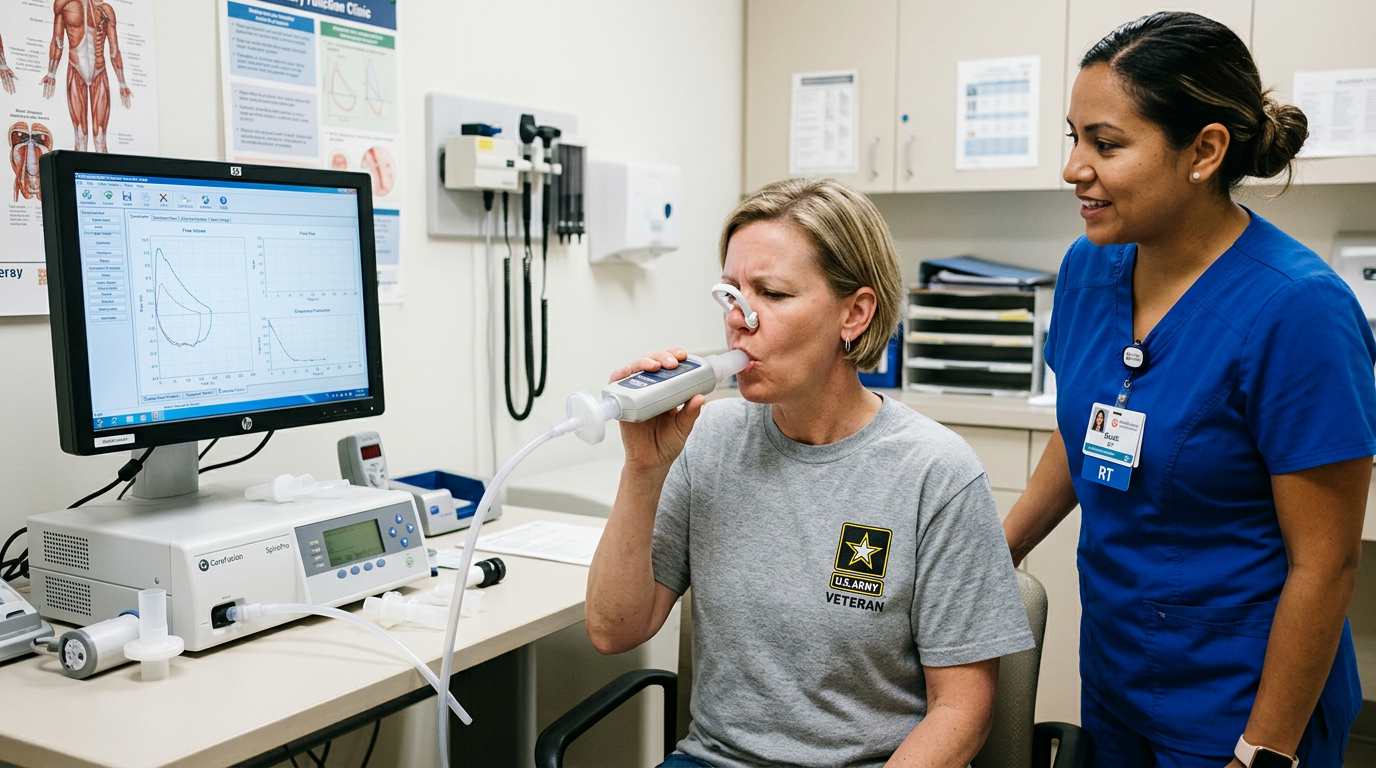
Understanding COPD
COPD is a group of progressive lung diseases — including emphysema and chronic obstructive bronchitis — that block airflow and make breathing difficult. Symptoms include chronic cough, wheezing, tightness and worsening shortness of breath.
The exposure link the VA now accepts for you
Long-term exposure to burn-pit smoke, fine particulate and industrial fumes damages the airways and air sacs of the lungs. COPD after this kind of service exposure is recognized under the PACT Act’s airborne-hazard provisions.
Because this is a presumptive condition, you do not have to prove the science of how your service caused it. If you have a qualifying diagnosis and served in a covered location during a covered period, the VA presumes the connection — your job is to file, attend the exam, and make sure the rating reflects how badly it truly affects you.
Why this hits women differently
Women’s lungs are proportionally smaller, so the same airborne damage can cause a larger relative loss of function — yet women’s breathlessness is more often blamed on deconditioning. Objective breathing tests are what establish the true severity.
What the VA Pays for COPD
COPD is rated under 38 CFR 4.97, Diagnostic Code 6604 (COPD). Here is exactly what each level requires, in plain English — not a table you have to decode.
FEV-1 of 71–80% of predicted, or an FEV-1/FVC ratio of 71–80%, or a DLCO of 66–80%.
FEV-1 of 56–70%, or an FEV-1/FVC ratio of 56–70%, or a DLCO of 56–65%.
FEV-1 of 40–55%, or an FEV-1/FVC ratio of 40–55%, or a DLCO of 40–55%, or maximum exercise capacity of 15–20 ml/kg/min oxygen consumption.
FEV-1 under 40%, or an FEV-1/FVC ratio under 40%, or a DLCO under 40%, or cor pulmonale, or the need for outpatient oxygen therapy.
Source: 38 CFR 4.97, Diagnostic Code 6604 (COPD). Every percentage here is a starting point set by federal regulation, not a promise — your actual rating depends on your records and exam. An accredited representative can confirm exactly what fits your case.
One rating is rarely the whole picture
This condition does not stand alone. The VA combines it with every other service-connected condition you carry using its combined-ratings math — so a presumptive claim can push your overall rating higher than this one number suggests. And if your toxic-exposure conditions together make it impossible to hold steady, gainful work, you may qualify for TDIU (Total Disability based on Individual Unemployability) and be paid at the 100% rate even if no single condition reaches 100%. This is one of the most overlooked ways women veterans are underpaid.
A rating is a monthly, tax-free check — here is the 2026 math
These are the current VA rates for a veteran with no dependents, effective December 1, 2025. Add a spouse, children or dependent parents and every figure at 30% and above goes up. This is why an under-rating is not a technicality — the gap between 30% and 70% is more than $15,072 a year, every year, for life.
Source: the 2026 VA disability compensation tables, effective December 1, 2025. Rates shown are for a veteran alone; Special Monthly Compensation and dependents pay more. An active cancer is rated 100% while it is being treated — $3,938.58 a month — which is why filing during treatment matters.
Getting this rated at its true severity
Keep your pulmonary function tests over time so any decline is documented, and record every medication, inhaler and oxygen requirement. Describe your worst days. An accredited representative can confirm the exposure link and ensure the rating reflects your current lung function.
Do you qualify for COPD?
Under the PACT Act, a presumptive claim comes together when two things are true at once: you have a diagnosis of copd, and your service falls inside one of the covered toxic-exposure windows below. When both are met, the VA presumes your condition is service-connected — you do not have to prove how the exposure caused it.

Post-9/11 service
Afghanistan, Djibouti, Egypt, Jordan, Lebanon, Syria, Uzbekistan or Yemen — or the airspace above them — on or after September 11, 2001.

Gulf War-era service
Bahrain, Iraq, Kuwait, Oman, Qatar, Saudi Arabia, Somalia or the United Arab Emirates — or the airspace above them — on or after August 2, 1990.

Agent Orange & other exposures
Vietnam, Thailand, the Korean DMZ, Camp Lejeune and other recognized sites each carry their own presumptive rules and dates on top of the burn-pit windows.
Not sure whether your dates and locations line up? That is one of the most common reasons a valid claim gets denied, and one of the easiest to fix with the right records. An accredited representative can confirm your covered service before you file, but you have to make the first call.
Filing a claim for COPD, step by step
You can file a PACT Act claim on your own — the presumption does most of the legal work for you — but knowing the order of operations is what keeps it from stalling for a year. File the Intent to File (21-0966) first: it takes minutes and locks your effective date for twelve months, and every dollar of back pay is measured from that date rather than from the day you finally finish gathering records. Then assemble proof of presence and a current diagnosis. Then submit the 21-526EZ. Then show up to the exam prepared to describe your worst weeks in the schedule's own terms. Filing a bare claim first and hoping the VA develops it is the most common way a straightforward presumptive case comes back underrated — the rater decides on whatever is in the file the day they open it. Here is what the process looks like from start to decision.

Confirm the diagnosis
Make sure the condition is documented in your medical records — from the VA or a private doctor. A clear, current diagnosis is the first half of a presumptive claim.
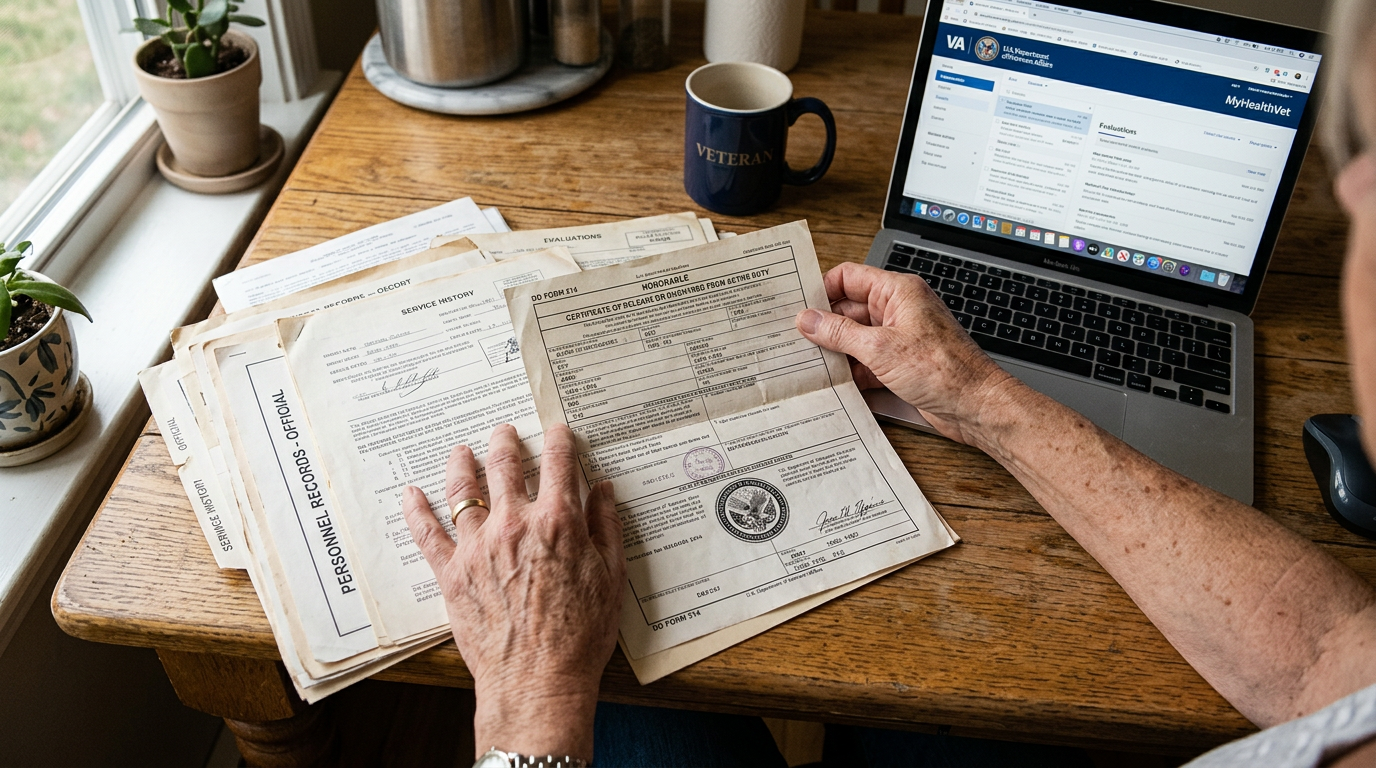
Establish your covered service
Pull your DD-214, deployment orders and duty history to show you served in a covered location during a covered period. This is the second half — and once both are met, the VA presumes the link.

File the claim
File for disability compensation on VA Form 21-526EZ and name the condition and your toxic exposure. If you are not ready to file everything yet, submit VA Form 21-0966 (Intent to File) first — it locks in your effective date for up to a year, which is what back pay is calculated from.
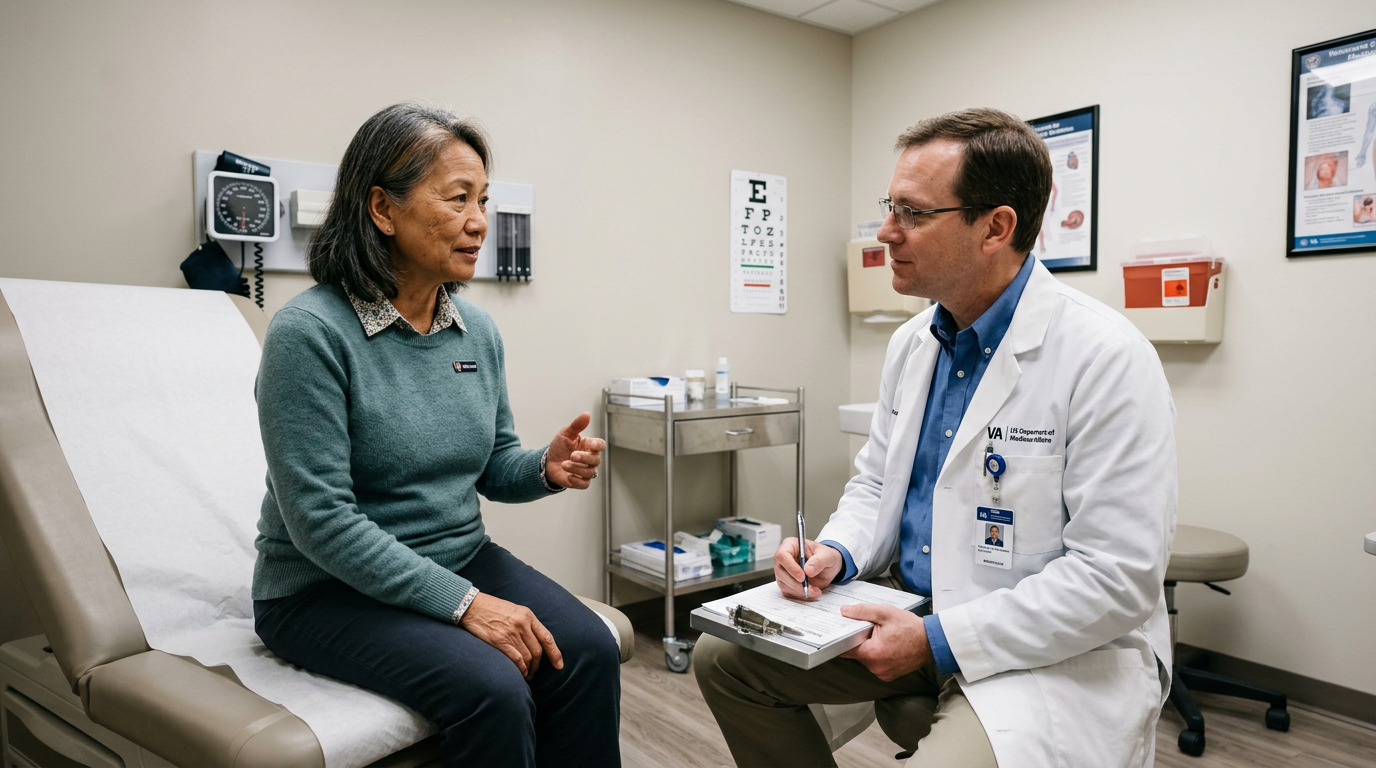
Attend the C&P exam
The VA will schedule a Compensation & Pension exam. Describe your symptoms on your worst days, not your best — the rating is set from what the examiner records, and a short, polite exam is the most common reason a valid claim comes back under-rated.
You do not have to do this alone
A free, no-obligation record review will tell you whether copd fits the presumptive rules for your service — and exactly what to file. Scroll down to request yours.
The PACT Act & Toxic Exposure, Explained
A couple of clear, trustworthy explainers on the PACT Act and toxic-exposure benefits, from official sources. They are worth watching because they are the government describing its own obligations on the record — useful the next time someone at a regional office treats your exposure as a novel theory. Pay particular attention to the free toxic exposure screening: it takes about five minutes, every enrolled veteran is offered one at least every five years, and it puts a permanent note in your medical record that you reported exposure. That note is evidence later. Nothing here replaces the rating detail on this page; it backs it up. Watch whenever you are ready.
Ask About the Toxic Exposure Screening
The Veterans Health Administration walks through the free toxic exposure screening every enrolled veteran can request — and why it starts your exposure record.
The PACT Act and Your VA Benefits
The Department of Veterans Affairs explains expanded health care, presumptive respiratory conditions, and who qualifies after burn-pit and airborne-hazard exposure.
These videos are shared for general education from official and third-party sources. They are not legal advice, and watching them is never required to get help with your claim.
Real numbers, answered by real people
You do not need an appointment or an account to start. These are the lines that actually move a toxic-exposure claim forward, and none of them cost anything. If you are not sure which one you need, call the Women Veterans Call Center first and say what is going on — they route you to the right desk instead of leaving you on hold at the wrong one.
VA Benefits Hotline
File, check a claim, or ask what the PACT Act covers for your service.
Call 800-827-1000Mon–Fri, 8am–9pm ET
Women Veterans Call Center
Staffed entirely by women. Toxic-exposure screening, enrollment, and who to see at your VA.
Call or text 1-855-829-6636Mon–Fri 8am–10pm ET · Sat 8am–6:30pm ET
Veterans Crisis Line
If a diagnosis has you in a dark place right now, you do not have to wait.
Call 988, then press 1Free, confidential, 24/7 · text 838255
Official VA Forms & Links
Everything you need to understand this claim is already on this page. These links are here in addition, so you can download the exact form or read the VA's own page — each one opens on va.gov, off Women Veterans Claim Help.
VA Form 21-526EZ
Application for Disability Compensation — the form for a presumptive claim
VA Form 21-0966
Intent to File — locks in your effective date while you gather records
VA Form 21-4142
Authorization to release private medical records to the VA
PACT Act & your VA benefits
The official VA overview of the law and what it changed
Toxic exposure and VA disability eligibility
The VA’s own page on hazardous-materials exposure claims
2026 disability compensation rates
The full official rate tables, effective December 1, 2025
COPD & the PACT Act: Straight Answers
The questions that come up most often about presumptive claims, old denials, ratings, and what filing actually costs you.
Do I have to prove that my service caused copd?
No. That is the whole point of a presumptive condition. If you have a qualifying diagnosis and you served in a covered location during a covered period, the VA presumes the connection. You still have to document the diagnosis and the service — but you do not have to produce medical literature or an expert opinion tying the two together.
What if the VA already denied me for this before the PACT Act?
A prior denial does not close the door. Congress expected exactly this situation: veterans denied for conditions that are now presumptive can file a supplemental claim, and if it is granted the VA can go back to the date of the original claim in many cases — which is where large back-pay awards come from. Do not assume an old denial is final.
How long does a PACT Act claim take?
There is no single number, and anyone who promises one is guessing. What you can control is the order of operations: file an Intent to File to lock your effective date, get the diagnosis and service records in the file up front, and show up to the C&P exam. Claims stall most often because a record was missing or an exam was missed — not because of the law.
What rating will I get for copd?
Nobody can promise a percentage, because the rating comes from the criteria in the schedule above applied to your records and your exam. What you can do is make sure the evidence actually shows your worst days, and that every residual and secondary condition is claimed — that is usually the difference between a low rating and an accurate one.
Does filing a claim cost anything, or affect my VA health care?
Filing costs nothing. Enrolling in VA health care costs nothing. A granted claim can only raise your priority group and lower your copays — it never reduces care you already receive. And an accredited representative cannot charge you a fee on a first-time claim.
What if my condition is not on the presumptive list?
You can still be service-connected the traditional way by showing a diagnosis, an in-service exposure or event, and a medical link between them. The presumptive list makes some claims automatic; it does not limit what can be claimed. Toxic-exposure claims outside the list win regularly with the right evidence.
Still have a question about your own situation?
See every presumptive condition, or read how the PACT Act works.