

Urinary & Pelvic-Floor Conditions
Recurrent UTIs, interstitial cystitis, urinary incontinence and pelvic-floor dysfunction are among the most under-reported service-connected conditions in women — for a specific reason. Long field and deployment stretches with no safe, clean or private facilities forced many women to “hold it” for hours, day after day, causing lasting damage.
These are ratable disabilities that can be tied directly to service. Everything is on this page, in plain English: what they are, why they hit women, what in your service caused them, exactly what each level pays, how the VA underrates them, and how to build a claim that holds up.
What These Conditions Really Are
These are physical disabilities of the bladder and pelvic floor. Recurrent UTIs are repeated infections that can scar and damage the urinary tract. Interstitial cystitis is chronic bladder pain and urgency. Urinary incontinence is loss of bladder control — leakage with a cough, a laugh, or no warning at all. Pelvic-floor dysfunction is damage to the muscles that hold the bladder in place. None of them are “just getting older” when they trace back to service.
The word your entire rating turns on is leakage — specifically, how often you have to change absorbent material. The VA does not rate how embarrassed you are or how much you have quietly managed it. It rates the frequency, in numbers. Getting that frequency documented honestly is the difference between a 20% and a 60% rating.

“Leakage” — and why frequency is everything
What gets measured
Not pain or embarrassment — the number of times a day you change absorbent material, and how often you have to void. Those counts map directly to a percentage.
Why it decides the claim
Fewer than 2 changes a day is 20%; more than 4, or needing an appliance, is 60%. The same condition can pay very differently depending on what the record shows.
Why women lose points here
Embarrassment keeps women from stating the true frequency at the exam, so the rating comes in low. A bladder diary in plain numbers is what protects it.
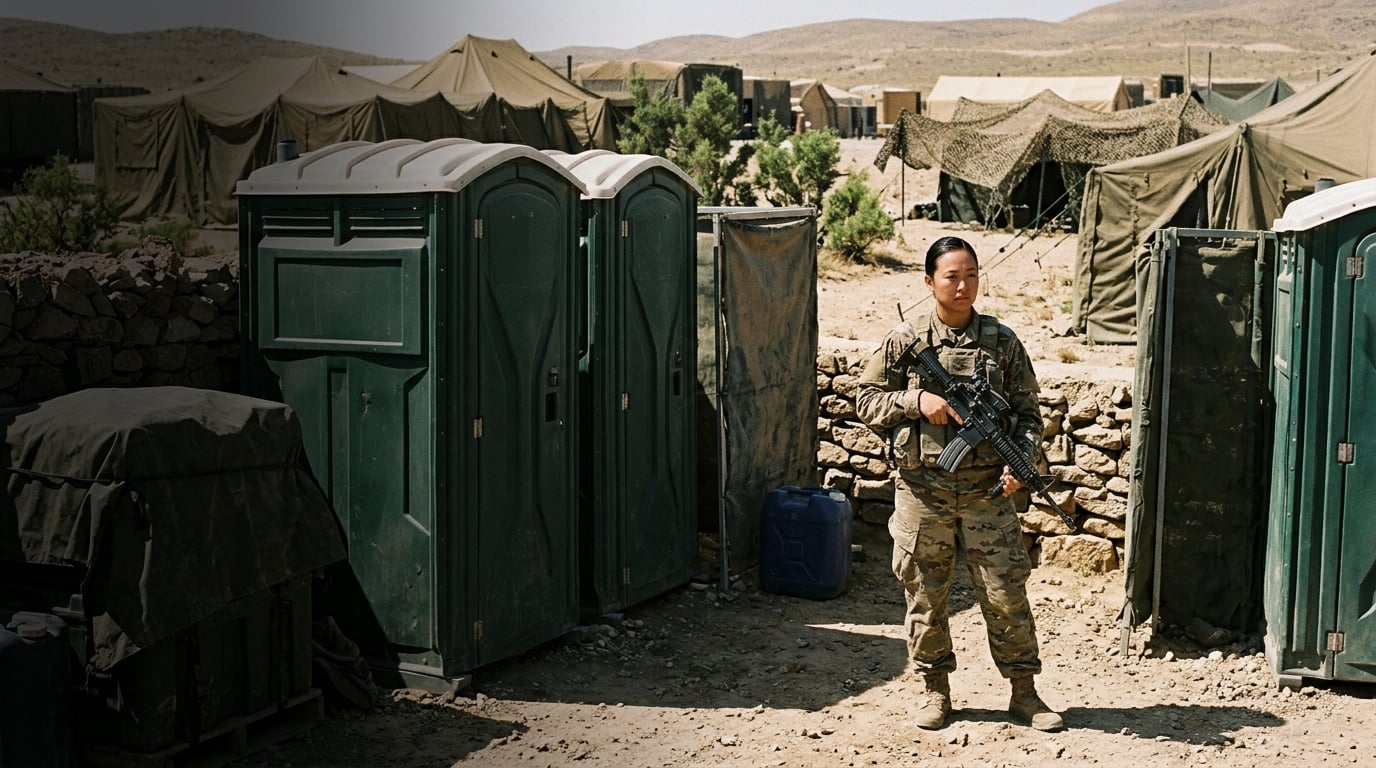
A hazard built into the field — and almost never filed
Women faced a problem the system was never designed around: nowhere safe or private to go. On patrol, on convoy, in mixed billeting and forward positions, the choice was to hold it for hours or to stop drinking altogether. Both cause damage. Repeated over a deployment, they leave chronic infections, an irritated bladder and a weakened pelvic floor.
Then embarrassment does the rest. Women do not raise it at the exam, examiners do not ask, and a real, ratable disability is quietly left off the claim. There is nothing shameful here — it is a service-caused injury like any other. Naming it and dating it to your service is what turns it into compensation.
By the Numbers
These figures come from the VA’s own rating schedule. Urinary and pelvic floor conditions are among the most under-claimed disabilities among women veterans, and the reason is not medical — it is that almost nobody wants to write it down or say it out loud in an exam room. Understand what that silence costs. Under 38 CFR §4.115a, urine leakage that requires absorbent materials changed more than four times a day is a 60 percent disability. Daytime voiding at intervals of less than one hour, or waking five or more times a night, is 40 percent. Recurrent symptomatic urinary tract infections requiring long-term drug therapy carry their own rating. These numbers are already in the law; the VA is not doing you a favor by applying them. If you have spent years quietly managing this alone — planning routes around bathrooms, keeping a spare set of clothes in the car, avoiding exercise — read these slowly. This is a compensable disability, not something to be ashamed of.
Up to 60%
the schedular rating for urine leakage when you change absorbent material more than four times a day or need an appliance (§4.115a)
40%
the maximum rating for urinary frequency — voiding less than hourly by day or five or more times a night
Under-filed
among the most under-reported service-connected conditions in women — almost never raised by examiners
Direct
these conditions can be tied directly to service through field conditions and in-service treatment records
No deadline
there is no time limit to file — damage that started in service is still claimable years later
Private
the claim is handled with discretion — your privacy is protected throughout the process
What in Your Service Causes It
These are the recognized origins the VA will connect to service — directly under 38 CFR §3.303, as a secondary condition under §3.310(a), or by aggravation under §3.310(b). Most denials happen for one of two reasons, and neither is about whether you are actually disabled. The first is that nobody tied the diagnosis back to a recognized origin in writing, so the rater had nothing to grant on. The second is quieter and more common: embarrassment kept it off the record entirely for fifteen years, and the file now shows no complaints. Both are fixable. The origins the VA accepts are not exotic — childbirth during service, pelvic or abdominal surgery, spinal and nerve injury, chronic infections, the aftermath of sexual assault, hormonal changes from surgical menopause, and toxic exposure affecting the kidneys and bladder all appear in granted claims. Find yours in this list, then make sure the connection is stated plainly somewhere a rater will actually read.

No safe or private facilities
On deployment and in the field, the lack of safe, clean, private facilities forced hours of urinary retention — day after day. “Holding it” for an entire shift is a direct, recognized path to chronic bladder irritation and pelvic-floor damage. This is the origin story most examiners never think to ask about.

Recurrent field UTIs
Field hygiene conditions, heat and dehydration drive repeated urinary tract infections. Treated on sick call and then forgotten, they can become chronic and cause lasting damage to the bladder and kidneys. Each documented infection in your service records is a building block of the claim.

Heavy lifting & load-bearing
Rucking, load-bearing gear, heavy lifting and repetitive impact weaken and injure the pelvic-floor muscles that control the bladder. The same service that wears out backs and knees also damages the muscles that hold everything in place — which is why urinary and musculoskeletal claims so often travel together.

Deliberate dehydration
Many women drank less on purpose to avoid using unsafe or exposed facilities. Concentrated urine irritates the bladder and feeds infection, and the habit compounds the harm over a whole deployment. It was a survival strategy at the time — and it left real, ratable damage behind.
What the VA Pays for These Conditions
Urinary conditions are rated under 38 CFR §4.115a on function, not on diagnosis — which means the label your doctor uses matters far less than what your bladder actually does to your day. There are three separate measuring sticks and you are rated on whichever gives you the highest evaluation. Voiding dysfunction / urine leakage: absorbent materials changed less than twice a day is 20 percent, changed two to four times a day is 40 percent, and an appliance or materials changed more than four times a day is 60 percent. Urinary frequency: daytime intervals of two to three hours or waking twice a night is 10 percent, intervals of one to two hours or waking three to four times is 20 percent, and intervals under an hour or waking five or more times a night is 40 percent. Urinary tract infection: long-term drug therapy with one or two hospitalizations a year is 10 percent, and recurrent symptomatic infection requiring drainage or frequent hospitalization is 30 percent. Every one of these tiers is a count — which is exactly why an undocumented count gets you the bottom tier. Here is what each level requires, in plain English.
Urine leakage / voiding dysfunction (§4.115a): 20% if you change absorbent material fewer than 2 times a day; 40% for changing 2–4 times a day; 60% for more than 4 times a day or needing an appliance. The rating is driven almost entirely by how often you have to change protection.
Urinary frequency: 10% when you void every 2–3 hours or twice a night, rising to 40% when you go less than every hour during the day, or five or more times a night. Nighttime frequency that wrecks your sleep counts here.
Recurrent symptomatic UTIs: generally 10–30% depending on how much treatment they require — from long-term drug therapy up to repeated hospitalization or continuous intensive management.
Source: 38 CFR §4.115a and §4.115b, which rate voiding dysfunction, urinary frequency and recurrent infections of the genitourinary system. Every percentage here is a starting point set by federal regulation, not a promise — your actual rating depends on your records and exam. An accredited representative can confirm exactly what fits your case.
These rarely come as a single rating
A damaged pelvic floor rarely stops at the bladder. Leakage, frequency, recurrent infections and the depression that comes with them can each carry a rating that combines into a higher total. If the condition makes steady work impossible, ask about TDIU — you can be paid at the 100% rate even when your combined schedular rating is lower.
Understanding Urinary & Pelvic-Floor Conditions
The pelvic floor is a hammock of muscle and connective tissue that holds the bladder, uterus, and rectum in place and controls continence — and it takes real damage from childbirth, heavy load carriage, pelvic surgery, nerve injury, and chronic straining. These are clear explainers from respected medical sources on how that system works and what goes wrong: the difference between stress incontinence and urge incontinence, why prolapse changes bladder mechanics, why recurrent infections become a cycle, and what pelvic floor physical therapy, pessaries, medication, and surgery can genuinely do. Two things worth knowing before you watch: this is common, and it is treatable — VA women’s health clinics provide urogynecology referrals and pelvic floor therapy. Getting treated also creates the treatment record your claim needs. Watch whenever you’re ready.
Bladder Leaks in Women — What Causes Them
Stanford Health Care explains the causes of urinary incontinence and bladder leaks in women and the treatment options that can help.
Understanding Urinary Incontinence
A clear medical overview of the types of urinary incontinence, why pelvic-floor strain drives it, and what can be done about it.
These videos are shared for general education from third-party medical creators. They are not legal advice, and watching them is never required to get help with your claim.

How the VA Quietly Underrates These Claims
These claims get lowballed for one dominant reason: the true frequency never makes it onto paper. Every tier under §4.115a is a number — pads per day, voids per hour, times you wake at night, infections per year — and the examiner will write down whatever you say when they ask. Veterans who have spent a decade quietly managing this round down out of habit and embarrassment, and “a few times” becomes a 20 percent rating instead of a 40 or 60. The second failure is a record with no diagnosis attached, because you handled it yourself and never reported it, which the rater reads as an absence of the condition. The third is a claim filed for a single label — “incontinence” — when the file actually supports separate consideration of infections and pelvic floor dysfunction. The fourth is a decision that never addresses the secondary path from a spinal injury, surgery, or MST-related condition already in your file. Here is exactly how it happens — so you can head it off:
- The examiner never asks how often you change protection, so the rating defaults to the lowest tier
- Embarrassment leads to understating symptoms in the exam room — and the record follows what was said
- Nighttime frequency that destroys your sleep is left out because no one asked about nights
- The condition is written off as “age” or “childbirth” instead of connected to field service
This is where an accredited representative earns their place — making sure the true frequency is documented, the nights are counted, and the field origin is tied to your record.
Secondary Claims — The Connections Most Women Miss
Urinary and pelvic-floor problems rarely stand alone. They are frequently caused by another service condition — and they frequently cause new ratable problems. Each recognized link is a separate rating you may be leaving on the table.

Urinary problems caused by something else
If any of these applies, your condition can often be connected as secondary to it:

Conditions your urinary problems can cause
Once it is service-connected, these can be claimed as secondary to it:
A secondary claim needs a diagnosis plus a medical opinion (“nexus”) saying the link is at least as likely as not. This is one of the highest-value things an accredited agent helps build.
Building a Claim That Wins
These claims are won on the diagnosis, the service link, and a record that captures the true frequency. Quiet endurance earns you nothing in a rating decision. Start with a two-week bladder diary and take it to your appointment: date, every void, every leak, how many pads or liners you used, and how many times you got up at night. That single document does more for this claim than anything else you can produce, because it converts a subject you hate discussing into the exact counts §4.115a is written around. Get the diagnosis on paper from primary care, urology, or urogynecology. State the service link explicitly — childbirth on active duty, pelvic surgery, a back or nerve injury you are already rated for, chronic infections, or an MST-related condition. Then file: Intent to File (VA Form 21-0966) to lock the effective date, VA Form 21-526EZ for the claim, and VA Form 21-4142 to release private urology records. Say the real numbers at your exam. Here is what a strong file is built from:
Every claim stands on three legs
A current diagnosis
A firm diagnosis on record — ideally from a urologist or urogynecologist, which the VA weights more heavily than a primary-care note.
An in-service link
Evidence of the field conditions, sick-call visits for UTIs, or the treatment you received in service that ties the condition to your time in.
A nexus
A medical opinion connecting the two — stating the current condition is at least as likely as not related to your service.

A bladder diary is what sets the rating
Your rating is built on frequency, and the VA only sees what is written down. Keep a diary for one to two weeks before your exam. Each day, note:
- How many times you changed absorbent material
- How often you voided during the day and overnight
- Any leakage — with a cough, a laugh, lifting, or no warning
- Infections, treatment and any accidents that kept you from work
What to expect at the C&P exam
The examiner works from the genitourinary DBQ. Three things protect your rating:
Bring your bladder diary
It is the objective record of frequency and leakage — the numbers that decide your percentage.
State the real frequency
Do not round down out of embarrassment. Say plainly how many changes and how many night-time trips a typical day involves.
Connect it to work
Spell out accidents, missed days and the constant search for a restroom — that is how true severity gets counted.
When you are ready to file
File on VA Form 21-526EZ, list every urinary and pelvic-floor symptom, have your urologist complete the DBQ, and attach your bladder diary. Do not let embarrassment keep a real disability off the claim. You can also open the disability calculator to see how these ratings would combine.
Your Rights — Know Them Before You File
The system is easier to face when you know the rules are on your side. These protections apply to your your urinary or pelvic floor condition claim from the moment you start.
You never pay a fee just to file. A VA-accredited representative can help you at no upfront cost — anyone demanding money up front to "start" your claim is a red flag.
The VA has a legal Duty to Assist — it must help you gather your service and medical records, and must tell you what evidence is still missing BEFORE it issues a denial.
You have the right to request a female provider and a trauma-informed clinician for any exam connected to your claim.
You have the right to file for every condition you live with — including secondary conditions your service-connected condition caused or made worse.
A single low rating is not the end of the road. You have the right to appeal, to submit new evidence, and to be re-evaluated as your condition changes.
If your conditions together keep you from holding steady, gainful work, you have the right to be considered for TDIU — paid at the 100% rate even if no single condition reaches 100%.
Questions Women Ask About Urinary & Pelvic Floor Claims
Straight answers to the questions that stop women from filing — or from claiming everything they are owed.
How does the VA actually rate urinary and pelvic floor problems?
Voiding dysfunction is rated largely on how often you leak and how much protection you need — specifically how frequently you have to change absorbent materials or pads in a day. The more often, the higher the rating. Being honest and specific about that frequency at your exam directly affects the outcome.
What can these conditions be connected to?
Urinary and pelvic floor dysfunction can be service-connected to childbirth during service, pelvic or abdominal trauma, military sexual trauma, or surgery. It can also arise secondary to gynecological conditions or to spine and nerve conditions that affect bladder control. There are several valid routes to connection, and the right one depends on your record.
I find this exam humiliating. Do I have any say?
You do. You can request a female provider, you can bring someone with you, and you are entitled to be treated with dignity throughout. This is a legitimate, ratable medical disability — not something to be embarrassed about — and an accredited advocate can help make sure the process respects that.
Can this be filed as a secondary condition?
Yes. Pelvic floor and urinary dysfunction are commonly filed as secondary to service-connected gynecological conditions, or to spine and nerve injuries that disrupt bladder control. A secondary claim needs a medical opinion linking it to the already service-connected condition — you do not have to start from scratch on service connection.
When You Are Ready to File
Before you file anything, talk to an accredited agent first — it is free. A claim is won or lost on how it is built: the diagnosis on record, the right in-service connection, and whether every condition and secondary is captured. Once a claim is submitted it is much harder to fix than to get right the first time. There is no fee to have an accredited claims agent (#45147) review your situation and tell you honestly whether and how we can help.
You now know what the VA looks for — it is all above. When you are ready, the forms themselves are downloaded and submitted on the official VA site. These are the exact ones you will use:
Resources — Save These
Every one of these is free and confidential. You do not need to be enrolled, rated, or “official” to use any of them. Tap any card to take action now — the phone numbers dial straight from your phone.