

Mental Health & MST-Related Conditions
PTSD, depression and anxiety — including conditions connected to Military Sexual Trauma — are all rated on one scale under 38 CFR §4.130. The VA does not rate the trauma itself; it rates how severely your condition impairs your ability to work and function in daily life.
The rules were deliberately changed to protect survivors: MST claims do not require the standard stressor proof, and an Other-Than-Honorable discharge does not automatically bar you. Everything is on this page — what these conditions are, why they hit women, what causes them, what each level pays, how the VA underrates them, and how to build a claim that holds up.
What These Conditions Really Are
PTSD, depression, anxiety and related conditions are recognized mental-health disabilities — not weakness, and not something you should have been able to “get over.” When they arise from MST, combat, a hostile command climate or a TBI, they are service-connected injuries every bit as real as a wound. The VA does not rate the trauma; it rates the impairment the trauma left behind.
The phrase your entire rating turns on is occupational and social impairment. Every level of §4.130 is defined by how much your condition damages your ability to hold a job and sustain relationships. Describing that impairment honestly — not minimizing it — is what decides whether you are rated at 30%, 70%, or 100%.

“Occupational and social impairment” — the words §4.130 turns on
What it means
How much the condition damages your ability to work and to sustain relationships. Symptoms matter, but the level is set by their effect on function — not by the diagnosis alone.
How the levels work
50% is reduced reliability and productivity; 70% is deficiencies in most areas of life; 100% is total impairment. One scale covers PTSD, depression and anxiety together.
Why women lose points here
Women often push through and minimize symptoms at the exam — “I’m managing” — and the rater scores the words that were said. Describing the real impairment is what protects the rating.

Why MST makes this different — and why the burden was lifted
For women veterans, Military Sexual Trauma is the single leading predictor of PTSD — ahead of combat. And it is the hardest to prove the old way, because assaults so often went unreported, or reporting brought retaliation instead of protection. The VA recognized this and relaxed the rules: MST claims can be supported by marker evidence instead of a formal report.
A request for transfer, a sudden drop in performance, a visit to a chaplain, a breakup, new anxiety or a substance problem that appeared after the event — any of these can stand in for a report that was never filed. And an Other-Than-Honorable discharge, which was sometimes the result of the trauma itself, does not automatically bar the claim. The system finally bent toward the survivor. The task now is documenting it.
By the Numbers
These figures come from the VA’s rating schedule and its own MST research. Military sexual trauma is not a diagnosis and it is not a rating — it is an experience, and what gets rated is the condition it left behind: PTSD, depression, anxiety, an eating disorder, a substance use disorder that started as self-medication. The VA has spent years acknowledging that most MST is never formally reported, which is precisely why 38 CFR §3.304(f)(5) exists and allows evidence from outside the service record to establish that the assault occurred. Free MST-related care is available under 38 U.S.C. §1720D with no enrollment requirement, no copay, and no time limit — and getting that care is separate from, and does not obligate you to, filing a claim. If you have carried this alone for years and told yourself it was not “bad enough” to claim, read these numbers slowly. The threshold is not how much you suffered compared to someone else; it is whether the condition impairs your work and your life.
Leading
MST is the single leading predictor of PTSD in women veterans — ahead of combat exposure
Up to 100%
PTSD, depression and anxiety can be rated as high as 100% for total occupational and social impairment (§4.130)
50% min
a minimum rating that can apply for the first six months after a trauma-based discharge (§4.129)
No stressor proof
MST claims can be built on marker evidence instead of a formal in-service report
One scale
PTSD, depression and anxiety are all rated together under a single general formula
No deadline
there is no time limit to file — a condition you have lived with for decades is still claimable today
What in Your Service Causes It
These are the recognized service origins behind these conditions. Most denials happen because the stressor was never named, or because a marker-based MST claim was judged by the old “no report, no claim” standard that no longer applies.

Military Sexual Trauma
MST is the single leading cause of PTSD in women who served — ahead of combat. Because assaults so often go unreported, the VA deliberately accepts indirect “marker” evidence: a sudden transfer request, a drop in performance, a visit to a chaplain or clinic. You do not need a formal report on file to prove it happened.

Combat & operational stress
Combat exposure, casualties, convoy attacks and life-threatening operations produce PTSD, depression and anxiety — all rated under the same formula. Women served in and alongside combat far more than their records often show, and “no combat MOS” is not the barrier the VA sometimes treats it as.
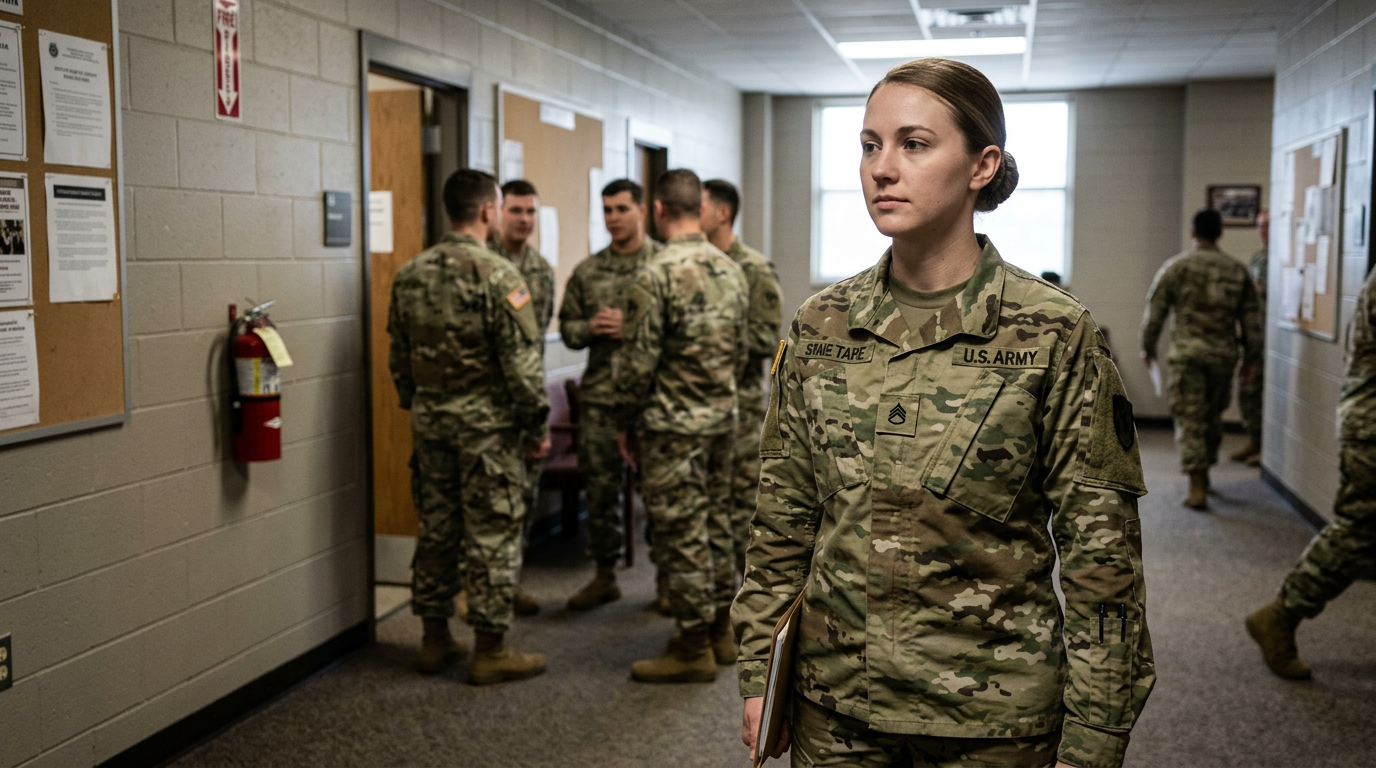
Hostile command climate & moral injury
Harassment, betrayal by leadership, and being disbelieved or retaliated against cause lasting mental-health conditions. Moral injury — being forced to act against your own conscience, or being failed by the people who should have protected you — is real, service-connected harm.

Traumatic brain injury
TBI from blasts, vehicle accidents and training injuries frequently coexists with and worsens PTSD, depression and anxiety. The overlap is important: TBI and a mental-health condition can each be rated, and untangling them is exactly the kind of thing a rater gets wrong on their own.
What the VA Pays for These Conditions
Every mental-health condition here — PTSD, depression, anxiety, and MST-related conditions — is rated on one single scale: the General Rating Formula for Mental Disorders at 38 CFR §4.130. The diagnosis does not set the percentage. Occupational and social impairment does. The tiers are 0, 10, 30, 50, 70, and 100 percent, and the jump from 30 to 70 is worth thousands of dollars a year, so knowing what separates them matters more than almost anything else in your claim. The VA also may not assign only one rating per diagnosis and then stop — where you carry multiple mental-health diagnoses, they are rated together under this one formula, so the question is always the total impairment. Two other rules are worth knowing: §4.7 requires that where the picture falls between two tiers, the higher one is assigned if it more nearly approximates your disability, and §4.129 requires a minimum 100 percent rating for at least six months when you were discharged because of a mental disorder caused by a highly stressful event. Here is what each level actually means, in plain English.
The general rating formula (§4.130) rates all of these on one scale by overall occupational and social impairment: 0% and 10% for mild or controlled symptoms; 30% for occasional decrease in efficiency; 50% for reduced reliability and productivity; 70% for deficiencies in most areas — work, family, judgment, mood; 100% for total occupational and social impairment.
§4.129: when a servicemember is discharged because of a mental condition arising from a traumatic in-service event, a minimum 50% rating applies for the first six months after separation, with a re-examination to follow. It exists precisely because MST and trauma-based discharges were once under-rated.
Source: 38 CFR §4.130 (the general rating formula for mental disorders) and §4.129. Every percentage here is set by federal regulation, not a promise — your actual rating depends on your records and exam. An accredited representative can confirm exactly what fits your case.
When work becomes impossible
A mental-health condition rarely travels alone — sleep disorders, physical pain and other conditions combine with it into a higher total. If your symptoms make steady work impossible, ask about TDIU — you can be paid at the 100% rate even when your combined schedular rating is lower. For a deeper walk-through, see the full mental-health page.
Understanding PTSD, Trauma & Recovery
Trauma is not a character flaw and it is not weakness — it is a nervous system that learned to stay ready and never got the signal to stand down. These are clear explainers from respected medical sources on what that actually does to the brain and body: why memory of the event can be fragmented, why the startle response outlasts the danger by decades, why avoidance feels like coping and slowly shrinks your life, and what evidence-based treatment such as CPT, prolonged exposure, and EMDR is genuinely able to do. Understanding the mechanism helps twice — it makes the symptoms less frightening, and it gives you accurate language for the exam room instead of the reflex to say you are fine. Watch whenever you’re ready, in whatever order you want, and stop any time. If watching gets heavy, the Veterans Crisis Line is 988, press 1, or text 838255.
PTSD Stressors: What VA Needs & How to Prove It
A practical breakdown of what counts as a stressor for a VA PTSD claim, the evidence the VA looks for, and how to document it so your claim holds up.
VA Claim Denied for PTSD? File a Different Mental Health Claim
If your PTSD claim was denied, this explains why filing for a different mental health condition under the same rating schedule can be a winning strategy.
These videos are shared for general education from third-party medical creators. They are not legal advice, and watching them is never required to get help with your claim. If you are in crisis, dial 988 then press 1 for the Veterans Crisis Line.

How the VA Quietly Underrates These Claims
Mental-health claims get lowballed for one reason above all others: the impairment is invisible, and you have spent years getting very good at hiding it. You put on real clothes for the exam, you are polite, you answer in complete sentences, and the examiner writes that you presented as well-groomed, cooperative, and oriented — three phrases that quietly become the basis for 30 percent instead of 70. The rating criteria at §4.130 are about how you function across a bad month, not how you performed for forty-five minutes in a strange office. The second common lowball is a file with no treatment history, because you never went, which gets read as an absence of severity rather than an absence of access. The third is a claim built only on the diagnosis, with nothing describing missed work, lost relationships, panic in crowds, or the jobs you left. Here is exactly how it happens — so you can head it off:
- A rater who conflates “still able to hold a job” with “no real impairment” and drops you a level
- An MST claim judged against the old “no formal report, no claim” standard that no longer applies
- Markers — transfer requests, performance drops, chaplain visits — sitting in the file, never connected
- A veteran who minimizes at the exam — “I’m fine, I’m managing” — and is scored on those words
This is where an accredited representative earns their place — surfacing the markers, making sure the true impairment is on the record, and holding the VA to the survivor-protective rules that already exist.
Secondary Claims — The Connections Most Women Miss
A mental-health condition is rarely isolated. It is frequently caused by a service event or another condition — and it frequently causes new ratable problems. Each recognized link is a separate rating you may be leaving on the table.

A mental-health condition caused by something else
If any of these applies, your condition can often be connected as secondary to it — or directly to the event:
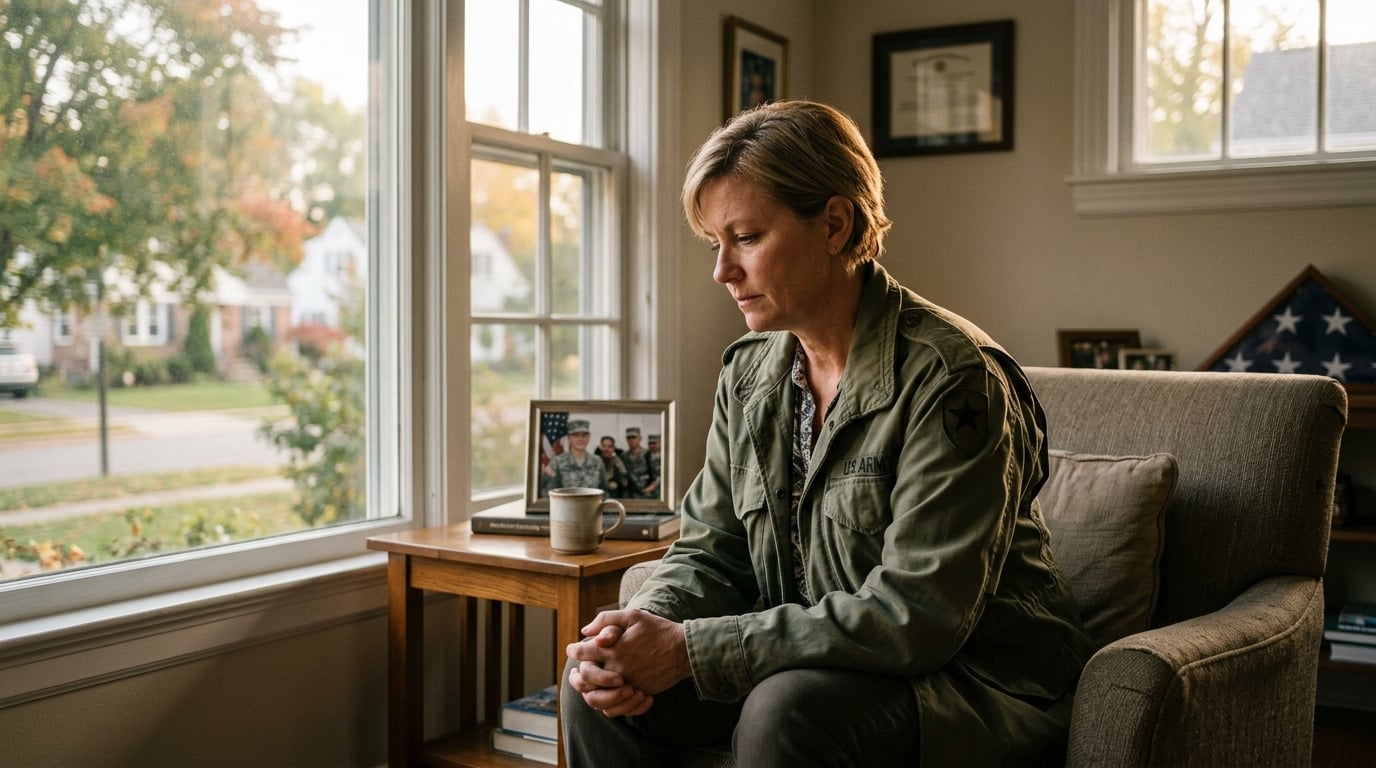
Conditions your mental-health condition can cause
Once it is service-connected, these can be claimed as secondary to it:
A secondary claim needs a diagnosis plus a medical opinion (“nexus”) saying the link is at least as likely as not. This is one of the highest-value things an accredited agent helps build.
Building a Claim That Wins
These claims are won on three things: a current diagnosis, a stressor or a marker, and a record that captures the true impairment. How much you have quietly held together counts for nothing in a rating decision, and that is a hard, unfair truth worth saying out loud. For MST specifically, 38 CFR §3.304(f)(5) lets you prove the assault with markers instead of a police report — a sudden request for transfer, a drop in performance evaluations, unexplained economic or social changes, a new pregnancy or STD test, substance use that started out of nowhere, a letter to a friend or family member at the time. One credible marker plus a medical opinion linking your condition to it can carry the claim. Lock your effective date now with an Intent to File (VA Form 21-0966), file on VA Form 21-526EZ, use VA Form 21-4142 to release private therapy records, and consider a personal statement or VA Form 21-0781 describing what happened and what changed afterward. You never have to name your assailant. Here is what a strong file is built from:
Every claim stands on three legs
A current diagnosis
A firm mental-health diagnosis on record — from a psychiatrist, psychologist or VA clinician — tied to a recognized condition like PTSD, depression or anxiety.
An in-service stressor or marker
The event, or — for MST — the markers that stand in for a report: transfer requests, performance drops, chaplain or clinic visits, statements from people you told.
A nexus
A medical opinion linking the diagnosis to the service event, stating it is at least as likely as not connected to your service.

A symptom journal is what makes the invisible visible
Impairment that lives in your head has to be put on paper. Keep a journal in the weeks before your exam. Note:
- Nightmares, flashbacks, panic attacks — how often and how severe
- Days you could not work, leave the house, or be around people
- How relationships, sleep and concentration are affected
- Any thoughts of self-harm — and reach out to 988 (press 1) if they come
What to expect at the C&P exam
The examiner works from the mental-disorders DBQ. Three things protect your rating:
Bring your journal
It is the objective record of how often and how badly symptoms hit — the frequency a single interview will miss.
Do not minimize
This is the one exam where “I’m managing” costs you. Describe your worst days honestly — the impairment, not the brave face.
Connect it to function
Spell out lost jobs, damaged relationships and days you could not leave home — that is how the true level is set.
When you are ready to file
File on VA Form 21-526EZ. For MST, you can use VA Form 21-0781 to describe the event and its markers. Attach your journal and any statements from people who saw the change in you. For the full walk-through of how MST markers work, see the mental-health page. You can also open the disability calculator to see how these ratings would combine.
Your Rights — Know Them Before You File
The system is easier to face when you know the rules are on your side. These protections apply to your your mental health condition claim from the moment you start.
You never pay a fee just to file. A VA-accredited representative can help you at no upfront cost — anyone demanding money up front to "start" your claim is a red flag.
The VA has a legal Duty to Assist — it must help you gather your service and medical records, and must tell you what evidence is still missing BEFORE it issues a denial.
You have the right to request a female provider and a trauma-informed clinician for any exam connected to your claim.
You have the right to file for every condition you live with — including secondary conditions your service-connected condition caused or made worse.
A single low rating is not the end of the road. You have the right to appeal, to submit new evidence, and to be re-evaluated as your condition changes.
If your conditions together keep you from holding steady, gainful work, you have the right to be considered for TDIU — paid at the 100% rate even if no single condition reaches 100%.
Questions Women Ask About Mental Health & MST Claims
Straight answers to the questions that stop women from filing — or from claiming everything they are owed.
I never reported the assault. Can I still file an MST claim?
Yes. VA rules do not require an official incident or police report. Because MST so often went unreported, the VA lets you prove the event happened with 'marker' evidence — a transfer request, a drop in performance, a chaplain or counselor visit, a letter home, or a witness statement. Even one or two markers, corroborated, can carry a claim.
Will I have to relive everything in the exam?
You have the right to request a female provider and a trauma-informed clinician for any exam tied to your claim, and you control how much detail you put in your own statement. A good representative helps you frame it so the claim is supported without forcing you to relive every moment.
What rating do PTSD, depression and anxiety get?
They are rated under one formula — 38 CFR §4.130 — from 0% to 100% based on how severely the condition impairs your ability to work and function, not on the trauma itself. There is also a rule requiring a minimum 50% rating for the first six months after separation for a qualifying in-service stressor. The full scale is spelled out above.
I have an other-than-honorable discharge. Am I barred from benefits?
Not necessarily. VA rules (38 CFR §3.12) recognize that MST can be a 'compelling circumstance' explaining misconduct that followed the trauma — and that can keep an OTH discharge from barring your benefits. You can also apply to have the discharge upgraded. A record that fell apart after the trauma is often evidence for you, not against you.
When You Are Ready to File
Before you file anything, talk to an accredited agent first — it is free. A claim is won or lost on how it is built: the diagnosis on record, the right in-service connection, and whether every condition and secondary is captured. Once a claim is submitted it is much harder to fix than to get right the first time. There is no fee to have an accredited claims agent (#45147) review your situation and tell you honestly whether and how we can help.
You now know what the VA looks for — it is all above. When you are ready, the forms themselves are downloaded and submitted on the official VA site. These are the exact ones you will use:
Resources — Save These
Every one of these is free and confidential. You do not need to be enrolled, rated, or “official” to use any of them. Tap any card to take action now — the phone numbers dial straight from your phone.