

Your Mental Health Is a Service-Connected Injury — Treat It Like One
Women veterans experience PTSD at roughly double the rate of their male counterparts, are five times more likely than civilian women to suffer major depression, and die by suicide at 2.5 times the civilian rate. Those are not character flaws, they are the predictable, documented consequences of what military service asked of you. The VA provides free treatment, and when those conditions are connected to your service, the law says you can be compensated for them. Most women were never told either of those things. I am telling you now.
Everything you need is on this page, in plain English. I lay out the full rating schedule the VA uses to decide your percentage, every treatment option available to you, how to establish the service connection that gets your claim granted, the secondary conditions most women leave on the table, crisis resources you can use right now, and the step-by-step of how to file. You will not have to leave this page to understand your own case, but understanding it is not enough. You have to get in front of a provider and tell your story honestly, because nobody can do that part for you.
How You Connect a Mental Health Condition to Your Service
Getting a diagnosis is only half the battle. A diagnosis by itself proves you are sick right now — it proves nothing about why. To pay you, the VA has to be convinced of three things at once: that you have a current diagnosed condition, that something happened during your service, and that the two are linked. That third piece is called the nexus, and it is where the overwhelming majority of mental health claims are won or lost. A nexus is not a feeling and it is not your own belief — it is a written medical opinion from a qualified provider using the legal magic words: your condition is “at least as likely as not” related to your service. That phrase means a 50/50 chance or better. It is deliberately a low bar. You do not have to prove your service caused your condition; you only have to make it as likely as the alternative. When the evidence is evenly balanced, the law requires the VA to decide in your favor — that is the benefit-of-the-doubt rule at 38 U.S.C. §5107(b), and it is the single most useful sentence in the entire claims system.
There are three separate legal paths to that link, and many women qualify under more than one — which matters, because the VA is only required to grant on the theory it looks at. Direct service connection means the condition started during service, or was first documented there: an in-service diagnosis, a mental health note in your service treatment records, a stressor that shows up in your personnel file. Secondary service connection (38 CFR §3.310) means an already service-connected condition caused or worsened your mental health condition — chronic pain that produced depression, a hysterectomy that produced grief and anxiety, migraines that produced isolation. Secondary claims are the most underused door on the entire site, and they carry their own rating on top of the original one. Aggravation means you walked in with something and the military made it permanently worse; you are paid for the amount of worsening, not the baseline. On top of those three sits the presumptive category, where the VA concedes the link automatically for certain exposures and circumstances so no nexus letter is needed at all.
One more thing that trips people up: the VA rates all mental health conditions under one single set of criteria at 38 CFR §4.130, and it will not pay you twice for overlapping symptoms (§4.14, the anti-pyramiding rule). So filing PTSD, depression, and anxiety as three claims does not produce three checks — it produces one combined mental health evaluation. That is not a reason to hide conditions; list every diagnosis you carry, because a rater must consider all of them and the highest applicable level governs. It is simply a reason to stop chasing more diagnoses and start documenting how severely the ones you already have affect your work, your sleep, your relationships, and your ability to function on your worst days.
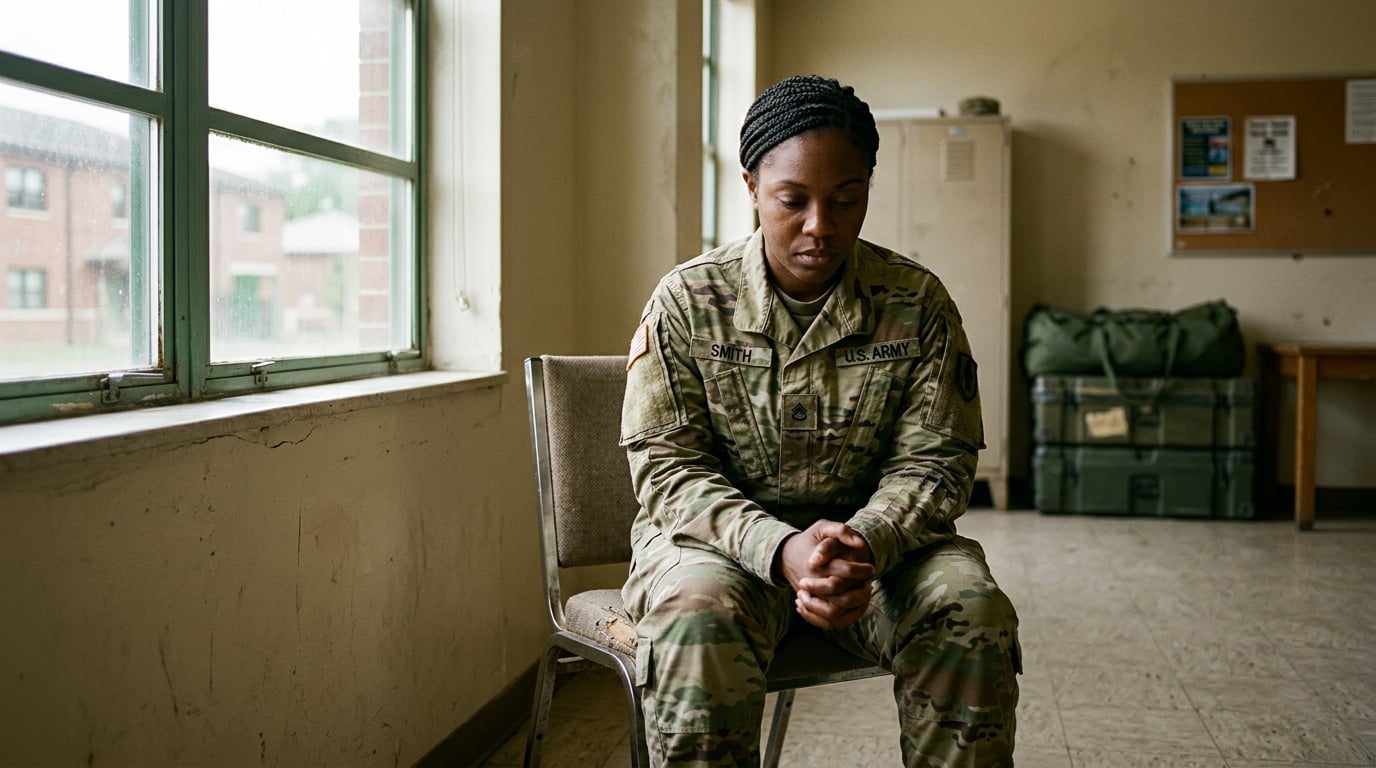
Direct Service Connection
38 CFR §3.303
Your mental health condition began during military service or was caused by an event, injury, or exposure that happened while you served. A C&P examiner provides a medical nexus opinion connecting your current diagnosis to the in-service event.
Example: PTSD from combat, sexual assault, or a training accident; depression that began during deployment and never resolved.
Secondary Service Connection
38 CFR §3.310(a)
Your mental health condition was caused or made worse by a disability you are already service-connected for. The clinical mechanism — such as chronic pain disrupting sleep and causing depression — must be explained in a nexus opinion.
Example: Depression secondary to chronic pain from a service-connected back injury; anxiety secondary to tinnitus; insomnia secondary to PTSD.

Aggravation
38 CFR §3.306 / §3.310(b)
You had a mental health condition before service, and your military service made it permanently worse beyond its natural progression. Or a service-connected disability aggravated a non-service-connected mental health condition.
Example: Pre-existing anxiety permanently worsened by the demands and trauma of military service.
The MST Connection
If your mental health condition is related to Military Sexual Trauma, the VA applies a relaxed evidence standard — you do not need a police report, a rape kit, or any in-service documentation. Behavioral markers (transfer requests, performance drops, relationship changes) can serve as corroborating evidence. Read our full MST page for the complete breakdown.
What counts as evidence
- Service treatment records (STRs) showing in-service treatment, complaints, or diagnosis
- Post-service medical records documenting continuity of symptoms
- A medical nexus opinion from a qualified provider stating your condition is "at least as likely as not" related to service
- Buddy statements / lay evidence from fellow service members, family, friends describing behavioral changes
- VA Form 21-0781 — Statement in Support of Claim for Service Connection for PTSD
- Personnel records showing transfers, performance changes, disciplinary actions around the time of the stressor
How service connection actually works with mental health care
This is the point most women veterans get wrong, and it costs them years. Eligibility for VA treatment and eligibility for VA compensation are decided by two different parts of the agency under two different sets of rules. The Veterans Health Administration decides whether you can be seen; the Veterans Benefits Administration decides whether you get paid. You can be in treatment for years with no rating, and you can be rated for a condition you have never been treated for. Neither one waits on the other.
Care comes first, and it does not require a rating
Once you are enrolled in VA health care, mental health treatment is part of your medical benefits package. There is no requirement that the condition be service-connected. MST-related care goes further and requires neither enrollment nor a rating under 38 U.S.C. §1720D. Vet Center counseling requires neither. So the honest sequence is: get treated now, get rated after.
Compensation requires three things, and treatment builds two of them
A granted claim needs a current diagnosis, an in-service event or stressor, and a medical link between them. Your treatment record is where the diagnosis and the severity live, and the provider who knows you is usually the one who can write the nexus. Every honest appointment makes the claim stronger, which is why filing before you have ever been evaluated is the hardest path.
You do not need to prove the assault happened the way you think
For PTSD based on military sexual trauma, the VA accepts markers in your record instead of a police report — a sudden drop in performance reviews, a request for transfer, unexplained medical visits, pregnancy tests, weight change, disciplinary problems, a breakup, substance use that started then. Under 38 CFR §3.304(f)(5) those markers can corroborate the stressor. Most women were never told this.
Treatment cannot be used against you
Getting counseling does not cost you custody, a security clearance decision, or your firearms by itself, and asking for help is not a report to your chain of command. Fear of consequences keeps women out of care longer than anything else. If confidentiality is your concern, start with a Vet Center, whose records are kept separately from your VA medical record.
By the Numbers
The scale of what women carry — and the rules that decide what it is worth. These figures come from the VA’s own data and the regulations that govern your claim, not from advocacy estimates, so you can bring any of them into a conversation with a rater or a representative and stand behind them. They matter for a practical reason: mental health is rated on a single scale that runs from 0 to 100 percent, and the difference between two adjacent steps on that scale is measured in thousands of dollars a year for the rest of your life. Knowing what the numbers actually are is the difference between accepting whatever comes back and knowing when something is wrong.
1 in 3
women screen positive for MST
a leading driver of the PTSD, depression and anxiety claims women file — and one the system routinely under-rates.
VA / National Center for PTSD
0–100%
the range for mental-health ratings
conditions are rated on how much they impair your work and daily life, not on the diagnosis label.
38 CFR §4.130
§3.310
covers secondary conditions
depression from chronic pain, insomnia tied to PTSD — each secondary condition adds to your combined rating.
38 CFR §3.310
988
Veterans Crisis Line, press 1
free, confidential, and available 24/7 — and it never affects your VA claim or benefits.
Veterans Crisis Line
Women Veterans & Mental Health — The Numbers They Don't Tell You
Women veterans carry a mental health burden that is statistically distinct from their male counterparts and dramatically worse than civilian women. These are not opinions — they are data from the VA and the Department of Defense. The difference is not that women are more fragile; it is that the exposures are different and the response to them was worse. Women were far more likely to experience sexual trauma during service, far more likely to be the only woman in the room when it happened, and far less likely to be believed if they said so. On top of that, they were screened, examined and rated by a system built around male bodies and male presentations of trauma, which is how symptoms get written down as anxiety or an adjustment disorder when the underlying condition is PTSD. That mislabeling follows women into their claims, and it is one of the main reasons the same condition is rated lower for a woman than for a man.

~13%
of women veterans experience PTSD — roughly double the rate for male veterans (about 6%)
2.5×
higher suicide rate for women veterans compared to civilian women who never served

1 in 3
women veterans screen positive for Military Sexual Trauma, a leading driver of PTSD and depression

5×
more likely to experience major depression than civilian women of the same age
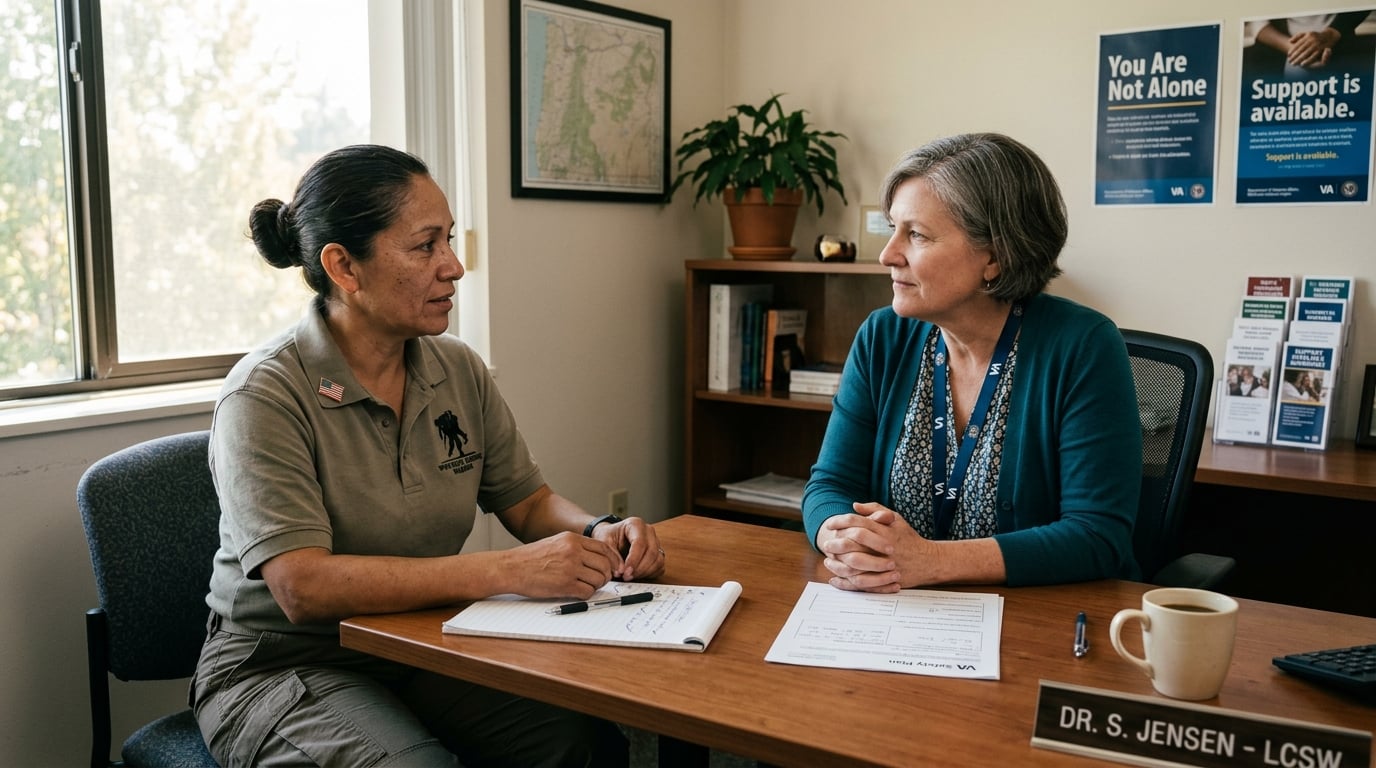
45.4%
of suicide deaths among women veterans in 2022 involved firearms — safety planning saves lives

24.1%
decrease in women veteran suicide rate 2020 to 2022 — real progress, but risk is still elevated

Why the rates are higher for women
- Military Sexual Trauma — roughly 1 in 3 women veterans screen positive, and MST is one of the strongest predictors of PTSD and depression.
- Intimate partner violence rates are higher among women veterans than civilian women.
- Reproductive health disruptions — hormonal changes from service-directed contraception, surgeries, and menopause compound mood disorders.
- Isolation — women veterans are far less likely to be identified as veterans by their communities, cutting them off from peer support.
- Stigma within the military itself — reporting mental health symptoms was career-ending for many women who served.
Treatment — What the VA Actually Offers
You choose what works for you. That is not a slogan — it is policy. VA mental health care is built around evidence-based talk therapy, medication management, or both, and you are entitled to say which you want and which you do not. You can be seen one-on-one, in a women-only group, in couples or family sessions, or by telehealth from your own living room so you never have to sit in a waiting room full of men. You can request a provider of a specific gender, and you can ask to switch providers if the fit is wrong — you do not owe anyone an explanation and asking does not go on some permanent record. If a clinic tells you otherwise, that is a local staffing problem being dressed up as a rule, and the Women Veterans Program Manager at that facility exists specifically to fix it.
The therapies the VA actually delivers have names, and knowing them changes the conversation. Cognitive Processing Therapy (CPT) and Prolonged Exposure (PE) are the two front-line PTSD treatments — roughly 8 to 15 weekly sessions, structured, with a defined end point. EMDR is an alternative that does not require you to narrate the trauma out loud in detail, which matters enormously for a lot of MST survivors. CBT variants cover depression, anxiety, insomnia (CBT-I), and chronic pain. Medication management is handled by a psychiatrist or a psychiatric nurse practitioner, separately from talk therapy, and you can do one without the other. Above that sit higher levels of care most veterans are never told about: intensive outpatient programs, residential rehabilitation treatment programs including women-only and MST-specific residential tracks, and inpatient care during an acute crisis. If weekly outpatient sessions are not holding you, the next level up exists and you can ask for a referral to it by name.
Cost is where most women stop reading, so be clear on it. For enrolled veterans there are no copays for VA mental health outpatient care. Separately, and more importantly, care for a condition related to Military Sexual Trauma is free and does not require VA enrollment, a service-connected rating, or a filed claim — that is statutory, at 38 U.S.C. §1720D, and there is no time limit on it. You do not have to have reported the assault. You do not have to prove anything to get treated. Treatment and compensation are two different systems: getting care never requires a claim, and the clinical records you build while getting care are frequently the strongest evidence in the claim you file later.
And if you do not want to go through a VA hospital at all, there is a parallel door. Vet Centers are community-based counseling centers, they are separate from VA medical centers, they keep their own confidential records, and they offer individual, group, and family readjustment counseling — plus MST counseling — at no cost, often with same-week availability. Call 1-877-927-8387, 24/7. In an immediate crisis, the Veterans Crisis Line is 988, then press 1, or text 838255 — staffed by people trained on military and MST-specific experience, and you do not need to be enrolled in anything to use it. Every option described in the cards below is a real program you can name out loud when you call, and naming the program is what gets you scheduled.
Evidence-Based Therapies
Cognitive Processing Therapy (CPT)
12 structured sessions that help you identify and challenge “stuck points” — the negative thoughts about the trauma that keep you locked in place. Uses daily worksheets. Available with or without a written trauma account. One of the two therapies the VA most strongly recommends for PTSD.
Prolonged Exposure (PE)
Gradual, guided approach to the memories, feelings, and situations you have been avoiding. You recount the traumatic event repeatedly in a safe clinical setting; between sessions you listen to recordings. The fear response diminishes over time. The other top-recommended VA therapy for PTSD.
Eye Movement Desensitization & Reprocessing (EMDR)
Processes traumatic memories through bilateral stimulation — following a light, tone, or finger movement while holding the memory in mind. Helps the brain file the memory differently so it loses its charge.
Cognitive Behavioral Conjoint Therapy (CBCT)
For couples — helps both partners understand how PTSD affects the relationship and builds communication tools together.
Medications
SSRIs (VA first-line for PTSD)
- • Sertraline (Zoloft) — FDA-approved specifically for PTSD
- • Paroxetine (Paxil) — FDA-approved specifically for PTSD
- • Fluoxetine (Prozac) — commonly prescribed off-label
SNRIs
- • Venlafaxine (Effexor) — recommended by VA/DoD guidelines
Other Medications
- • Prazosin — for trauma-related nightmares
- • Mood stabilizers — for bipolar and related conditions
Note: If an SSRI prescribed for your PTSD causes side effects (sexual dysfunction, weight gain), those side effects may themselves be ratable as secondary conditions.
How You Access Care
- In person at any VA medical center or outpatient clinic
- VA Video Connect (telehealth) — therapy from your home, no travel
- Individual, couples, family, or group therapy
- Women-only group sessions available at many facilities
- Residential / inpatient programs for severe symptoms (separate sleeping areas; some facilities have women-only residential)
- Vet Centers — 300+ community locations, no enrollment required, confidential
- You can request a female therapist


Your Advocates Inside the VA
Women Veterans Program Manager (WVPM)
At every VA medical center. Your first point of contact for navigating any women-specific service — mental health, reproductive health, MST care, benefits, enrollment. They advocate for you inside the system.
Women's Mental Health Champions
Mental health clinicians at every VA facility with specialized training in women's mental health. They know the unique challenges women veterans face and can connect you to local resources.
MST Coordinators
Every VA facility has one. If your mental health condition is related to Military Sexual Trauma, the MST Coordinator is your entry point to free, confidential care — no claim, no report, no proof required.
Peer Specialists
Veterans who have recovered from mental health conditions themselves, trained to help you design a recovery plan and walk alongside you.
Secondary Conditions — What Most Women Leave on the Table
Once you are service-connected for a mental health condition, every condition that flows from it — caused by it, worsened by it, or caused by its treatment — can be service-connected too under 38 CFR §3.310. Some of them get their own separate percentage on top of what you already have. Most women file for PTSD, stop there, and never learn that the migraines, the gut problems, the jaw pain and the sleep apnea were part of the same injury.
Click any condition below. Each one opens into what the condition actually is, the full symptom list in plain language, how to recognize it in yourself, the exact steps to file it as a secondary claim, the nexus language a provider has to use, how to get treated for it, and how to get an accredited agent to build the claim with you.
How secondary claims work
You need a medical nexus opinion from a provider who explains the clinical pathway: “The veteran's chronic insomnia is at least as likely as not caused by her service-connected PTSD, as persistent hypervigilance and nightmares directly disrupt her sleep architecture.” That opinion, plus a diagnosis and evidence of functional impairment, is the claim. Each secondary condition gets its own diagnostic code and its own rating, added to your combined total using VA math.
Female Sexual Arousal Disorder & Special Monthly Compensation
What it is: Female Sexual Arousal Disorder (FSAD) is a recognized medical condition in which a woman cannot reach or maintain the normal physical arousal response — lubrication, sensation, blood flow, the ability to become or stay aroused — or has persistently low sexual desire, in a way that causes distress. It is not “in your head” and it is not about willingness. For veterans it very often has a physical and neurological basis: the same trauma, depression, anxiety and psychiatric medications that the VA already compensates can directly blunt the body's arousal response. In the clinical manuals it sits alongside related diagnoses such as Female Sexual Interest/Arousal Disorder and genito-pelvic pain / penetration disorder — all of which describe a body that has stopped responding the way it did before service.
Men file for erectile dysfunction constantly — as a condition secondary to PTSD, depression, or the psychiatric medications used to treat them — and on top of the rating they receive Special Monthly Compensation (SMC-K) for “loss of use of a creative organ.” Women have an exact counterpart the VA recognizes: FSAD. It is the same statutory benefit — and almost no one tells women it exists.
FSAD is a classic secondary claim: to MST-related PTSD, to depression or anxiety, or to the SSRIs and SNRIs prescribed for those conditions, which list sexual dysfunction as a documented side effect. If the underlying mental-health condition is service-connected, the sexual dysfunction that flows from it — or from its treatment — can be too, under the same 38 CFR §3.310 that governs every other secondary on this page.
It is rarely raised at a C&P exam, and the examiner will almost never ask. You have to know to claim it. A free accredited review can tell you whether the secondary connection is there and whether SMC-K applies to your situation.
- What SMC-K pays
- An additional $139.87 per month (2026 rate) paid on top of your regular combined disability compensation — not folded into it.
- The law behind it
- Special Monthly Compensation for loss of use of a creative organ, under 38 U.S.C. §1114(k) and 38 CFR §3.350(a).
- How it is service-connected
- Most often secondary to MST-related PTSD, depression, or anxiety — or to the psychiatric medications that treat them — under 38 CFR §3.310.
Amounts are estimates set by the VA and depend on your specific decision. This is not medical or legal advice.
Why it matters — don't leave it on the table
At $139.87 a month, SMC-K is roughly $1,678 a year — and because SMC is paid for as long as the condition exists, that is tens of thousands of dollars over a lifetime, plus whatever back pay reaches to your effective date. A man being treated for PTSD is routinely asked about erectile dysfunction and walked into an ED claim; a woman with the identical trauma and the identical medications is usually asked nothing at all. That silence is not because the benefit does not apply to her — it applies exactly the same way. It is because no one raised it. Naming it out loud also takes away the shame: sexual dysfunction after trauma, after years on antidepressants, is one of the most common things women veterans carry and one of the least often said. You are not the only one, and the VA already has a compensation category built for it.
How to Get Into Care — Even If You Have Never Used the VA
You do not need a disability rating. You do not need a filed claim. You do not need a diagnosis in hand, and you do not need to have figured out what is wrong with you before you ask for help. Treatment and compensation are two entirely separate systems at the VA, and treatment is the one you can start this week. What follows is the actual sequence, whether you already have a VA doctor or have never walked into a VA facility in your life.
Getting into care is also the foundation of every claim on this page. Every rating decision the VA makes rests on medical records, and records only exist if somebody wrote something down. The appointment you make this month becomes the evidence that supports your percentage next year. That is not a reason to seek care — your health is the reason — but it is a fact worth knowing.
If you already have a VA primary care provider
- 1
Send a secure message and use the words that get action
Sign in to My HealtheVet on VA.gov, open Secure Messaging, and write to your primary care team in one plain sentence: “I am struggling with my mental health and I need a mental health referral.” The VA standard is a response within three business days. Do not soften it and do not apologize — vague messages get vague replies.
- 2
Or call your facility and ask for a same-day mental health assessment
VA policy is to provide a same-day mental health evaluation to any veteran who asks for one. You can call your primary care clinic, or you can walk into the facility and say those words at the desk. You are not jumping a line; you are using a standard that exists for you.
- 3
Ask specifically for a women’s health primary care provider
Every VA medical center has designated women’s health primary care providers trained in women’s comprehensive care, and every facility has a Women Veterans Program Manager whose job is to make that happen. If you have never been offered one, ask by name. You are allowed to request a female provider, and you are allowed to change providers.
- 4
Say the specific words out loud at the appointment
Nightmares. Panic attacks. Suicidal thoughts. Drinking to sleep. Military sexual trauma. Providers document what you actually name. A visit where you said “stressed” produces a note that says stressed, and that note is what an examiner reads three years from now.
If you are not enrolled in VA health care yet
- 1
Apply with VA Form 10-10EZ
That is the health care enrollment application. Apply online at VA.gov, by phone, by mail, or in person at any VA medical center with the help of an enrollment coordinator. Most veterans who served on active duty and separated under conditions other than dishonorable are eligible, and applying costs nothing.
- 2
Call 877-222-8387 if the form stops you
That is the VA Health Benefits Hotline, and a person will walk you through the application on the phone. If you would rather talk to someone who works specifically with women veterans, call the Women Veterans Call Center at 1-855-829-6636 — it is staffed entirely by women, and many of them are veterans.
- 3
Do not disqualify yourself in your head
Income, a prior denial, no rating, years of never using the VA, an other-than-honorable discharge, National Guard or Reserve service — none of these are automatic bars, and eligibility rules have expanded repeatedly, including under the PACT Act. Let the VA make the determination in writing rather than assuming the answer.
- 4
MST-related care is free, with no rating and no enrollment required
Under 38 U.S.C. §1720D, the VA provides free care for physical and mental health conditions related to military sexual trauma. You do not need a disability rating, you do not need to have reported the assault, and there is no copay. Ask your facility for its MST Coordinator by title.
- 5
Vet Centers see you with no enrollment at all
Vet Centers are community counseling centers separate from VA hospitals. They provide free individual, group and family counseling, and readjustment and MST counseling, without enrollment in VA health care. Call 1-877-927-8387, staffed 24/7. For some women this is the easier front door — and it counts.
What actually happens after you submit — the honest timeline
Nobody tells you this part, so women assume silence means rejection and give up. Here is the real sequence, in the order it happens, using VA’s own published standards.
A decision, and a letter in the mail
VA.gov states it takes less than one week to decide a health care application and that you will get a letter telling you whether you were approved. If more than a week goes by with no contact, VA specifically says do not apply again — call 877-222-8387 (TTY 711), Monday through Friday, 8:00 a.m. to 8:00 p.m. Eastern, and ask for the status.
A welcome call from VA
Someone calls to welcome you into the health care system, help you schedule your first appointment, and answer benefit questions. Answer that call. If you miss it, you can call the facility yourself — you do not have to wait to be called twice. This is also the moment to say the words “I need a mental health appointment” and “I want a women’s health primary care provider.”
Your Veterans Health Benefits Handbook
VA mails you a handbook that lays out your specific benefits based on the priority group you were placed in, plus your copay status and how to use the system. Keep it. It is the document that tells you what you are entitled to, in writing, and it is useful the first time somebody at a desk tells you something different.
A priority group from 1 to 8
Everyone enrolled is placed in one of eight priority groups, and it drives copays and access. Service-connected ratings, former POW status, Purple Heart, Medal of Honor, catastrophic disability, VA pension, Medicaid, and low income all pull you toward Group 1. A higher priority group generally means lower or no copays. If you later get a disability rating, your group can change — tell VA.
What the first visit is actually like
It is a primary care intake, not an interrogation: vitals, medical history, medications, and a set of screening questions that include depression, PTSD, military sexual trauma, and safety at home. Those screening questions are your opening. Answer them truthfully rather than protectively — a positive screen is what generates the mental health referral.
Copays, and who does not pay them
Many women veterans owe nothing. Care for a service-connected condition has no copay. Care related to military sexual trauma is free under 38 U.S.C. §1720D with no rating and no enrollment required. Priority group, income, and a VA pension can all remove copays. Current copay amounts are published by VA and can change each year, so read the rates rather than guessing — and if a bill arrives that you cannot pay, ask about financial hardship assistance instead of ignoring it.
A Veteran Health Identification Card
The VHIC is the card you show at check-in. You can request it at your facility. It is not a benefit decision and it is not a rating — it is a library card for the hospital, and it is worth having in your wallet.
A denial is not the end of it
Health care eligibility decisions can be reviewed, and eligibility rules have expanded repeatedly — most recently under the PACT Act, which opened enrollment to whole groups of veterans previously turned away. Read what the letter says the reason was, fix that specific thing, and reapply or request a review. And in the meantime, Vet Centers will still see you at 1-877-927-8387 with no enrollment at all.
Once you are in: where every medical thing lives on VA.gov
My HealtheVet now lives inside VA.gov rather than on its own separate site, and everything below sits behind the same single sign-in you created for the application. Signed in, the menu you want is My HealtheVet. This is the toolbox — and the second column is the part that matters for a claim, because it is how you get your own records without asking anyone’s permission.

Secure messaging with your care team
Send a written message straight to your primary care or mental health team and get a documented answer, typically within three business days. Use it to request a mental health referral, report that medication is not working, ask for a female provider, or get something added to your record. Everything you send and receive is part of your record — which is exactly why it is useful.
Open secure messages
Your medical records, downloadable
Review notes, lab and test results, immunizations, care summaries, and your VA health history online, and download them as a single file. These are the records a C&P examiner reads and the records your accredited agent needs. Pull them yourself before any exam so you know what the VA is looking at.
Review medical records
Appointments — schedule, cancel, and see what is coming
View, schedule, cancel, and track VA and approved community care appointments in one place. Cancel online rather than no-showing; repeated no-shows are how women get dropped from clinics they waited months for.
Manage appointments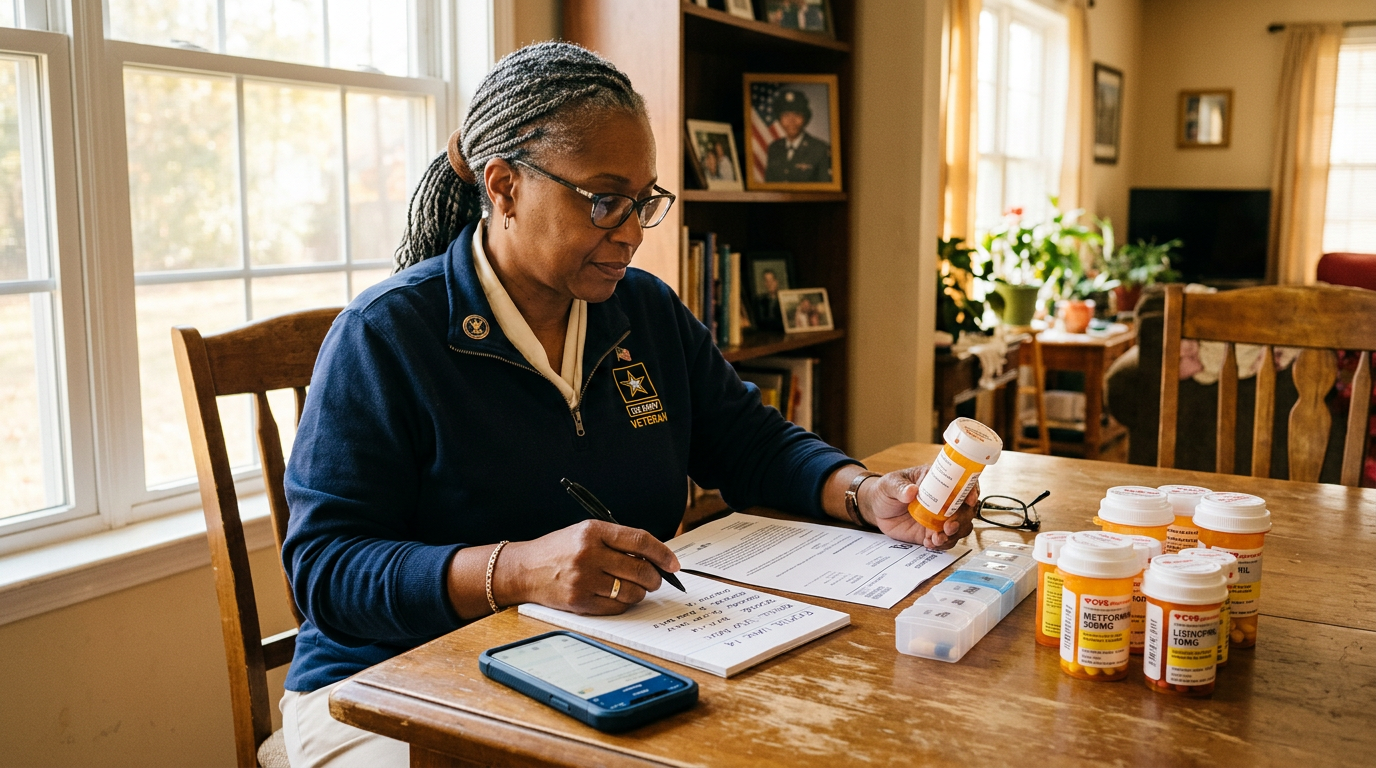
Prescriptions and refills
Refill and track VA prescriptions and see your medication list. If a psychiatric medication ran out and you have been off it for weeks, that gap shows up in your record as improvement rather than as an access problem — refill it, and say in a message why it lapsed.
Refill prescriptions
Find the right facility, not just the nearest one
The facility locator lets you search VA medical centers, community-based outpatient clinics, and Vet Centers by service. Look for a facility with a women’s health clinic and an MST Coordinator — a slightly longer drive to a facility that actually treats women is usually the better appointment.
Find VA locations
Priority groups and copay rates, in writing
Your priority group determines what you pay. Both the group rules and the current copay rates are published. Read them before you accept a bill as correct, and re-check your group after any new disability rating.
See priority groups
VA mental health services, laid out by VA itself
VA’s own mental health pages describe what is offered — therapy, medication, inpatient and residential programs, PTSD and substance use programs — and confirm you can get mental health care without a service-connected rating. Useful when someone tells you otherwise.
VA mental health services
MST care and women’s health care needs
Two specific pages worth reading in your own words: the military sexual trauma page, which states MST-related care is free and does not require a rating or a report, and the women’s health page, which lists the comprehensive services every enrolled woman veteran is entitled to.
MST care at VAIf the website defeats you, that is not a reason to stop. Every one of these tasks can be done by a human being on the phone. Call the Women Veterans Call Center at 1-855-829-6636 and tell them exactly which step you are stuck on — enrollment, an appointment, a provider change, records — and they will either handle it or connect you to the person at your facility who can. For enrollment specifically, call 877-222-8387. For counseling with no website and no enrollment at all, call a Vet Center at 1-877-927-8387.
Get your own records: Service Treatment Records and the Blue Button report
A claim is decided on paper, and the paper is your records. You do not have to wait for the VA to find them and you should not — pull them yourself, read them before anyone else does, and hand a clean copy to the person representing you. There are two piles that matter: your Service Treatment Records from your time in uniform, and your VA medical records from every appointment since. Here is exactly how to get both.
1. Order your Service Treatment Records
STRs are the medical records created while you served — sick call, exams, the complaints you filed and the ones that got brushed off. If you separated recently they may already be in the VA system; if not, request them. The fastest route for most veterans is milConnect (milconnect.dmdc.osd.mil), where you sign in and request a copy of your official military personnel and medical file. Older records live at the National Personnel Records Center — request them through the National Archives at vetrecs.archives.gov or by mailing a Standard Form 180 (SF-180). Ask for the complete file, not a summary.
2. Download your VA records — the Blue Button report
Signed in to VA.gov, open My HealtheVet → Medical records and use the VA Blue Button report. It pulls your VA history — notes, labs, test results, medications, appointments — into a single file you can save as a PDF. Choose the widest date range and select everything, then download and keep it. This is the same record a C&P examiner reads, so read it first: if a diagnosis is missing, a date is wrong, or a symptom you reported was never written down, you want to know before your exam, not after your denial.
3. Send the file to your advocate
Once your STRs and your Blue Button PDF are on your own device, get them to the accredited agent working your claim. Email the files, or bring them to your first call, so your representative is reading the same record the VA is. Never mail your only copy — send a copy and keep the original. With a signed VA Form 21-22 on file, your advocate can then request records directly from the VA on your behalf, but the fastest start is always the file already in your hands.
The four numbers that get you into care
Veterans Crisis Line
988, then press 1
Or text 838255. 24/7. You do not have to be suicidal to call.
Women Veterans Call Center
1-855-829-6636
Staffed by women. Helps with enrollment and finding the right provider.
VA Health Benefits Hotline
877-222-8387
Enrollment questions and help completing Form 10-10EZ.
Vet Center Call Center
1-877-927-8387
Free counseling, no enrollment, 24/7.
The Rating Schedule — 38 CFR §4.130
This is the actual formula the VA uses to rate every mental health condition — PTSD, depression, anxiety, bipolar disorder, and all others. They do not rate the diagnosis itself; they rate how severely it impairs your ability to work and function in daily life. Every condition under §4.130 uses this same scale.
The symptoms listed at each level are examples, not a checklist — you do not need every listed symptom to qualify for a rating. The VA looks at your overall level of occupational and social impairment. Source: 38 CFR §4.130
The General Rating Formula for Mental Disorders
Total Occupational & Social Impairment
Gross impairment in thought processes or communication; persistent delusions or hallucinations; grossly inappropriate behavior; persistent danger of hurting self or others; intermittent inability to perform activities of daily living (including minimal personal hygiene); disorientation to time or place; memory loss for names of close relatives, own occupation, or own name.
Deficiencies in Most Areas
Occupational and social impairment with deficiencies in most areas such as work, school, family relations, judgment, thinking, or mood. Symptoms: suicidal ideation; obsessional rituals which interfere with routine activities; speech intermittently illogical, obscure, or irrelevant; near-continuous panic or depression affecting ability to function independently; impaired impulse control (such as unprovoked irritability with periods of violence); spatial disorientation; neglect of personal appearance and hygiene; difficulty adapting to stressful circumstances; inability to establish and maintain effective relationships.
Reduced Reliability & Productivity
Occupational and social impairment with reduced reliability and productivity. Symptoms: flattened affect; circumstantial, circumlocutory, or stereotyped speech; panic attacks more than once a week; difficulty in understanding complex commands; impairment of short- and long-term memory (retention of only highly learned material, forgetting to complete tasks); impaired judgment; impaired abstract thinking; disturbances of motivation and mood; difficulty in establishing and maintaining effective work and social relationships.
Occasional Decrease in Work Efficiency
Occupational and social impairment with occasional decrease in work efficiency and intermittent periods of inability to perform occupational tasks (although generally functioning satisfactorily, with routine behavior, self-care, and conversation normal). Symptoms: depressed mood; anxiety; suspiciousness; panic attacks (weekly or less often); chronic sleep impairment; mild memory loss (such as forgetting names, directions, recent events).
Mild or Transient Symptoms
Occupational and social impairment due to mild or transient symptoms which decrease work efficiency and ability to perform occupational tasks only during periods of significant stress, or symptoms controlled by continuous medication.
Diagnosed, Symptoms Not Compensable
A mental condition has been formally diagnosed, but symptoms are not severe enough either to interfere with occupational and social functioning or to require continuous medication.
Source, reproduced above in plain terms: 38 CFR §4.130. Every figure here is a starting point — an accredited representative should confirm what truly fits your record.
Important: The Single-Rating Rule
The VA does not stack separate ratings for multiple mental health diagnoses. If you are service-connected for PTSD and also have depression and anxiety, the VA evaluates ALL your psychiatric symptoms together and assigns one combined mental health rating. This is the “anti-pyramiding” rule under 38 CFR §4.14. It means you should document every symptom from every condition — the rating reflects the total picture, not just one diagnosis.
38 CFR §4.129 — The Minimum 50% Rule
If your mental health condition developed from a traumatic event during service, the VA must assign a minimum 50% rating during the first six months after your release from active duty, then re-evaluate. This protects veterans whose symptoms are acute at separation.
How to File a Mental Health Claim — Step by Step
Filing a claim does not have to be overwhelming, but the order you do things in changes what you are paid. Filing an Intent to File on VA Form 21-0966 first locks in your effective date and gives you a full year to gather evidence — every month you wait before doing that is a month of back pay you will never recover. After that, the work is evidence, not paperwork: a current diagnosis, something that ties the condition to your service, and a record that honestly reflects how bad the worst days are rather than how well you hold it together in a twenty-minute appointment. Most denials are not decisions that you are lying; they are decisions that something required was missing from the file. Here is the process broken into the steps that actually matter, in the order they happen.
File an Intent to File (VA Form 21-0966)
This locks in your effective date — the date from which your compensation is calculated if the claim is granted. You have one year to submit the full claim. Do this FIRST, even if you are not ready to file everything yet. You can file online at VA.gov, by phone (1-800-827-1000), or in person.
Intent to File on VA.govGet a current diagnosis (if you don't have one)
You need a formal diagnosis meeting DSM-5-TR criteria from a qualified mental health provider. If you are already receiving treatment at the VA, your records likely document this. If not, schedule an evaluation — the VA provides this at no cost.
Gather your evidence
Service treatment records (STRs), post-service medical records showing continuity, buddy statements from people who witnessed your behavioral changes, and any documentation of the in-service stressor. For MST-related claims, behavioral markers are accepted in place of a police report.
Submit VA Form 21-526EZ (Application for Disability Compensation)
This is your formal claim. You can file online at VA.gov, with a Veterans Service Organization (VSO), or with an accredited claims agent. For PTSD specifically, you will also need to complete VA Form 21-0781 (Statement in Support of Claim for PTSD).
File your claim on VA.govAttend your Compensation & Pension (C&P) exam
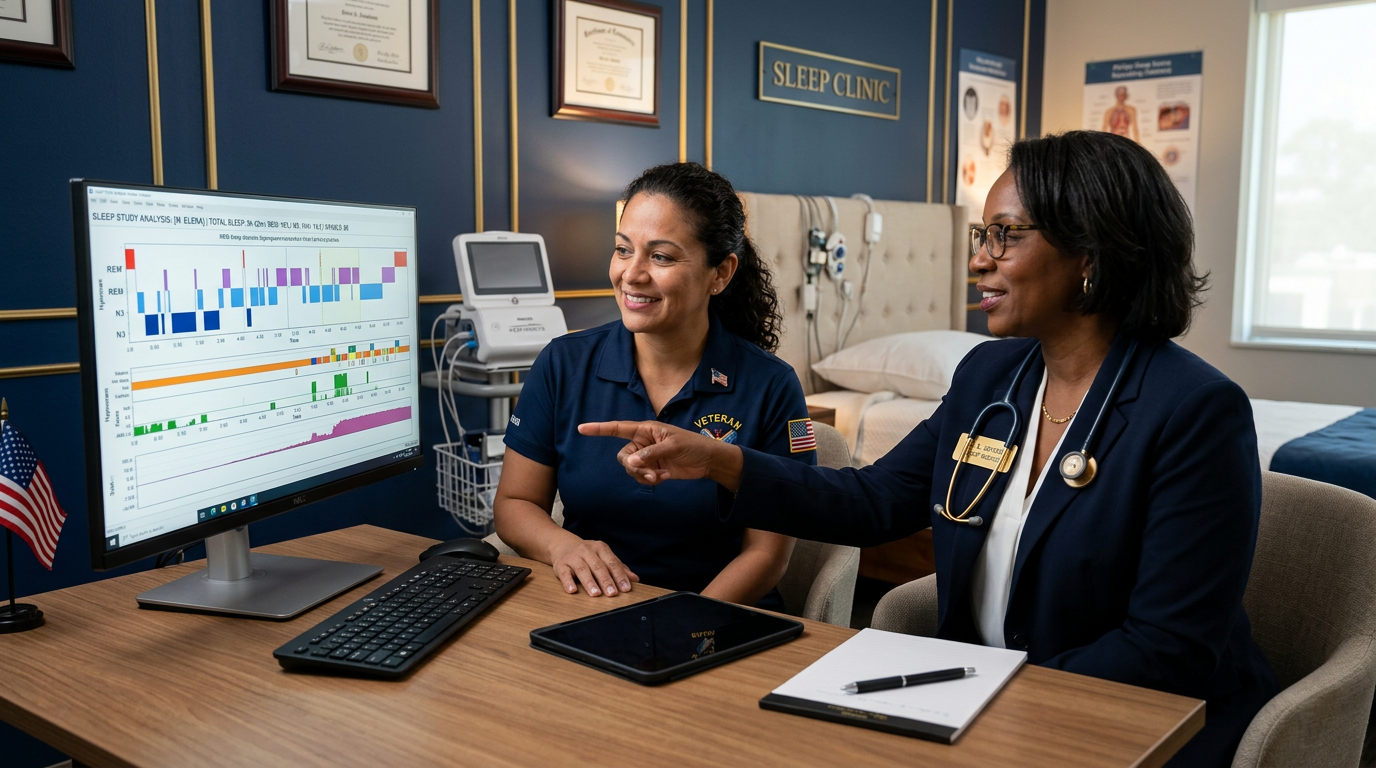
The VA will schedule a mental health exam with a contracted or VA psychologist. This exam is how the VA determines your rating percentage. Be honest about your worst days — do not minimize. The examiner uses the Disability Benefits Questionnaire (DBQ) for mental disorders to score your symptoms against the §4.130 rating scale above.
Receive your rating decision
The VA will mail you a decision letter. If granted, compensation is retroactive to your Intent to File date. If denied or rated lower than you believe is accurate, you have the right to appeal — and an accredited representative can help you navigate that process.
Lay evidence matters — do not skip it
Personal statements from you, your spouse, fellow veterans, friends, and family members describing how your symptoms affect your daily life are powerful evidence. The VA is required to consider them. A well-written buddy statement that describes what they observed — sleep disruption, withdrawal, anger, avoidance — can be the difference between 50% and 70%.
What to Expect at Your C&P Exam
After you file, the VA may schedule a Compensation & Pension (C&P) exam to evaluate how severe your condition is and how it connects to your service. It can take 30 to 60 days for the VA to schedule it. Knowing when the VA orders an exam, how to prepare, and what happens afterward takes a lot of the fear out of the process.
When the VA Orders an Exam
The VA does not automatically schedule an exam for every condition. To order one, three things generally need to be in your file:
- 1.A current diagnosis of the condition from a healthcare professional.
- 2.Evidence of an in-service event, injury, or exposure that could have caused or aggravated it.
- 3.A medical nexus linking your current condition to that in-service event.
If Those Are Missing
If those criteria are not clearly met, the VA may not schedule an exam, which can lead to a denial. That is why a well-documented claim matters so much. If no exam is scheduled, you can submit additional evidence or request a re-evaluation to show your condition meets the criteria. This is exactly the gap an accredited representative can help you close before you file.
How to Prepare for Exam Day
Be honest and straightforward
Describe your symptoms accurately. Both underreporting and exaggerating hurt the accuracy of your assessment. Talk about your worst days, not your best.
Prepare emotionally
These exams can be taxing because they often revisit traumatic events. Talk through your feelings with a friend, family member, or counselor before you go.
Bring support
You can bring a representative, advocate, or friend for support. If you work with a VSO or accredited agent, they can guide you through the process.
Follow up afterward
After the exam, check in with the VA about your claim status and be proactive about the next steps. Keep engaging with your own mental health care regardless of the outcome.
What Happens After the Exam
The examiner compiles a detailed report from your exam, your medical history, and any tests, and assesses the severity of your condition and how it affects your daily life and work. That report goes to the VA Regional Office. If the VA finds the report incomplete or unclear, it may send it back for corrections, clarification, or a second opinion, which can delay your claim. Your claim only moves to the decision phase once the VA is satisfied the evidence is thorough and accurate. Staying in treatment during this time both supports your health and keeps your record current.
Understanding Mental Health Claims — In Plain Language
Educational content from accredited VA disability experts, chosen because they explain the rating criteria accurately rather than promising outcomes. Watching how the General Rating Formula is actually applied is one of the fastest ways to understand why two people with the same diagnosis end up at 30 and 70 percent — the rating turns on functional impairment, not on the name of the condition. These are third-party educational resources shared for general information — not legal advice, and not a substitute for having someone review your specific record.
PTSD Stressors: What VA Needs & How to Prove It
A practical breakdown of what counts as a stressor for a VA PTSD claim, the evidence the VA looks for, and how to document it so your claim holds up.
VA Claim Denied for PTSD? File a Different Mental Health Claim
If your PTSD claim was denied, this explains why filing for a different mental health condition under the same rating schedule can be a winning strategy.
Crisis Resources — Save These
Every one of these is free and confidential. You do not need to be enrolled, rated, or “official” to use any of them — and you never have to explain yourself to get help. The Veterans Crisis Line is answered around the clock by people trained specifically for veterans, and you do not have to be in danger to use it. Vet Centers sit outside the VA medical system and keep separate records, which is why many women start there. The Women Veterans Call Center is staffed by women who will walk you through eligibility and enrollment without making you justify the call. Save these now, while it is calm, so they are already in your phone on a day when looking them up feels impossible.
The phone numbers dial straight from your phone and the links open the official page or free app. Save this list somewhere you can find it again — for yourself, or for a fellow veteran who needs it.

What You Are Feeling Is Real. What You Deserve Is Clear. The Door Is Open.
However long it has been, whatever you did or did not do at the time — the care is free, the claim has no deadline, and you do not have to figure it out alone. You have read everything you need to know. The next step is simply asking for help.
Go Deeper on Each Condition
Yes, every condition below has its own dedicated page with the full rating criteria, step-by-step claim instructions, common mistakes, and FAQs — built so you never have to leave the site to understand your case.





Questions Women Ask About Mental Health Claims
Clear answers about ratings, service connection, and the C&P exam — so you know what to expect before you file. A free review can tell you how these rules apply to your situation.
How does the VA rate PTSD, depression, and anxiety?
All mental health conditions are rated under the General Rating Formula for Mental Disorders in 38 CFR §4.130, at 0, 10, 30, 50, 70, or 100 percent. The rating is based on how much your symptoms impair your work and social functioning — not on the diagnosis label. Describe your worst days, not your best, because the rating is meant to capture the true impact of the condition.
Do I need to have been in combat to get service connection for PTSD?
No. Combat is only one of many qualifying stressors. PTSD can be service-connected from military sexual trauma, a training or vehicle accident, the fear of hostile or terrorist activity, or other traumatic events in service. For MST and fear-based stressors, VA rules allow the stressor to be established without the strict documentation combat once required.
What is a secondary mental health claim, and why does it matter?
Under 38 CFR §3.310, a mental health condition caused or aggravated by another service-connected disability is itself service-connected. Depression secondary to chronic pain, anxiety secondary to a serious illness, or insomnia tied to PTSD are common examples — and each secondary condition adds to your combined rating. These are among the most overlooked claims women leave unfiled.
What happens at the C&P exam for a mental health claim?
The Compensation & Pension exam is where the VA evaluates the severity of your condition. Attend every scheduled exam, be honest about how bad your worst days are, and bring any therapy notes, prescriptions, or statements from people who know you. An exam that feels rushed or dismissive can be inadequate — which is grounds to challenge the decision.
Can I get help right now if I am in crisis?
Yes. Call the Veterans Crisis Line at 988 and press 1, or text 838255, any time of day or night. It is free, confidential, and does not affect your VA claim or benefits in any way. If you are in immediate danger, call 911.
Will filing a mental health claim affect my job or my gun rights?
Filing a VA disability claim for a mental health condition does not, by itself, take away your firearms or report you to your employer. A rating reflects the impact of your condition on daily life; it is not a finding that you are dangerous. If you have specific concerns, an accredited claims agent can walk you through what a rating does and does not do.
Still have a question about your own situation?