Uterine Fibroids & Polyps
Benign growths that cause heavy bleeding, pain, and anemia — rated on symptoms and any surgery they require.
Uterine fibroids are noncancerous growths of the uterus that appear during childbearing years. They range from seedling-sized to large enough to distort the uterus. For many women veterans, fibroids developed during or were aggravated by service — and were treated with hormonal medication, monitored but left untreated, or discovered only after discharge.
The VA rates fibroids under the General Rating Formula for Disease of the Gynecological System (38 CFR §4.116), typically using Diagnostic Code 7613 (disease or injury of the uterus). The three-step ladder — 0%, 10%, or 30% — turns on whether symptoms require treatment and whether treatment controls them. If fibroids lead to a hysterectomy, separate surgical codes (DC 7617 or 7618) apply with higher ratings.
Fibroids are one of the most common reasons women undergo hysterectomy. Filing the fibroid claim first — before or alongside any surgical claim — protects the earliest effective date and ensures the full picture of your condition is on record.
Rated Under 38 CFR §4.116
Benign growths that cause heavy bleeding, pain, and anemia — rated on symptoms and any surgery they require.
Use the eligibility criteria and claim steps on this page to pursue this claim without leaving the guide.
Understanding Uterine Fibroids
What fibroids are
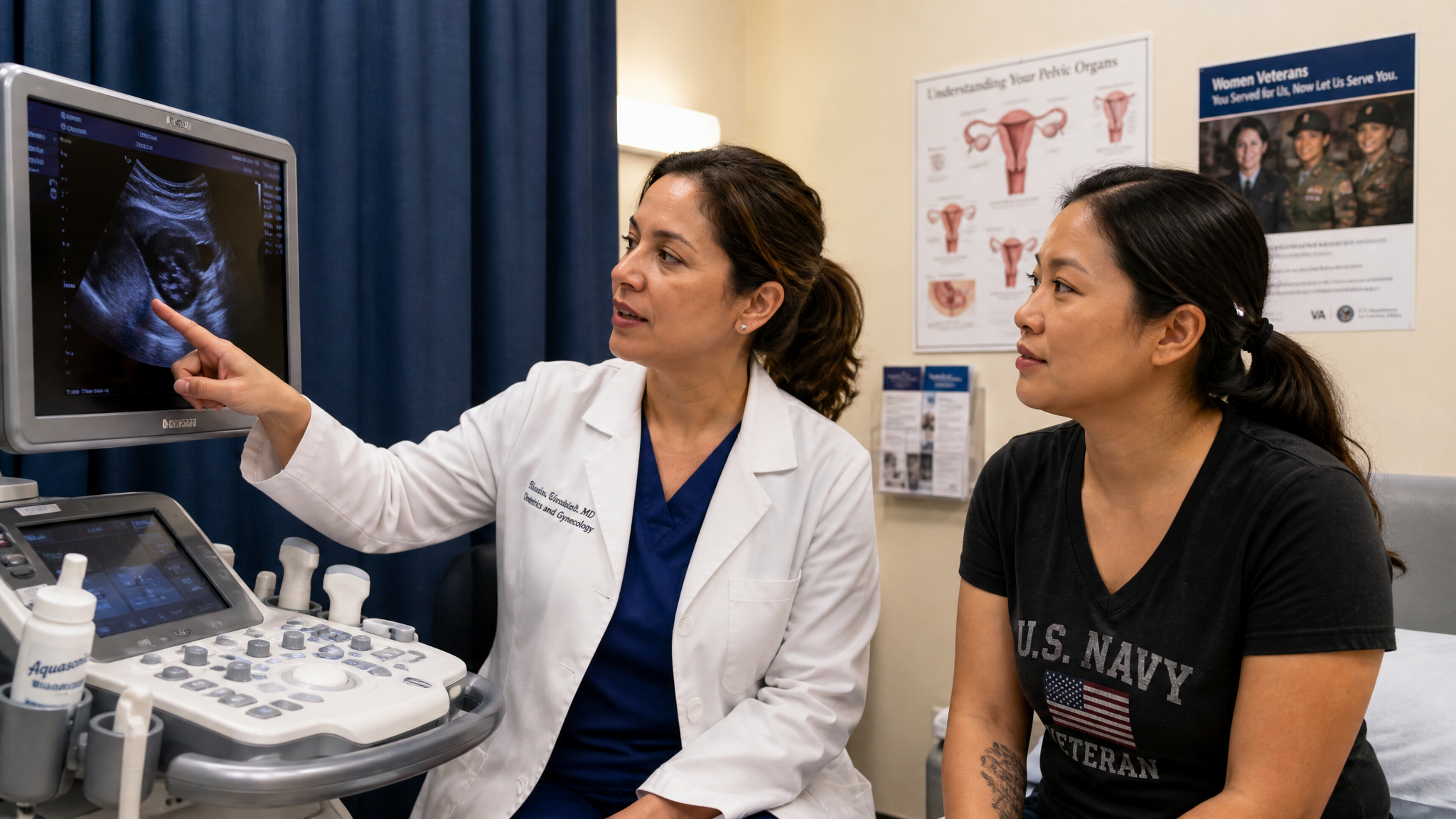
Fibroids (leiomyomas) are benign smooth-muscle tumors in the wall of the uterus. They can grow inside the uterine cavity, within the muscular wall, or on the outer surface. Polyps are smaller growths of the uterine lining. Both can cause identical symptoms.
How they affect women veterans
Heavy menstrual bleeding leading to anemia, pelvic pressure and pain, urinary frequency from pressure on the bladder, constipation, pain during intercourse, and complications with fertility. Active-duty conditions — delayed care, limited access to specialists, stress — often let them grow unchecked.
The rating formula
Under the General Rating Formula: 0% if symptoms do not require continuous treatment, 10% if symptoms require continuous treatment, 30% if symptoms are not controlled by continuous treatment. If fibroids lead to a hysterectomy, the surgical code takes over: DC 7618 (uterus removed, ovaries kept) = 100% for 3 months then 30%; DC 7617 (uterus + both ovaries) = 100% for 3 months then 50%.
Why they are under-claimed
Many women are told fibroids are "common" and "benign" — which is true, but irrelevant to whether they are service-connected and compensable. If fibroids began or grew during service, or were aggravated by service conditions, the law provides compensation for the symptoms they cause.
Do you qualify for a Uterine Fibroids claim?
You have a current diagnosis of uterine fibroids or polyps — confirmed by ultrasound, MRI, or surgical pathology.
You can show the condition began during or was aggravated by military service — through service treatment records, imaging, or documented heavy bleeding.
A medical nexus opinion connects your fibroids to service — including aggravation by stress, delayed treatment, or hormonal changes during service.
Alternatively, your fibroids are secondary to another service-connected condition under 38 CFR §3.310.
If fibroids led to a hysterectomy during or after service, the surgery itself is separately ratable.
Not sure whether you qualify? Eligibility can be complex. An accredited representative can confirm exactly where you stand before you invest time in applications.
What a Uterine Fibroids claim actually gives you
0% rating (non-compensable)
Fibroids are diagnosed and present but do not require continuous treatment. This establishes service connection for future worsening.
10% rating
Symptoms — heavy bleeding, pelvic pressure, pain — require continuous treatment (medication, hormonal therapy) for control.
30% rating
Symptoms are NOT controlled by continuous treatment. Breakthrough bleeding, persistent pain, or anemia despite medication.
Hysterectomy codes
DC 7618 (uterus removed, ovaries kept) = 100% for 3 months then 30%. DC 7617 (uterus + both ovaries) = 100% for 3 months then 50%. SMC-K for loss of creative organ adds ~$130/month.
Secondary conditions
Anemia, depression, anxiety, and chronic fatigue caused by fibroids can each be rated separately under 38 CFR §3.310.
VA healthcare
All fibroid treatment is covered for enrolled veterans: medication, imaging, minimally invasive procedures (uterine artery embolization, myomectomy), and surgery.
What this means for you
Fibroids affect up to 80% of women by age 50, but that does not make them less deserving of compensation when service caused or worsened them. Active-duty women often had fibroids monitored but untreated, were given hormonal medication that masked growth, or lacked access to timely specialist care. Those service conditions are part of the claim. If your fibroids led to a hysterectomy — during or after service — the surgical rating and SMC-K are almost certainly owed.
Filing a Uterine Fibroids claim, step by step
Get current imaging
An ultrasound or MRI confirming fibroids and their size/location. Bring previous imaging from service if available to show onset or progression.
File an Intent to File (VA Form 21-0966)
Locks your effective date while you build the claim. Free, takes five minutes, and protects up to a year of back pay.
Obtain a nexus opinion
A provider's statement connecting your fibroids to service. If you had documented symptoms, heavy bleeding, or gyn visits in service, the nexus is strengthened.
Submit VA Form 21-526EZ
List uterine fibroids specifically. If you have already had or are scheduled for surgery, list that separately as well — the surgical rating is distinct.
Document impact on daily life
Heavy bleeding episodes, days of work missed, anemia symptoms, pain severity on worst days. The examiner needs to hear the real impact, not the managed version.
Appoint an accredited representative
VA Form 21-22a. A representative reviews the claim for completeness, pushes back on low ratings, and can file appeals if needed. No upfront cost.
Women Veterans Call Center
Staffed entirely by women. Call or text for help with claims, healthcare, or connecting to your Women Veterans Program Manager.
1-855-829-6636What trips women veterans up
Not filing because fibroids are "common" — prevalence does not affect whether they are service-connected.
Filing only the hysterectomy and not the underlying fibroids — the fibroid claim may have an earlier effective date.
Accepting a 10% rating when medication is not controlling symptoms — if you still bleed heavily or have pain, that is 30%.
Forgetting to claim anemia secondary to fibroids — iron-deficiency anemia from chronic heavy bleeding is separately ratable.
Not documenting the worst days — the VA rates on severity, and average days understate the condition.
Missing SMC-K after hysterectomy — loss of the uterus qualifies as loss of a creative organ.
Uterine Fibroids: your questions answered
Can I get a VA disability rating for fibroids even without a hysterectomy?
Yes. Fibroids are rated on the symptoms they cause under the General Rating Formula at 38 CFR §4.116 — heavy bleeding, pain, and pelvic pressure. You do not need surgery to have a compensable rating.
What if my fibroids were found after discharge?
Yes, you can still file. If service treatment records show heavy bleeding, pelvic symptoms, or gyn visits, and a provider connects the current fibroids to those in-service events, that supports service connection even if the formal diagnosis came later.
Are fibroids and the hysterectomy they caused rated separately?
No. Under VA rules, the same condition is not "pyramided" — rated twice. However, the fibroid claim establishes the service connection and effective date, and the surgical code (DC 7617 or 7618) provides the higher rating. File both conditions so the rater applies the most favorable code.
Can stress during service cause fibroids?
Research links stress, cortisol, and hormonal changes to fibroid growth. While the VA does not list fibroids as a "presumptive" condition, a medical nexus opinion can explain how service conditions — stress, limited healthcare, hormonal treatment — contributed to the development or growth of fibroids.
What is the maximum rating for fibroids without surgery?
The maximum rating under the General Rating Formula is 30%, for symptoms not controlled by continuous treatment. If fibroids cause secondary conditions — anemia, depression, pelvic pain — those are rated separately and added to the combined total.
Should I get private imaging before filing?
Yes. Current imaging (ultrasound or MRI) confirming fibroids strengthens the claim. If you also have older imaging from service showing the fibroids were present or smaller, that progression evidence is powerful.
See every reproductive health condition rated by the VA, or estimate the rating that could expand your compensation.
Not sure where to start?
Whether you need help understanding your rating, building a nexus, or challenging a decision, a free review of your situation can put you on the right path.