
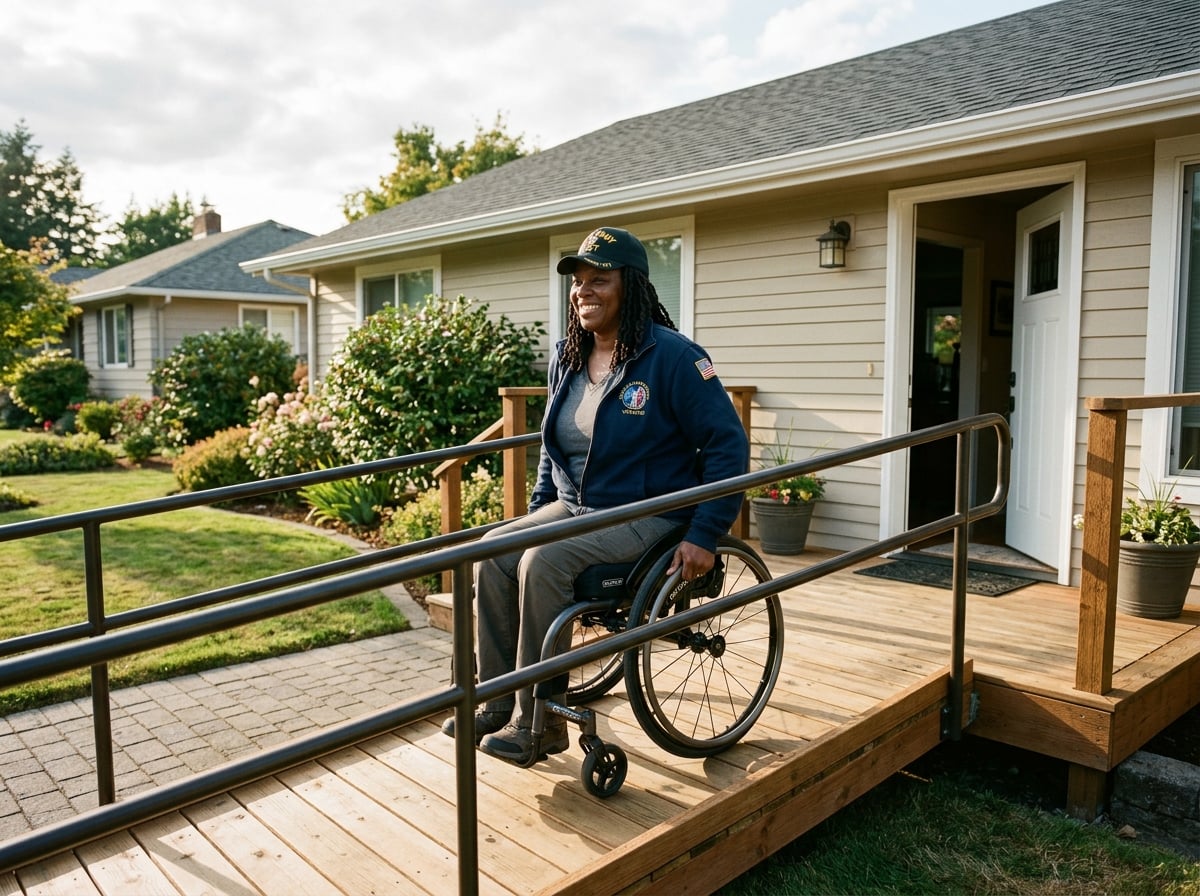
Adapted Housing Grants (SAH / SHA)
Grants to buy, build, or modify a home so it works with your service-connected disability — ramps, widened doorways, roll-in showers, and more.
A home should work with your body, not against it. For women veterans living with severe service-connected disabilities, the VA offers housing grants that pay to make a home genuinely livable — money to buy, build, or remodel so that daily life is possible with dignity and independence.
These are grants, not loans — money you do not pay back. The two main ones are the Specially Adapted Housing (SAH) grant and the Special Housing Adaptation (SHA) grant, with a temporary option (TRA) for veterans living in a family member’s home.
If you are ready to own a home
Grants to buy, build, or modify a home so it works with your service-connected disability — ramps, widened doorways, roll-in showers, and more.
Use the eligibility and application steps on this page to identify the right housing path without leaving the guide.
Understanding Adapted Housing
Specially Adapted Housing (SAH) grant
The larger grant, for veterans with the most severe service-connected disabilities (such as loss or loss of use of both legs, certain severe burns, or blindness combined with loss of use of a limb). It helps you buy, build, or substantially modify a home for accessible, independent living. The maximum is set by law and adjusted every year.
Special Housing Adaptation (SHA) grant
A smaller grant for veterans with qualifying service-connected disabilities such as certain vision loss, or the loss or loss of use of both hands. It helps adapt an existing home — a home you own or one a family member owns. The maximum is likewise set annually.
Temporary Residence Adaptation (TRA)
If you are living temporarily in a home owned by a family member, a TRA grant can pay to adapt that home so it works for you right now, without using up your full SAH or SHA entitlement.
Do you qualify for Adapted Housing?
You have a qualifying severe service-connected disability (the exact conditions differ between the SAH and SHA grants).
You will own or already own the home being adapted (or, for TRA, a family member owns it).
The adaptation is needed for accessible, independent living — ramps, widened doorways, roll-in showers, accessible kitchens, and similar modifications.
A VA representative can confirm which grant fits your rating and situation.
Not sure whether you meet these? Eligibility for housing programs turns on details, income limits, discharge status, and how “at risk” is defined. An accredited representative can confirm exactly where you stand before you apply. Reaching out is the one step only you can take.
What Adapted Housing actually gives you
Buying or building an accessible home
Apply grant funds toward purchasing or constructing a home built for your needs.
Modifying your current home
Ramps, widened doorways, roll-in showers, accessible kitchens and bathrooms, and other adaptations.
Adapting a family member’s home (TRA)
Temporarily adapt a relative’s home you are living in without exhausting your full entitlement.
Money you keep
These are grants, not loans — you do not repay them.
What this means for you
Accessibility grants are dramatically underused, and women veterans with qualifying ratings often do not know they exist. If you have a severe service-connected disability and your home fights you every day — stairs you cannot manage, a bathroom you cannot safely use — these grants can change that. The current dollar maximums are set by law and adjusted each year, so verify the exact figure with the VA, but the amounts are substantial and the money is not repaid.
Getting Adapted Housing, step by step
Apply with VA Form 26-4555
Complete the Application in Acquiring Specially Adapted Housing or Special Home Adaptation Grant — online at va.gov, by mail, or with help from a VA representative.
Let the VA confirm which grant fits
The VA reviews your service-connected disabilities and determines whether you qualify for SAH, SHA, or TRA, and for what amount.
Plan your project
Work with the VA’s Specially Adapted Housing agent, who helps you plan the purchase, build, or modifications.
Complete the work and move forward
Funds are applied to your accessible home so you can live independently and with dignity.
What trips women veterans up
Assuming these are loans — SAH, SHA, and TRA are grants you do not repay.
Not applying because you rent or live with family — the TRA option exists for family-owned homes.
Guessing at the dollar amount instead of confirming the current annual maximum with the VA.
Overlooking that adapting an existing home counts — you do not have to buy or build new.
Adapted Housing: your questions answered
Do I have to pay these grants back?
No. Specially Adapted Housing (SAH), Special Housing Adaptation (SHA), and Temporary Residence Adaptation (TRA) are grants, not loans. You do not repay them.
How much are the grants worth?
The maximum amounts are set by law and adjusted every year, so the exact figure changes annually. The SAH grant is the larger of the two; the SHA grant is smaller. Confirm the current maximum with the VA when you apply.
Can I use a grant on a home my family owns?
Yes. The Temporary Residence Adaptation (TRA) grant lets you adapt a home owned by a family member you are living in temporarily, without using up your full SAH or SHA entitlement.
What kinds of changes do these grants pay for?
Ramps, widened doorways, roll-in showers, accessible kitchens and bathrooms, and other modifications that make independent living possible — or the purchase/construction of a home already built for accessibility.
Official VA & HUD Links
Everything you need is on this page. These official links are provided in addition, so you can go straight to the source to apply or read more.
See every housing program for women veterans, or estimate the rating that could fund your housing stability.