
Preparing for Your C&P Exam
The Compensation & Pension exam is where a lot of good claims quietly fall apart — not because the veteran was lying, but because she toughed it out and downplayed her worst days in front of the examiner. I wrote this page so you walk in knowing exactly what the exam is for and how to tell your story straight.
Here is what to do before, during, and after the exam — including your right to a female or trauma-informed examiner, and how to tell when an exam was inadequate. Reading it is on me. Showing up and speaking honestly is on you.
What a C&P Exam Actually Is
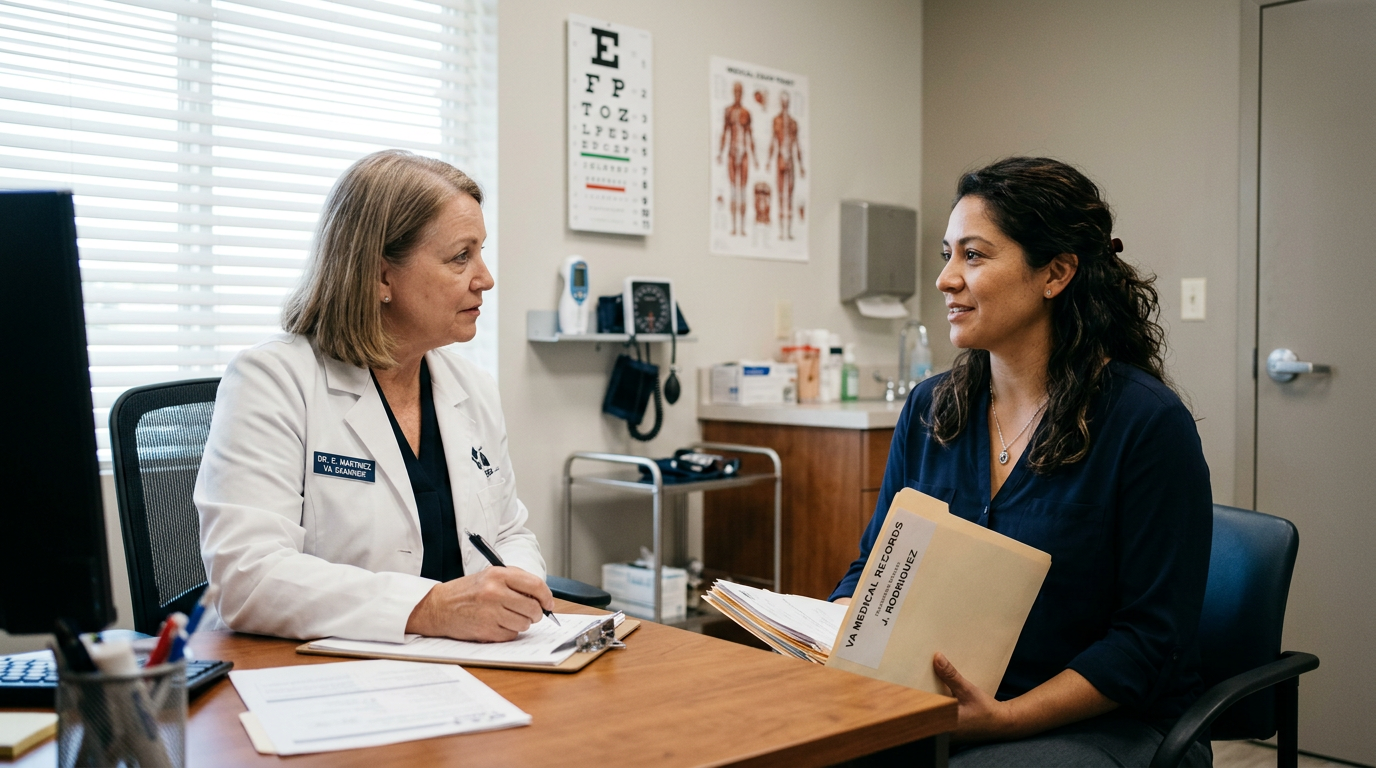
A Compensation and Pension (C&P) exam is a medical examination the VA orders to answer three questions: what is your diagnosis, is it connected to your service, and how severe is it? It may be done by VA staff or by a contracted examiner such as VES, QTC, or LHI. The examiner is not there to treat you — they are there to fill out a Disability Benefits Questionnaire (DBQ) that goes straight into your claim file.
That is why this one appointment carries so much weight. The rating official who decides your claim often leans hardest on what the C&P examiner wrote. If the exam captures your condition accurately, it helps you. If it undercounts you — or you undercount yourself — it can hold your rating down for years.
The one thing to remember: the examiner records how you present on that day. Come prepared to describe your condition at its worst and how often that happens — honestly and completely. This page explains the process; it is not legal advice or a filing strategy.
Before the Exam: How to Prepare
You do not get to redo a C&P exam because you forgot to mention something. Walk in ready. These four things take an afternoon and can change your result.
Reread your own claim and records
Go back through what you filed and the medical evidence behind it. The examiner has your file, but you should know your own story cold — when the condition started, how it has changed, and what daily tasks it stops you from doing. Vague answers hurt you; specific ones help.
Write down your symptoms and flare-ups
Keep a short list of your symptoms, how often they happen, how bad they get, and what they keep you from doing at home and at work. Flare-ups matter — if a good day at the exam is not your normal day, the examiner needs to hear that in plain words.
Request a female or trauma-informed examiner
For MST claims and sensitive exams, you can request a female examiner and a trauma-informed exam, and you can bring a support person. Ask for this ahead of time. An exam that ignores the trauma or is done by someone unfamiliar with it can be inadequate.
Do not miss it — reschedule if you must
A missed C&P exam can get your claim denied for failure to report. If you truly cannot make the appointment, call and reschedule before the date rather than skipping it. Show up, or move it — do not no-show.
During the Exam: Speak on Your Worst Day
This is the part veterans get wrong — not out of dishonesty, but out of pride. You spent a career pushing through pain. For this one hour, do not.
Describe your worst day, not your best
Veterans instinctively downplay pain and “push through.” That instinct costs you at a C&P exam. Describe your symptoms at their worst and how often those days happen — not the one hour you feel okay. Be honest, be complete, and do not tough it out for the examiner.
Do not exaggerate either
Overstating is as damaging as understating — examiners are trained to notice it, and it can sink your credibility on the parts that are true. Tell the truth about the bad days and the limits, exactly as they are. Accuracy is what wins.
The exam can be short — that is normal
Many C&P exams are brief because the examiner is filling out a Disability Benefits Questionnaire (DBQ), not treating you. A short exam is not automatically a bad one — but a rushed, dismissive, or speculative exam that ignores your history can be, and that matters later.
Answer what is asked, and finish your point
Stay on the question, but do not let an important detail get cut off. If the examiner moves on before you have explained how a symptom affects your work or your family, say so. This exam becomes a permanent part of the record the VA relies on.
After the Exam: Read It, and Push Back on a Bad One
The exam is not the end of your control over your claim. What you do afterward — especially if the exam was rushed or wrong — can still change the outcome.
Get a copy of the exam report
You have the right to see the C&P exam report and the DBQ the examiner completed. Request it through VA.gov or your VA facility. Reading it is the only way to know whether the examiner captured your condition accurately or missed the mark.
Know what an inadequate exam looks like
An exam can be inadequate as a matter of law if it was speculative, rushed, done by someone who never engaged with your history, or based on the wrong facts. The VA has a duty to provide an adequate exam under 38 CFR 3.159(c)(4). A bad exam is a reason to push back — not to give up.
A private opinion can rebut a bad exam
If the C&P exam undercounts your symptoms, a medical or psychological opinion from your own provider can carry real weight in challenging it. This is especially true for mental-health and MST claims, where a dismissive exam is a common and beatable problem.
A denial after a bad exam is appealable
If a decision rests on an inadequate exam, that is exactly the kind of thing the appeal lanes exist for. You can request a new exam or challenge the decision. This is where an accredited claims agent earns their keep — spotting the flaw and building the response.
If your claim was denied on a bad exam, that is not the end. An inadequate exam is one of the most common and most beatable reasons for a denial. See the appeals guide for the lanes available, and get the exam reviewed before you decide what to do next.
C&P Exam Questions Women Veterans Ask
What is a C&P exam?
A Compensation and Pension (C&P) exam is a medical examination the VA uses to assess your diagnosis, whether a condition is connected to service, and how severe it is. It may be done by VA staff or a contracted examiner (such as VES, QTC, or LHI). The examiner usually completes a Disability Benefits Questionnaire (DBQ) that becomes part of your claim file.
How should I describe my symptoms at the exam?
Describe your symptoms on your worst day and how often those days happen — not your best hour. Be honest and complete without exaggerating. Explain how the condition affects your daily life, your work, and your family. Downplaying your symptoms is the single most common mistake veterans make at these exams.
Can I request a female or trauma-informed examiner?
Yes. For MST claims and other sensitive exams, you can request a female examiner and a trauma-informed exam, and you can bring a support person. Ask for this ahead of the appointment. An exam that ignores the trauma or is conducted by someone unfamiliar with it can be inadequate.
What happens if I miss my C&P exam?
Missing a scheduled C&P exam can lead to your claim being denied for failure to report. If you cannot make the appointment, call to reschedule before the date rather than skipping it. Always show up or move the appointment — never simply no-show.
How do I get a copy of my C&P exam report?
You can request the C&P exam report and the completed DBQ through your VA.gov account or your VA facility. Reading it is the only way to confirm whether the examiner captured your condition accurately, and it is the first step if you think the exam was inadequate.
What can I do if the exam was rushed or wrong?
An exam that was speculative, rushed, based on the wrong facts, or done by someone who never engaged with your history can be inadequate as a matter of law under 38 CFR 3.159(c)(4). You may be able to request a new exam, and a private medical opinion can rebut a bad one. This page explains the process; it is not legal advice — an accredited claims agent can review your specific exam.
Exam coming up, or an exam that felt wrong? Get it reviewed.
Whether you are preparing for a C&P exam or you already sat one that undercounted you, an accredited claims agent (#45147) can help you understand what the report said and what your options are. The review is free and there is no obligation — but the phone call is yours to make.
Keep Going: Three Related Guides
Disability Claims
Build the diagnosis, in-service event, and nexus the examiner will be checking.
Open guideAppeals & Denials
Denied on an inadequate exam? See how to challenge it and request a new one.
Open guideMilitary Sexual Trauma
Trauma-informed exam rights, marker evidence, and the full MST claim path.
Open guide