
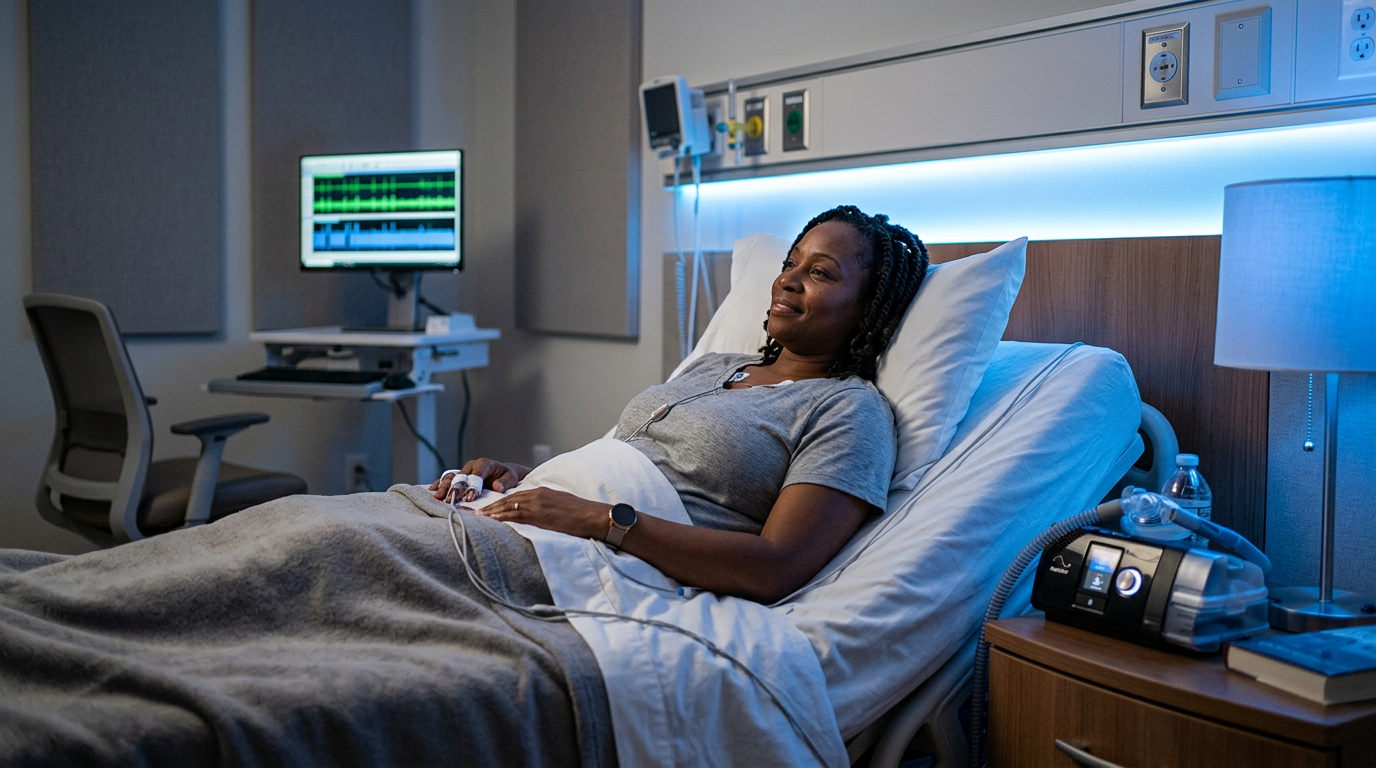
Sleep Apnea
Sleep apnea means your breathing repeatedly stops and starts all night, so you never reach deep, restorative sleep. It leaves you exhausted, foggy and at real cardiovascular risk — and a diagnosis that requires a CPAP machine is rated at 50%. It is badly under-diagnosed in women because the “middle-aged man” stereotype means they are rarely sent for a sleep study.
Everything is on this page, in plain English: what apnea actually is, why women get missed, what in your service causes it, exactly what each level pays, how the VA underrates it, and how to build a claim that holds up.
What Sleep Apnea Really Is
Sleep apnea is a condition in which your airway collapses or your brain briefly stops signaling you to breathe — dozens or even hundreds of times a night. Each pause drops your oxygen and jolts you out of deep sleep, usually without your ever knowing it happened. You wake up feeling like you never slept, because in the way that matters, you didn’t.
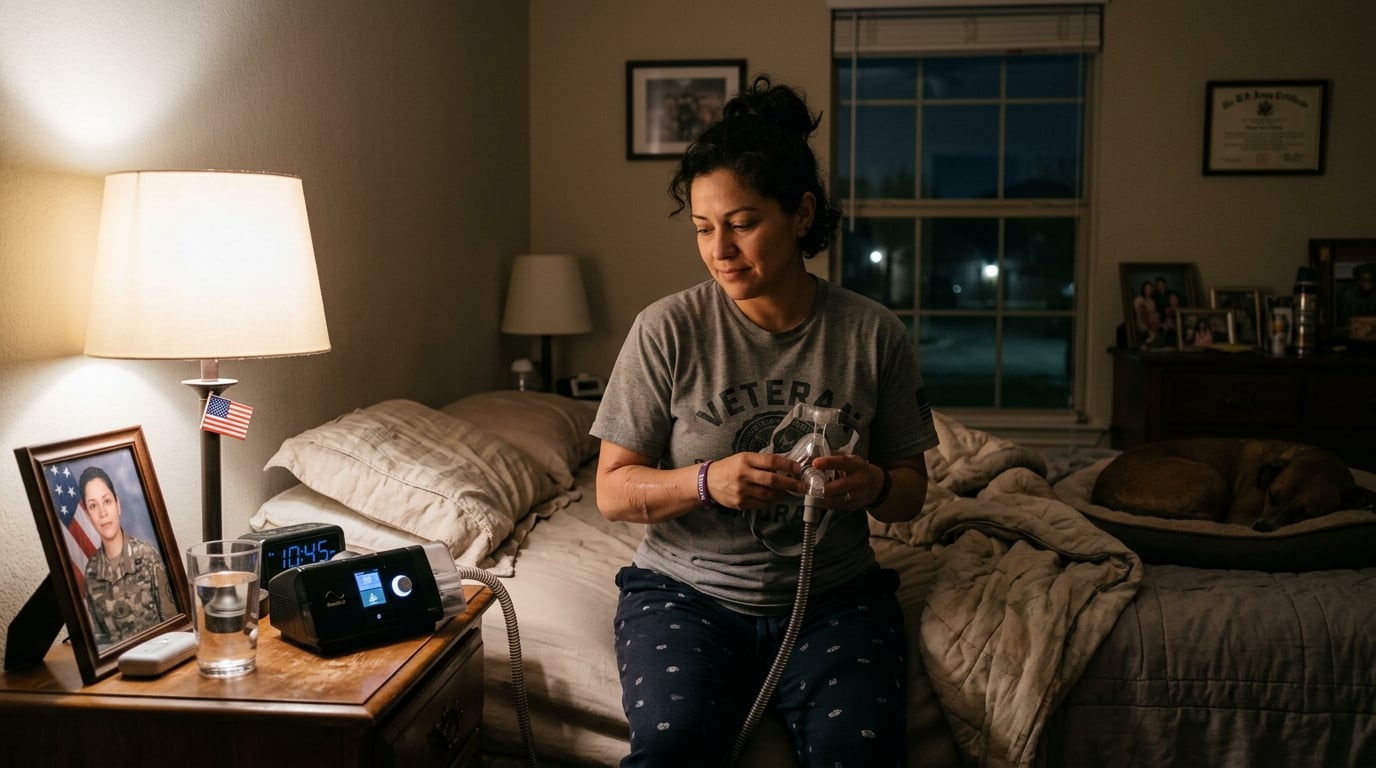
The phrase that governs your rating is requires a breathing assistance device. If your sleep study resulted in a prescription for a CPAP machine, you meet the criterion for the 50% level — full stop. That single fact is the difference between a 30% and a 50%, which is why getting the sleep study and the prescription documented matters so much.
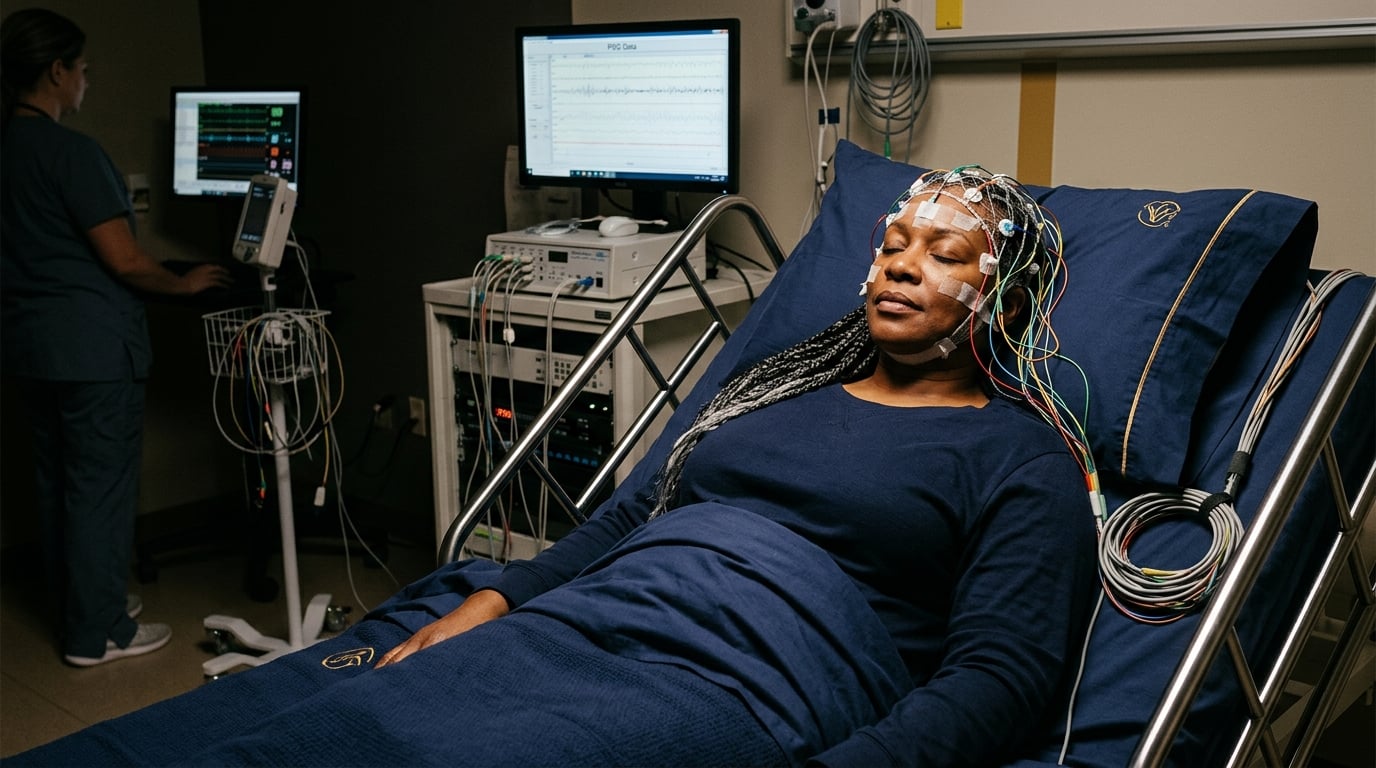
“Requires a CPAP” — and why it decides your rating
What it means
A sleep study documented the apnea and your provider prescribed a breathing assistance device (CPAP/BiPAP) to treat it. That prescription is the trigger for 50%.
What the VA measures
Not how tired you feel — whether a device is required. 50% for a CPAP; 30% for daytime sleepiness without one; 100% for respiratory failure or a tracheostomy.
Why women get missed
The “middle-aged man” stereotype means women are rarely referred for a sleep study at all — so the diagnosis, and the rating that flows from it, never happens.
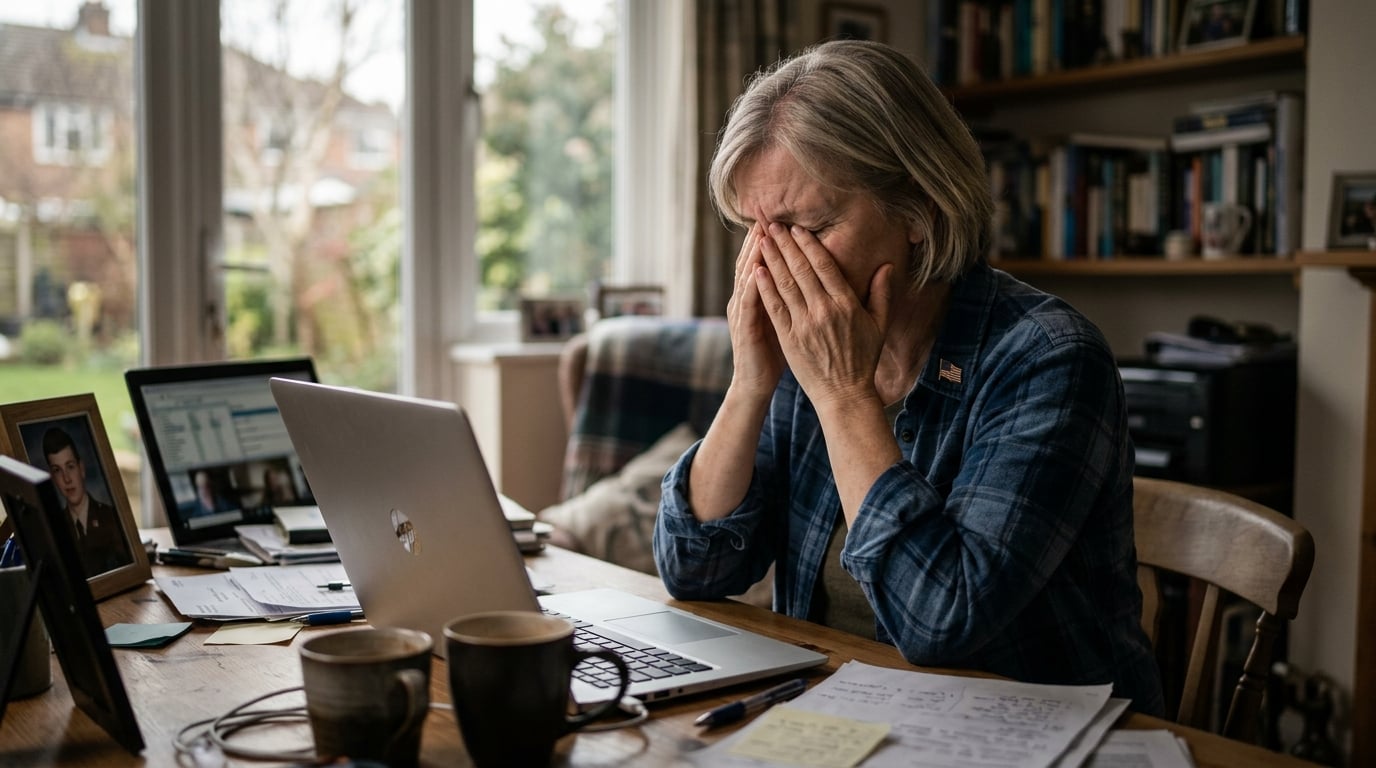
Why women get overlooked — and under-diagnosed
The textbook apnea patient is imagined as an older, heavyset man who snores. Women often don’t fit that picture — their symptoms show up as fatigue, insomnia, morning headaches and low mood rather than loud snoring — so a doctor is far more likely to hand them an antidepressant than a referral for a sleep study.
For veterans, apnea very often rides in behind another service-connected condition: PTSD that shreds sleep, weight gain from psychiatric medication, or airway damage from burn-pit exposure. Because the sleep study never gets ordered, the whole chain — diagnosis, CPAP, 50% rating — stops before it starts. Pushing for that sleep study is the single most important step.
By the Numbers
These figures come from sleep-medicine research and the VA’s own rating schedule. Sleep apnea in women is chronically under-diagnosed, and the reason is diagnostic bias: the textbook picture is a heavy, snoring man, while women more often present with fatigue, insomnia, morning headaches, mood changes, and difficulty concentrating — symptoms that get labeled depression or stress and never trigger a sleep study. Hormonal changes around menopause raise the risk sharply. Meanwhile the rating is one of the more valuable in the schedule: a prescribed CPAP or other breathing assistance device alone is worth 50 percent under Diagnostic Code 6847, which for a veteran with a spouse and children is thousands of dollars a year. If you have been exhausted for years, have been told you snore or stop breathing, wake with headaches, or fall asleep in the afternoon, and no one has ever ordered a sleep study — read these numbers slowly, then ask for the study.
50%
the rating for sleep apnea that requires a CPAP machine — the level most diagnosed veterans reach (DC 6847)
Often missed
women are far less likely to be referred for a sleep study because their symptoms don’t match the male stereotype
Secondary
apnea is very frequently connected as secondary to PTSD, medication weight gain, or sinus and airway conditions
100%
the rating when apnea progresses to chronic respiratory failure, cor pulmonale, or a tracheostomy
CPAP data
your machine’s compliance data is objective proof that supports and protects the 50% level
No deadline
there is no time limit to file — apnea rooted in service is still claimable years later
What in Your Service Causes It
Sleep apnea is very often secondary — caused or worsened by another condition that is already service connected — and that is the single most important strategic fact about this claim. Most veterans were never diagnosed on active duty, so a direct claim runs straight into “no evidence of onset in service.” The secondary route sidesteps that entirely. Under 38 CFR §3.310(a), a condition proximately caused by a service-connected disability is itself service connected, and under §3.310(b), a condition that your rated disability permanently aggravates is compensable for the degree of that aggravation. PTSD and depression disrupt sleep architecture and drive weight gain. Chronic pain, medication, and inactivity from a rated orthopedic injury do the same. Rhinitis, sinusitis, deviated septum, and asthma tied to burn-pit or environmental exposure restrict the airway directly. Naming the right connection — and getting a clinician to write it down with a rationale — is how this claim gets granted. Here are the origins the VA recognizes:
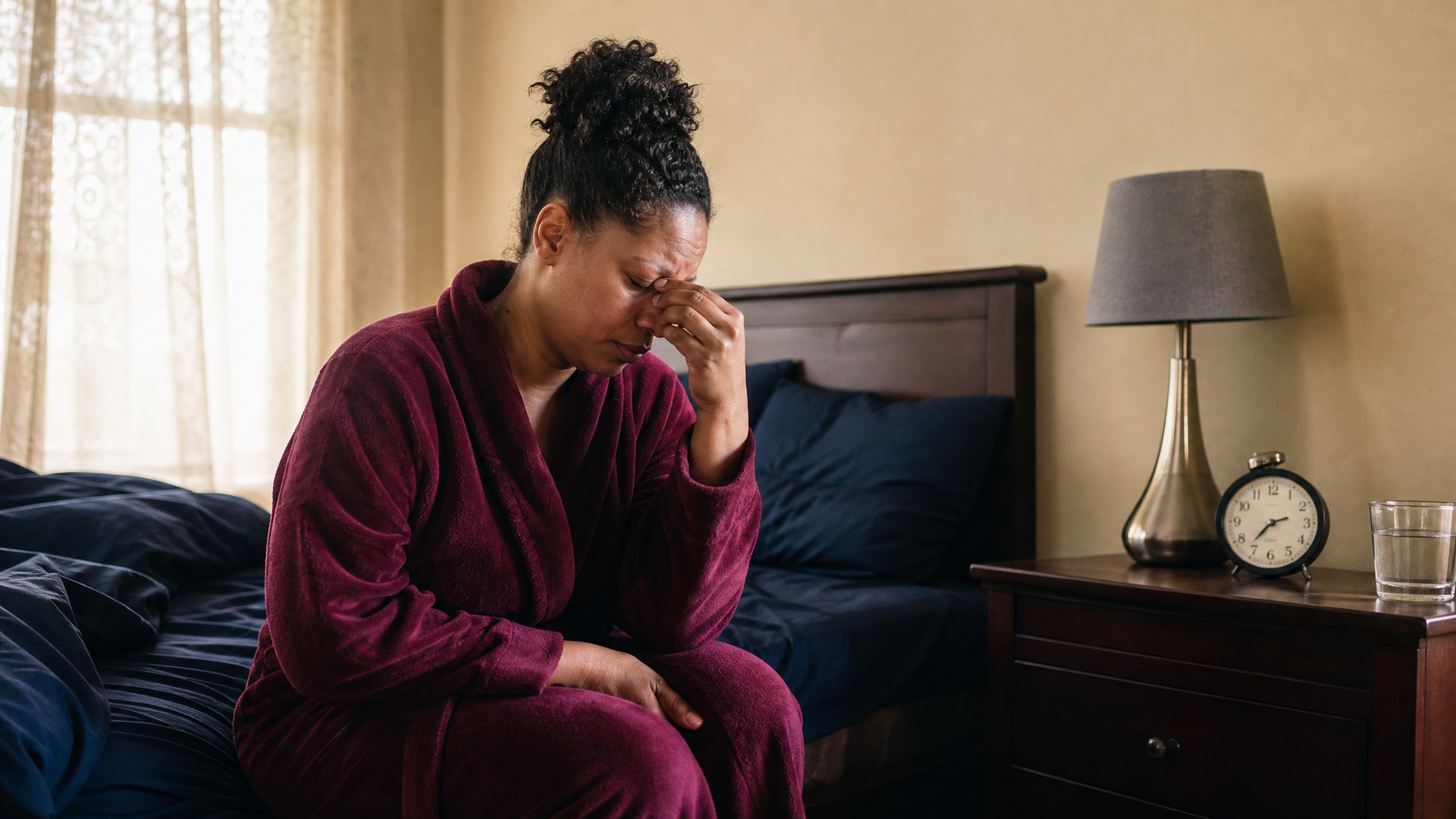
Secondary to PTSD
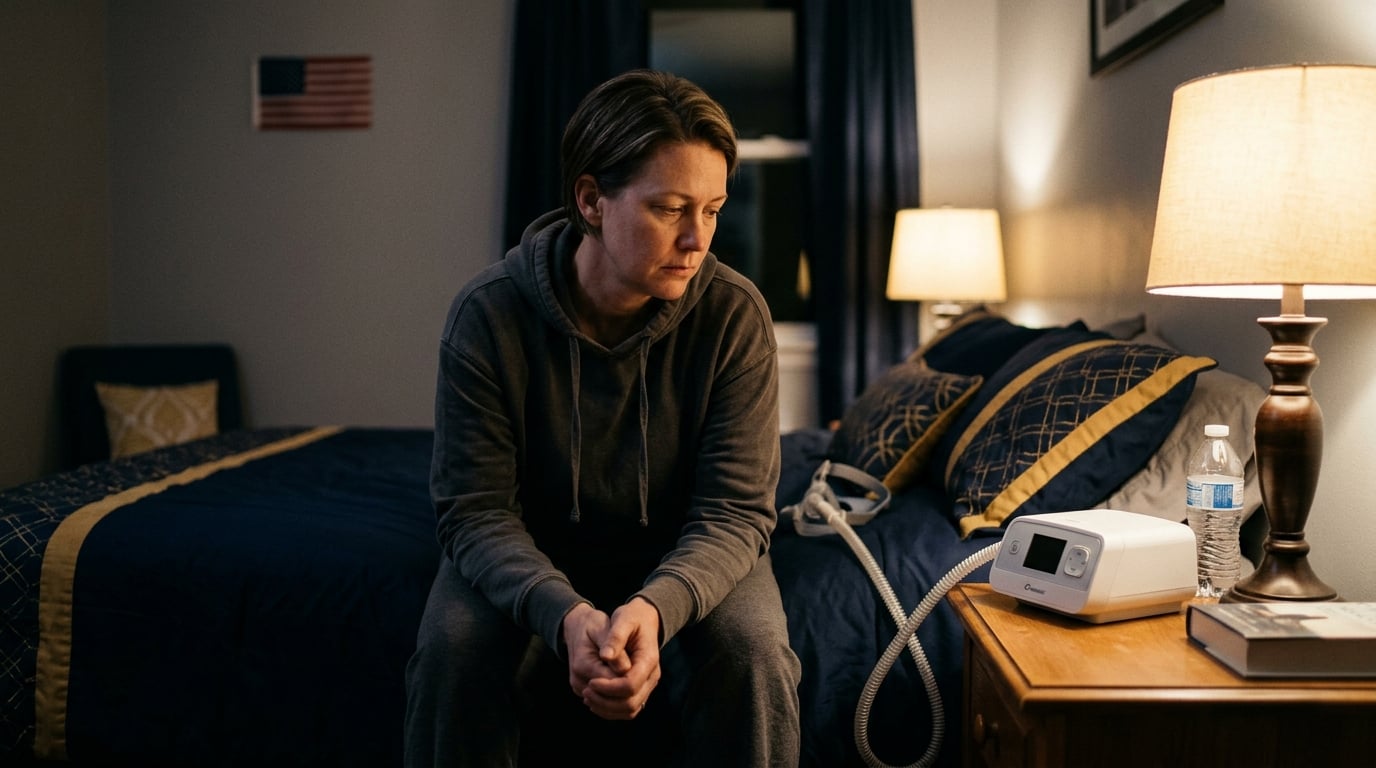
Trauma-driven sleep disruption and the underlying physiology of PTSD are recognized contributors to sleep apnea. When PTSD is already service-connected, apnea can be claimed as secondary to it — one of the most common and successful secondary connections women veterans have.
Weight change from medication
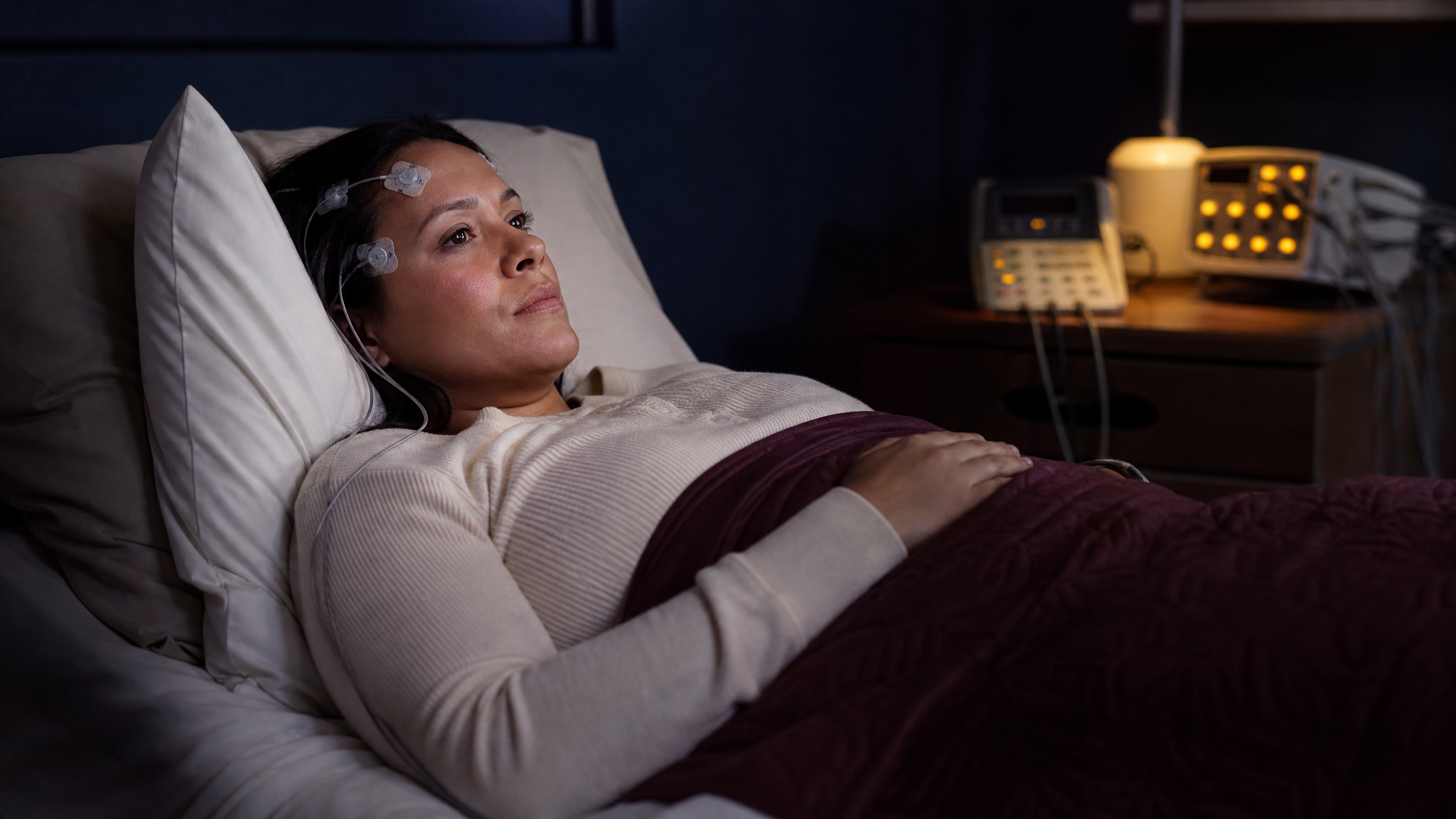
Weight gain caused by medications for service-connected conditions — antidepressants, mood stabilizers, steroids — can cause or worsen obstructive sleep apnea. That makes the apnea claimable as secondary to the condition those medications were treating.
Sinus & airway damage
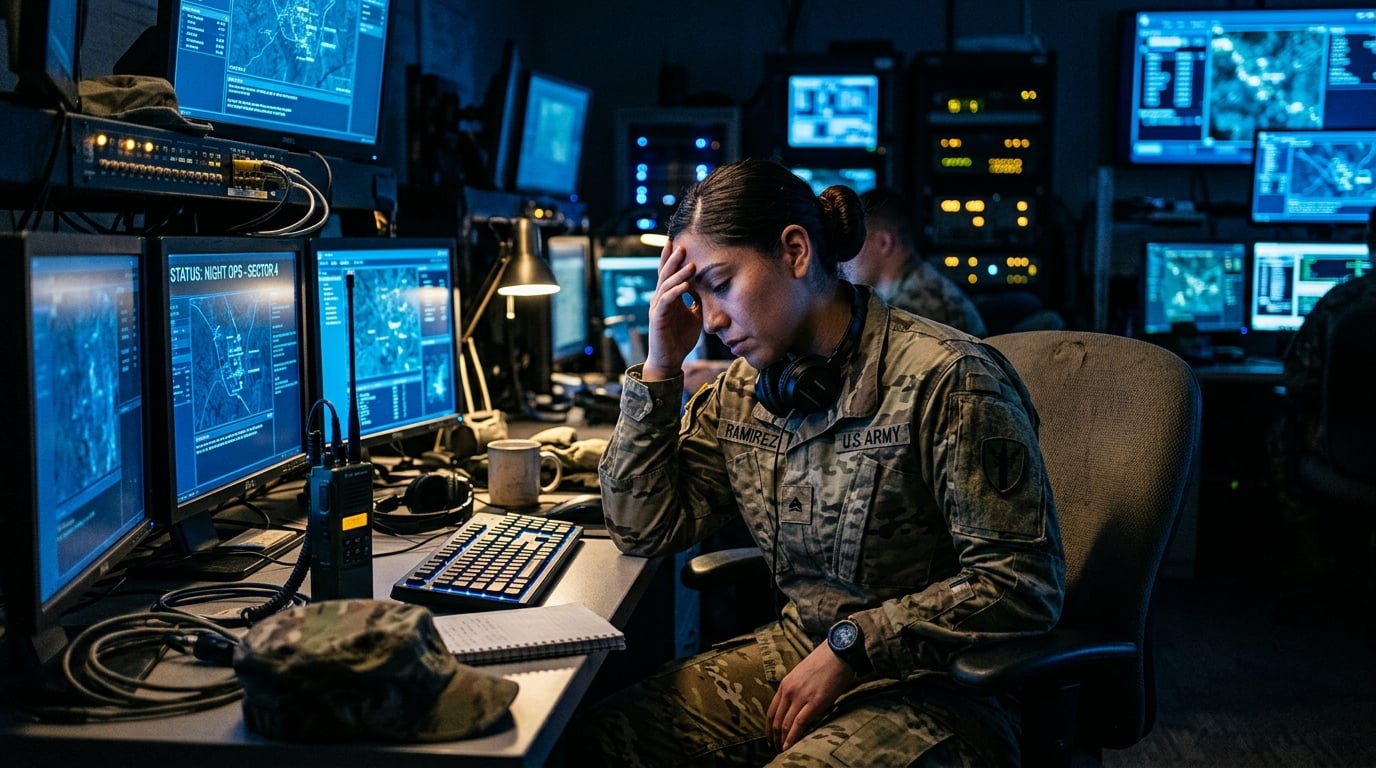
Burn-pit and environmental exposure, a deviated septum, and chronic rhinitis narrow the upper airway and contribute to obstructive apnea. Airway damage that began with an in-service exposure is a direct route to service connection.
Disrupted sleep schedules
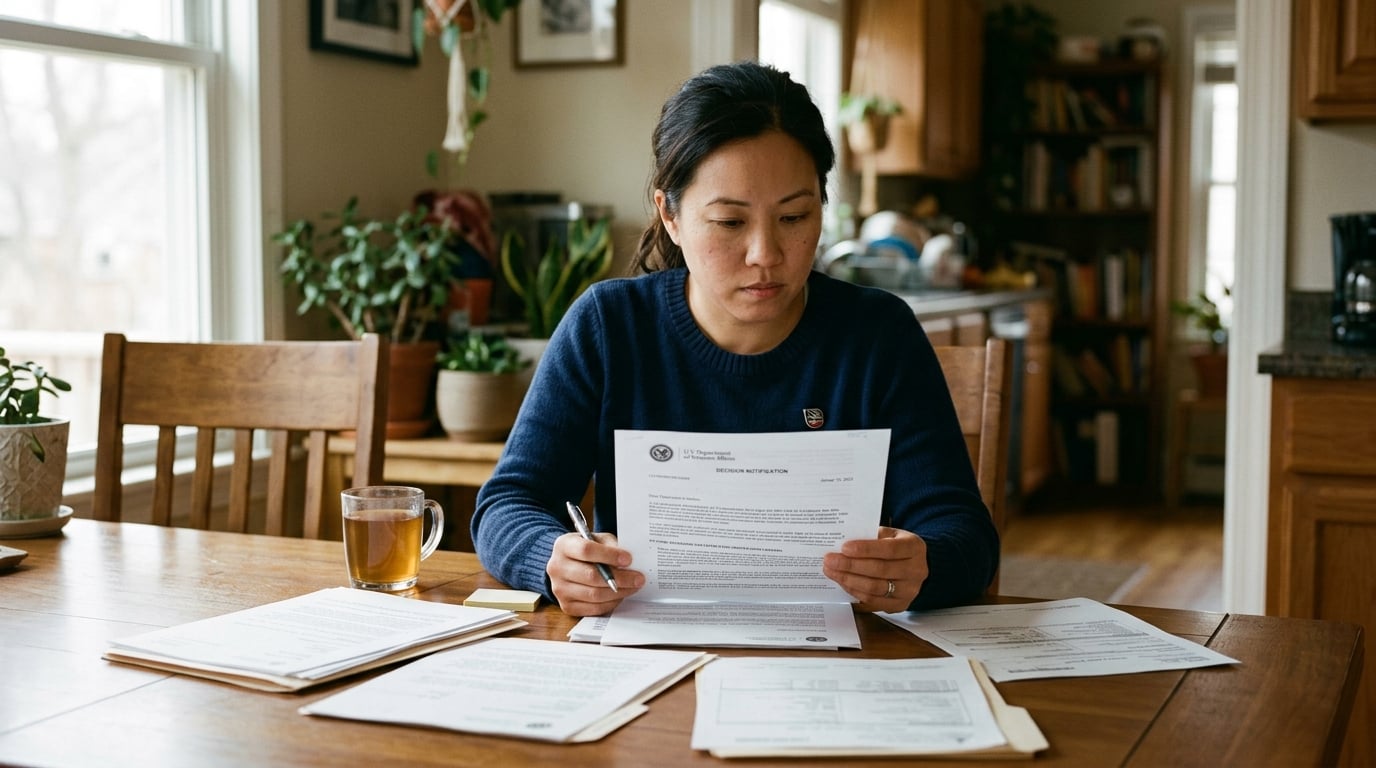
Watch rotations, shift work and irregular field sleep patterns are associated with the development of sleep-disordered breathing. Years of fractured, on-demand sleep during service can leave a lasting mark on how the body breathes at night.
What the VA Pays for Sleep Apnea
Sleep apnea is rated under 38 CFR §4.97, Diagnostic Code 6847, and the whole schedule turns on one question: does your treatment require a breathing assistance device? The tiers are short and unusually clean. 0 percent is an asymptomatic condition with documented sleep-disordered breathing. 30 percent is persistent daytime hypersomnolence — the exhaustion that does not lift no matter how long you were in bed. 50 percent is a condition that requires the use of a breathing assistance device such as CPAP, and it does not matter how well the machine works, only that you need it. 100 percent requires chronic respiratory failure with carbon dioxide retention or cor pulmonale, or the need for a tracheostomy. That 30-to-50 jump is where the money is, and it is decided by whether a prescription for the device is actually in your record — so if a machine was prescribed, make sure the prescription and the compliance data are in the file, not just a mention in a clinic note. Here is exactly what each level requires, in plain English.
Chronic respiratory failure with carbon-dioxide retention, or cor pulmonale (right-heart strain), or the need for a tracheostomy. This is the most severe presentation.
Requires the use of a breathing assistance device such as a CPAP machine. This is the level most veterans reach — if a sleep study prescribed a CPAP, this is your criterion. (DC 6847)
Persistent daytime sleepiness (hypersomnolence) without the need for a breathing device.
Diagnosed by sleep study but currently asymptomatic. Still worth establishing — it locks in service connection you can build on if it worsens.
Source: 38 CFR §4.97, Diagnostic Code 6847. Every percentage here is a starting point set by federal regulation, not a promise — your actual rating depends on your sleep study and records. An accredited representative can confirm exactly what fits your case.
A 50% secondary rating can transform your combined total
Because apnea is so often secondary to PTSD or another condition, a 50% apnea rating frequently stacks on top of ratings you already have — and 50% combines powerfully. If your service-connected conditions together make steady work impossible, ask about TDIU to be paid at the 100% rate.
Understanding Sleep Apnea, in Plain Language
Obstructive sleep apnea is not snoring and it is not a bad night’s sleep. It is your airway collapsing dozens or hundreds of times an hour, each time dropping your blood oxygen and jolting your brain back toward wakefulness — which is why you can spend eight hours in bed and wake up destroyed. These are clear explainers from respected medical sources on what that repeated oxygen deprivation does over years: hypertension, cardiac strain, insulin resistance, weight gain, memory and concentration problems, and mood disorder. They also cover how a sleep study works, what the apnea-hypopnea index means, and why CPAP remains the treatment that changes outcomes. Watch whenever you’re ready — and if nobody has ever ordered you a sleep study, that is the next call you make.
Mayo Clinic Minute — Obstructive Sleep Apnea
A short Mayo Clinic explainer on what obstructive sleep apnea is, how it interrupts breathing during sleep, and why it matters for your health.
Obstructive Sleep Apnea — Causes & Effects
A deeper look at what causes sleep apnea, how it is diagnosed with a sleep study, and the health effects of leaving it untreated.
These videos are shared for general education from third-party medical creators. They are not legal advice, and watching them is never required to get help with your claim.
How the VA Quietly Underrates Sleep Apnea
Apnea claims are frequently denied or lowballed on a technicality, and it is almost always the missing link back to service rather than the diagnosis itself. The standard denial reads that your sleep study is dated years after separation and there is no complaint of sleep problems in your service treatment record — which ignores that apnea is progressive, that it is rarely screened for on active duty, and that women in particular present atypically. The second common failure is a secondary claim filed without a medical nexus opinion: you assert that your PTSD caused the apnea, no clinician says so on paper, and the rater denies it in one sentence. The third is a rating held at 30 percent when a CPAP has been prescribed, because the prescription never made it into the evidence the rater reviewed. The fourth is an examiner who blames your weight, which is neither a legal bar nor an answer when the weight gain itself traces to a service-connected condition or its medication. Here is exactly how it happens:
- A grant of the diagnosis but a denial of service connection, because no one documented the in-service symptom or secondary link
- A secondary claim to PTSD refused for lack of a clear medical nexus opinion
- A rating dropped to 30% by arguing the CPAP is “optional” rather than required
- A sleep study never ordered in the first place, so the whole claim stalls before it begins
This is where an accredited representative earns their place — securing the nexus opinion, framing the secondary connection correctly, and making sure the CPAP prescription is squarely in the record.
Secondary Claims — The Connections Most Women Miss
Sleep apnea sits at the center of a web of connections, and it runs in both directions. It is often caused by another service-connected condition — and left untreated, it causes new ones. Both directions are compensable: 38 CFR §3.310(a) covers what your rated condition caused, and §3.310(b) covers what it permanently made worse. Untreated apnea is an independent driver of hypertension, cardiac disease, type 2 diabetes through insulin resistance, weight gain, gastroesophageal reflux, and cognitive and mood symptoms that are frequently misread as depression alone. Going the other way, PTSD, chronic pain, rhinitis, and sinusitis all feed the apnea. Veterans routinely claim one condition here and leave four unclaimed, and because ratings combine under §4.25, the difference between a single 50 percent and a properly developed chain is often the difference between a partial rating and a total one. Each recognized link is a separate rating you may be missing.
Apnea caused by something else
If any of these is already service-connected, your apnea can often be connected as secondary to it:
Conditions your apnea can cause
Once apnea is service-connected, these can be claimed as secondary to it:
A secondary claim needs a diagnosis plus a medical opinion (“nexus”) saying the link is at least as likely as not. This is one of the highest-value things an accredited agent helps build.
Building a Sleep Apnea Claim That Wins
An apnea claim is won on the sleep study and the connection to service — not on how tired you have felt for years. Without a diagnostic sleep study there is no claim at all, so that is step one: ask your VA primary care provider or a private physician for a referral, and note that home sleep tests are widely accepted. Step two is the link, and for most veterans that means a secondary theory tied to a condition you are already rated for, supported by a written medical opinion that states the connection and explains why — an opinion with no rationale carries almost no weight. Step three is proving the tier: get the CPAP prescription, the device order, and the compliance download into the record, because that is what separates 30 percent from 50. Lock your effective date with an Intent to File (VA Form 21-0966), file on VA Form 21-526EZ, release private sleep-clinic records with VA Form 21-4142, and add a statement from a spouse or partner who has watched you stop breathing. Here is what a strong file is built from:
Every claim stands on three legs
A sleep study diagnosis
A formal sleep study confirming apnea — and, ideally, a prescription for a CPAP, which establishes the 50% criterion.
An in-service link
In-service symptoms (documented fatigue, snoring, witnessed pauses) or a secondary link to PTSD, medication weight gain, or a sinus/airway condition.
A nexus
A medical opinion stating the apnea is at least as likely as not related to service or to the primary service-connected condition.

Document the sleep problem — and get the study ordered
The single most important move is getting a sleep study on the record. Support it by writing down:
- Daytime exhaustion, morning headaches and difficulty concentrating
- Anything a partner has noticed — snoring, gasping, pauses in breathing
- When the sleep problems began in relation to your service or PTSD
- Your CPAP compliance data once you have a machine
What to expect at the C&P exam
The examiner works from the Sleep Apnea DBQ and will review your sleep study and treatment. Three things protect your rating:
Bring the sleep study
The diagnosis and the CPAP prescription are the objective proof of the 50% criterion — make sure they are in front of the examiner.
Describe the daytime toll
Exhaustion, fog, and how it affects your driving, work and family — not just how you sleep, but how the lack of sleep hits your life.
Name the connection
State plainly whether this is secondary to PTSD, medication or a sinus condition — do not leave the examiner to guess.
When you are ready to file
File on VA Form 21-526EZ, list sleep apnea and any primary condition it is secondary to, and attach your sleep study and CPAP records. You can also open the disability calculator to see how a 50% apnea rating would combine with the rest of your conditions.
Your Rights — Know Them Before You File
The system is easier to face when you know the rules are on your side. These protections apply to your sleep apnea claim from the moment you start.
You never pay a fee just to file. A VA-accredited representative can help you at no upfront cost — anyone demanding money up front to "start" your claim is a red flag.
The VA has a legal Duty to Assist — it must help you gather your service and medical records, and must tell you what evidence is still missing BEFORE it issues a denial.
You have the right to request a female provider and a trauma-informed clinician for any exam connected to your claim.
You have the right to file for every condition you live with — including secondary conditions your service-connected condition caused or made worse.
A single low rating is not the end of the road. You have the right to appeal, to submit new evidence, and to be re-evaluated as your condition changes.
If your conditions together keep you from holding steady, gainful work, you have the right to be considered for TDIU — paid at the 100% rate even if no single condition reaches 100%.
Questions Women Ask About Sleep Apnea Claims
Straight answers to the questions that stop women from filing — or from claiming everything they are owed.
If I use a CPAP machine, what rating should I expect?
When sleep apnea requires the use of a breathing assistance device such as a CPAP machine, the condition is rated at 50 percent. That is written into the rating criteria. If you are prescribed a CPAP but were rated lower, that is one of the clearest signs a decision was wrong and should be reviewed.
Can sleep apnea be secondary to my other service-connected conditions?
Frequently, yes. Sleep apnea is often service-connected as secondary to PTSD, to weight gain driven by a service-connected condition or medication, or to chronic sinus and nasal conditions. A secondary claim only needs a medical opinion linking the two — you do not have to prove the apnea itself started in service.
I was never given a sleep study while I was in. Can I still win?
Yes. You do not need an in-service sleep study to be service-connected. Buddy statements from people who witnessed your loud snoring, choking or gasping and daytime exhaustion during service — combined with a current diagnosis and a nexus opinion — can carry the claim. Lack of a study on active duty is not a bar.
How common is the 50 percent rating?
Very. Because the criteria tie the 50 percent level directly to needing a CPAP or similar device, the majority of veterans who are prescribed one and properly rated land at 50 percent. Getting there depends on the evidence being framed correctly — which is exactly what an accredited review checks.
When You Are Ready to File
Before you file anything, talk to an accredited agent first — it is free. A claim is won or lost on how it is built: the diagnosis on record, the right in-service connection, and whether every condition and secondary is captured. Once a claim is submitted it is much harder to fix than to get right the first time. There is no fee to have an accredited claims agent (#45147) review your situation and tell you honestly whether and how we can help.
You now know what the VA looks for — it is all above. When you are ready, the forms themselves are downloaded and submitted on the official VA site. These are the exact ones you will use:
Resources — Save These
Every one of these is free and confidential. You do not need to be enrolled, rated, or “official” to use any of them. Tap any card to take action now — the phone numbers dial straight from your phone.